Search
for
Sort by
Community Join
540-570 / 1000+ resultscommunity Can one of you smarty pants explain the PP405 results? Why did they choose to highlight that 31% had 20% increase in density? What about the other 69%? What about other ±% in density? Why is this considered a great result? Thanks.
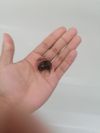
community Guys I need advice more hairs in the drain
The user is experiencing significant hair shedding after starting dutasteride, which is considered a normal part of the treatment process. Despite the shedding, the user notes some improvement in hairline appearance and is seeking advice and reassurance.
community For Dutasteride Users - Do You use it Daily, or Every Other Day for Hair Loss?
community The 'DHT itch' is real - notes from a casual bodybuilder
The "DHT itch" is real and likely due to inflammation at the hair follicle, exacerbated by increased testosterone or androgens. Treatments mentioned include dutasteride, minoxidil, finasteride, and various topical solutions.
community Prolactin the Cause of Hair Loss? ABS-201 the Cure?
community my ru58841 solution has crystals at the bottom after refrigerating for 2 months
RU58841 solution developed crystals after refrigeration. Letting it reach room temperature and shaking can dissolve the crystals.
community 1 YEAR DUTASTERIDE MESOTHERAPY EXPERIENCE
community [Part 2] – Sharing data for collaborative analytics on pyrilutamide
Analyzing data on pyrilutamide, a potential hair loss treatment, as well as the effectiveness of other treatments such as Minoxidil, Finasteride, and RU58841.
community Derm switched me back to fin from dut
community Just made a 5% solution of Pyrilutamide in the kitchen nbd
A joke about creating a hair loss treatment in the kitchen, with replies encouraging more jokes.
community CRISPR treatment for AGA on the horizon after approval for blood disorders
CRISPR treatments for blood disorders have been approved, leading to discussions about its potential for treating hair loss (AGA). A study showed that editing a gene related to DHT sensitivity could lead to hair regrowth, suggesting CRISPR may eventually be used for AGA, but it's expected to be expensive and not soon available.
community 17 months dut + min + 2800 grafts (5 months)
The user shared progress on hair restoration using dutasteride, oral minoxidil, and 2800 grafts, noting significant improvement in hair thickness and coverage. They discussed the importance of continuing DHT blockers like finasteride or dutasteride post-transplant to prevent further hair thinning.
community peptides seems to have dramatically decreased hairloss!
Peptides like GHK-Cu, BPC-157, and TB-500 have significantly reduced hair loss, with GHK-Cu being particularly effective. The discussion also covers the high cost of these peptides and explores more affordable purchasing options.
community Check your vitamin d3 levels!!!
community New study: Vitamin D counteracts DHT in mice and in human hair organ culture and hair cells
Vitamin D may counteract DHT and help with hair growth, as seen in mice and human hair cultures. Some users discuss using Vitamin D, magnesium, and other supplements for hair health, while others humorously note the success in mice.
community Adipocyte lipolysis activates epithelial stem cells for hair regeneration through fatty acid metabolic signaling
Fatty acid metabolic signaling can activate epithelial stem cells for hair regeneration. Oleic and palmitoleic acids showed the best results, but practical application on humans remains uncertain.
community link between creatine and hair loss
community Japan Uses Low Dose Dutasteride (0.1mg). Minimal exposure and hair growth success.
Low-dose dutasteride (0.1 mg) is effective for hair growth, potentially more so than finasteride, with fewer side effects. East Asians may respond well to these treatments due to hair characteristics.
community Why everyone should be using topical Dutasteride
community Feminizing Hormons wet through the roof with Finasterid
community Studies on creatine where participants don’t go thru loading phase?
community RU58841, 8% HPLC-MS done by jano, they legit
The conversation is about testing the effectiveness of RU58841 for hair loss, with the user planning to increase their dose to 30 mg per day along with 20 mg of Minoxidil. The test results showed approximately 70 mg/ml, which the user considers a good result.
community A Word On Creatine
community So basically we will know the efficacy of HMI-115 in 3 months after the phase II study concludes in China?
Hair loss discussion mentions HMI-115 efficacy in 3 months after Phase II study. Users discuss treatment effectiveness and mention massive regrowth in previously bald areas.
community Hy-tissue PRP 50 Experience ??
PRP treatments have been effective for the user, with a new recommendation of using a high-quality plasma kit once a year. The user seeks experiences with this specific PRP approach.
community Will taking creatine fuck up my hair?
community Any Dutasteride shed recovery stories?
community 3000 grafts + DHI Technique + Foam Minoxidil + Tretinoin + DUT 5 months and 2 weeks so far.
The conversation is about a user's hair transplant progress using 3000 grafts with DHI technique, foam Minoxidil, Tretinoin, and Dutasteride after 5.5 months. Commenters are impressed with the results, noting significant improvement.