Search
for
Sort by
Community Join
630-660 / 1000+ resultscommunity Has anybody tried this product from Hims? Does it work?
The post discusses a product from Hims that combines finasteride, minoxidil, and biotin in one pill for hair loss. Users share mixed opinions, with one praising its effectiveness, while another warns against potential heart-related side effects of oral minoxidil, suggesting topical solutions instead.
community Korean Laser Helmet has a 44% increase in hair growth vs 0% growth in placebo in a double-blinded randomized controlled clinical trial.
A Korean laser helmet increases hair growth by 44% compared to a placebo. Users discuss its cost-effectiveness, clinical support, and compare it to treatments like finasteride and minoxidil, focusing on wavelength and energy density.
community I am about to cry, umI hate my gens
Hair loss affects confidence, with discussions on treatments like finasteride, minoxidil, and RU58841. Emphasis is placed on self-acceptance and building confidence beyond appearance.
community Clascoterone 5% solution infographic
Clascoterone 5% solution is discussed as a potential new treatment for hair loss, offering an alternative for those who can't use finasteride or need additional options beyond minoxidil. Concerns about cost, effectiveness, and safety compared to existing treatments like RU58841 and finasteride are highlighted.
community Update on taking hims spray. I cut my dose to EOD, 2-3 sprays; instead of 4 sprays everyday. Trying to mitigate any leakage of fin into bloodstream.
A user shared progress pictures and discussed their hair loss treatment, including using Hims spray with finasteride, oral finasteride, castor oil, and derma rolling. They reduced their Hims spray dose to every other day to minimize finasteride absorption into the bloodstream.
community Diluting 0.05% topical finasteride serum/oil
The user wants to reduce their dose of topical finasteride to 0.1-0.2mg and is considering mixing 0.2ml of their current finasteride + minoxidil serum with 0.8ml of a minoxidil-only serum for better scalp coverage. They are asking for advice on whether this method is effective or if there's a better way to dilute the finasteride solution.
community FUE 2990 Grafts (2 Day surgery) HDC Clinic Dr. Maras
A 28-year-old man shared his experience with a 2990 graft FUE hair transplant at HDC Clinic in Cyprus, praising the professionalism and care received. He has been using topical Minoxidil, Biotin, Dermarolling, and recently started Finasteride and oral Minoxidil.
community 1 and a half years on fin - hair is way worse.
The user reported worsening hair loss after 1.5 years on finasteride, questioning if chronic iron deficiency could be a cause. They noted no side effects from finasteride.
community Purchasing and Shipping Alpecin DMG to the United States.
A user is seeking help to purchase and ship Alpecin DMG to the United States due to issues with eBay sellers. They prefer Alpecin DMG over minoxidil because of concerns about minoxidil's effects on insulin production, as they have diabetes.
community NW7 - Progress over 5 Months (HIMs Topical Fin/Min, Micro Needle 1.5mm, RU-58841)
A user shared their 5-month progress in treating hair loss using HIMs topical finasteride and minoxidil, micro-needling with a 1.5mm needle, and RU-58841. The post includes progress pictures showing improvement from a NW7 hair loss stage.
community Whats yall opinion on ghk cu as a product alone and in the combination alongside fin and min (oral)?
The conversation is about using oral finasteride and minoxidil for hair loss, with consideration of adding topical GHK-Cu for skin and hair benefits. The user seeks opinions on this combination.
community Am I a good candidate for finasteride? (Bloodwork) 18M NW2
An 18-year-old with Norwood 2 hair loss is considering finasteride treatment. Bloodwork shows testosterone and hormone levels mostly within normal ranges, except for low estradiol.
community Minoxidil is able to suppress androgen receptors or increase aromatase effect. Blood test in pictures.
A 24-year-old male experienced an increase in estradiol levels and symptoms like gynecomastia and excessive sweating after using Minoxidil for hair loss. His estradiol levels decreased after he stopped using Minoxidil.
community Am I losing my mind or should I be concerned
The user switched from topical to oral finasteride and minoxidil for hair loss and experienced swelling and sensitivity in the left chest area. They are concerned about these symptoms but noticed improvement after skipping a dose.
community Just found out I am Vitamin D deficient
A user found out they are vitamin D deficient and was prescribed high-dose vitamin D supplements, asking if others had similar experiences and if it improved their hair. Some shared improved mood and testosterone levels after treatment, while another combined vitamin D supplements with finasteride due to family history of baldness.
community Interpreting test results + experimenting w/ routine (long post)
The user has been treating hair loss for over 11 years with various methods including Minoxidil, Keto shampoos, vitamins, and microneedling, but has avoided Finasteride due to fertility concerns. They have recently added Zix and The Ordinary Serum to their routine and are questioning their high DHT levels despite their efforts.
community Do antihistamines help with hair loss
A user experienced hair loss and texture changes, tried minoxidil and finasteride, and considered antihistamines like Cetirizine for potential histamine issues. They reported improved alertness but continued shedding.
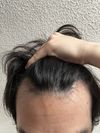
community What NW am I? Im guessing NW 1.5?
The conversation is about a user assessing their hair loss as Norwood 1.5 and discussing their use of oral minoxidil and finasteride for 2.5 years, which improved their hair density. They are content with their current progress but hope to reach Norwood 1.
community Semen Analysis results: Before and after Finasteride
A man stopped taking finasteride, a hair loss treatment, to improve his fertility. His sperm count and motility increased after stopping the medication, but sperm shape did not change.
community Making PG free solution at home
A user wants to make a solution for RU58841 and finasteride powder using only glycerin and asks if ethanol is necessary. They are seeking advice on whether glycerin alone is sufficient.
community Serum DHT CAN'T cause hair loss. Sebum DHT is a better measurement.
Serum DHT is mostly inactive; sebum DHT is a better measure for hair loss. Users discuss using finasteride, dutasteride, and topical treatments like KX826 and RU58841 for better scalp DHT suppression.
community 1.25 mg Fin for a year, and very inconsistent oral min for 3 months.
The user experienced significant hair regrowth using 1.25 mg finasteride daily and inconsistent oral minoxidil, with no side effects reported. Finasteride primarily increased hair density, while minoxidil contributed to thicker, healthier hair.
community IGE Hair Loss and Miniaturization
A 23-year-old male is experiencing diffuse hair loss and miniaturization, possibly due to high IGE levels after using tofacitinib. He seeks advice and has not yet consulted a dermatologist.
community White hair seemed to be turn black, re-pigmentation
The user experienced hair repigmentation and attributes improvements in hair and overall health to a carnivore diet, Boron, and Selenium supplementation. They stopped using finasteride after 20 years, noticed increased testosterone and libido, and observed hair regrowth with RU58841.
community Low-Dose Oral Minoxidil Does Not Significantly Affect BP
Low-dose oral minoxidil is used for hair loss and does not significantly affect blood pressure but may increase heart rate and cause hypotensive symptoms. Some users experience side effects like palpitations and shortness of breath, while others find it effective; topical minoxidil with tretinoin is also considered.

community Progress pics i want your guys opinion
The user has been using minoxidil and finasteride for 3.5 months and has seen a 20% improvement in hair density. They are advised to continue treatment and consider switching agents or adjusting dosages if needed.
community Anyone else get their hormone levels checked on dutasteride?
Dutasteride effectively reduces DHT levels and significantly increases testosterone levels. Users are cautious about adding oral minoxidil due to potential heart issues and are considering dosage adjustments with medical guidance.
community AGA/male pattern baldness and loss of hair in the past 6months
A 25-year-old male experienced significant hair loss due to telogen effluvium and androgenetic alopecia. He began using finasteride, minoxidil, and vitamins, seeing some regrowth but remains worried about hair density.
community 25M - 3500~ Graft Hair Transplant Results - 8 Months Later - 2nd HT?
A 25-year-old man had a 3500 graft hair transplant on the frontal region and is happy with the results after 8 months. He has been on minoxidil and finasteride, switched to dutasteride, added ketoconazole shampoo for seborrheic dermatitis, and is considering a second transplant for the mid scalp/crown.