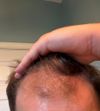
A new hair growth spray in the UK contains finasteride 0.3%, minoxidil 5%, and tretinoin 0.01%, but some users find the finasteride concentration too high. Another brand offers a similar spray with a lower finasteride dose at a cheaper price, and some users report scalp irritation from the new spray.
The conversation is about using natural DHT blockers like pumpkin seed oil and saw palmetto extract for hair loss. The user has been using minoxidil, derma rolling, vitamin D, and biotin but is considering finasteride next.
The post discusses the user's experience with hair loss treatment RU58841, which was tested for quality and found to be 96+% pure. The conversation includes various responses, with some users questioning the safety of the product and others expressing satisfaction with the test results.
The user is using RU58841, dutasteride, and minoxidil for hair loss, storing RU58841 in the fridge and applying it nightly. They report more baby hairs on the temples but are unsure if it's due to new growth or miniaturization, and seek advice on mixing and results from RU58841.
The user started a hair loss treatment with a topical solution containing 0.1% Dutasteride, 7.5% Minoxidil, 0.0125% Tretinoin, and Biotin, along with a multivitamin, Ashwagandha, CBD oil, Retinol, and Caffeine Solution. They experienced some shedding and scalp irritation, leading to a reduction in the use of the caffeine solution.
The conversation is about finding a legitimate and affordable Chinese source for RU58841 powder for hair loss treatment. It suggests choosing a vendor with good reviews and testing the product for authenticity.
The user experienced decreased libido with saw palmetto and is now considering topical anti-androgens like RU58841, pyrilutamide, and topical dutasteride for hair loss. Minoxidil is also mentioned as a potential addition, but the user is cautious about side effects and availability of treatments.
A satirical discussion on using minoxidil and finasteride in unconventional ways, including mixing them into drinks and other humorous methods. The conversation also touches on the potential health risks of minoxidil.
The user is seeking advice on improving their hair loss treatment regimen, considering changes to their topical solution, and is curious about others' daily routines and recommendations for medications and supplements. They are contemplating switching Tretinoin for Tazarotene, Latanoprost for Bimatoprost, and possibly adding Alfatradiol, Topical Melatonin, or a topical androgen receptor antagonist.
Crushing spironolactone pills and combining them with minoxidil for topical application may be effective for hair loss, with the addition of finasteride suggested. Adding rosemary and peppermint oils can help mask the unpleasant smell.
The conversation is about the best concentration of Tretinoin to use with Minoxidil for hair growth, with suggestions ranging from 0.025% to 0.05%. Users discuss personal experiences and plans to adjust Tretinoin concentration for better results.
RU58841 is being mixed with Minoxidil solution, but concerns arise about water causing instability. Mixing with water may lead to hydrolysis, potentially reducing effectiveness.
The user is currently using 0.025% Pantostin but plans to switch to 0.1% Alfatradiol. They will also use high-dose Kx826, high-dose Minoxidil, and aggressive microneedling for hair regrowth.
A user shared that taking vitamin E, specifically tocotrienols, seemed to reduce their hair shedding, and they are also using finasteride, minoxidil, and derma rolling for hair loss. Another user cautioned against high doses of vitamin E due to potential health risks.
The conversation discusses using 1% cetirizine, an antihistamine, as a potential treatment for androgenetic alopecia (hair loss). One user plans to try cetirizine instead of finasteride, while others are curious or skeptical about its effectiveness, discussing the role of inflammation in hair loss.
The user is using 2.5mg oral Minoxidil, rosemary mint oil, scalp massaging, a derma roller, multivitamins, and hair vitamins for hair regrowth. They are considering adding pumpkin seed oil, a derma pen, and saw palmetto vitamins, and are advised to consider finasteride.
A 23-year-old experiencing diffuse hair thinning has chosen a treatment stack including topical finasteride, a blend of rosemary, peppermint, and pumpkin seed oils, procyanidine B2 spray, ketoconazole shampoo, and scalp massages. They avoid minoxidil due to family history of side effects and oral finasteride due to high estrogen levels.
The post and conversation are about a user's 6-month progress using topical dutasteride, 8% minoxidil, tretinoin, 2% ketoconazole shampoo, microneedling, oral finasteride, pumpkin seed oil, Vitamin D3, a men's multivitamin, rosemary oil, and 5% minoxidil foam for hair loss treatment.
The user is experiencing solid hair regrowth after two months using a regimen of minoxidil foam, a 3-in-1 topical spray containing finasteride and tretinoin, and weekly dermastamping. They report no side effects and attribute success to the combination of treatments and a supportive diet and lifestyle.
The user has been taking oral minoxidil and finasteride for 10 months with no hair growth but no further hair loss. They are considering adding rosemary oil and possibly returning to a topical solution.
The user is using a topical solution containing 1% finasteride and 5% minoxidil for hair loss, with water, glycerin, and PEG-40 hydrogenated castor oil as carrier agents. They are questioning if these ingredients are effective carriers after using the solution for three months.
The conversation is about finding cheaper alternatives for hair loss treatments. Specific treatments mentioned include finasteride and L'Oréal Paris Elvital Hyaluron Plump Leave-In Spray.
The conversation discusses creating a topical finasteride solution by crushing finasteride pills and mixing them with minoxidil to reduce side effects. Users share experiences and methods for making the solution, with some suggesting using a premade topical finasteride if available.
The user is starting a hair loss treatment using a mix of coconut oil and rosemary oil, combined with microneedling. They plan to post results in 6 months.
Minoxidil can be effectively delivered through nanoemulsions containing eucalyptol or oleic acid, enhancing its diffusivity and targeting hair follicles. This contradicts the advice against mixing minoxidil with oils in topical formulations.
The conversation discusses sourcing topical dutasteride for hair loss treatment, with mentions of Dr. Mwamba's products and Farmacia Prati as potential suppliers. Additional treatments like topical tocotrienols and botox are suggested as extensions to the regimen.
Diluting topical finasteride with coconut oil is discussed, with a suggestion to use topical minoxidil for a combined treatment. OP plans to try the minoxidil combination.