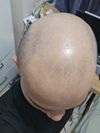
User starts Nuclear Stack treatment for hair loss, including Dutasteride, Minoxidil, RU58841, Derminator 2, and supplements. Seeks advice on storing and dosing RU58841.
Anti-inflammatories like curcumin, quercetin, and vitamin E may help with hair loss when used alongside treatments like finasteride and dutasteride. Ketoconazole is also noted for reducing scalp inflammation and improving scalp health.
A new hair loss treatment theory beyond minoxidil and finasteride is proposed, causing mixed reactions in the community, with some members eager to explore and support it, while others call for more research and evidence.
User tried dutasteride, topical finasteride, oral minox, dermawounding, saw palmetto, pumpkin seed oil, and ketacozonole for hair loss. Improvement was temporary, now trying RU58841 and seeking help.
The user started using 1mg finasteride and Regaine foam post-hair transplant, noticing significant hair growth at three months. They experienced testicular cramps as a side effect but no other issues, and are considering microneedling for further improvement.
A 26-year-old male is unhappy with his current hair loss routine, which includes microneedling, ketoconazole shampoo, and a topical formula with Minoxidil, Finasteride, and other ingredients. He struggles with consistency due to ADHD and is considering switching to oral medication for simplicity, but is concerned about side effects and effectiveness.
A user who was part of an ongoing trial for a prolactin blocker and had regrowth, but the progress photos were not shared due to negative reactions from other users. Treatments mentioned include HMI-115, Minoxidil, Finasteride, and RU58841.
The user is currently using Minoxidil foam and Dutasteride daily but still experiencing severe hair loss. They are considering adding topical Finasteride, Fluridil, Microneedling, and Tretinoin to their treatment despite the high cost and are seeking suggestions.
User on Dut, oral minox 20 mg, Saw Palmetto, Pumpkin Oil, RU, 8% topical minox, and topical fina for hair loss; top of head improves, but retrograde alopecia worsens. Asks for options besides exosomes and where to find topical melatonin.
Minoxidil may not be effective due to low sulfotransferase activity, and the user considers adding tretinoin to the regimen. They are unsure about the timing and combination with microneedling.
A 29-year-old considering hair loss treatment received advice to explore a theory on androgenic/anabolic balance and was encouraged to read a beginner's guide for better recovery chances. The user expressed gratitude and willingness to try the suggested approach.
The user stopped finasteride while trying to conceive and switched to oral minoxidil, ketoconazole shampoo, minoxidil foam, tretinoin, and microneedling. They are considering dutasteride mesotherapy but are unsure of its safety during conception.
The conversation is about the possibility of obtaining Pyrilutamide, a hair loss treatment, once it becomes available in China, despite it not being approved by the US FDA yet. The user wants to use Pyrilutamide along with other treatments.
A user shared a homemade hair loss treatment spray containing minoxidil, Japanese Sato Arovis, essential oils, and isopropyl alcohol, used alongside microneedling. They experienced initial shedding followed by strong hair regrowth after five months of use.
The user applies a topical solution containing minoxidil, finasteride, dutasteride, retinoic acid, and hydrocortisone to address scalp inflammation and is considering adding cetirizine to the mix. They are calculating the correct amount of cetirizine to add to their formula and have paused this approach to retry oral minoxidil.
The user was rejected from participating in a clinical trial for an extended-release oral Minoxidil due to having rheumatoid arthritis, despite initially being accepted. They had stopped using Dutasteride and Minoxidil to qualify but continued using other treatments like RU58841 and red light therapy.
The conversation discusses various hair loss treatments, including minoxidil, finasteride, dutasteride, pyrilutamide, alfatrodial, and nizoral, with a focus on the potential of new treatments like gt20029 and breezula. There is optimism about novel treatments that don't have systemic effects, although skepticism remains about the effectiveness of some new drugs.
The conversation is about the difficulty in obtaining GT20029, a hair loss treatment, due to patent issues and the need to resort to group buys or Chinese labs for acquisition. Specific treatments mentioned include Minoxidil, finasteride, and RU58841.
The user has been using oral Dutasteride, RU58841, and Minoxidil for three years without success and is considering adding topical Finasteride or Dutasteride to target DHT both locally and systemically. Other users suggest sticking to a consistent treatment plan, exploring different combinations, and considering other factors like potential misdiagnosis or inconsistent medication use.
Using a combination of topical finasteride, minoxidil, caffeine and dermaroller treatments to help with hair loss, while discussing the potential results and other options.
The conversation discusses using cetirizine (Zyrtec) topically to relieve scalp itch associated with hair loss and suggests it may also benefit androgenetic alopecia (AGA). One person found relief from scalp itch after three months on finasteride, noting the itch was linked to areas where hair was lost.
The conversation discusses DIY cosmetic procedures like PRP, mesotherapy, and micro-needling, with some users experimenting with Minoxidil, finasteride, and RU58841 for hair loss. It highlights a community of mostly older women performing these treatments themselves.
The user experienced positive hair regrowth using a routine of microneedling every 3 days, applying a blend of castor oil with peppermint and rosemary, bhringraj oil, and moringa oil, and using Pura D'Or DHT-blocking shampoo. They also take multivitamins and saw palmetto daily, reporting no side effects from saw palmetto.
Melatonin is being considered as a potential treatment for androgenic alopecia, with some users discussing its effects and combining it with other treatments like minoxidil and finasteride. Concerns about melatonin's impact on hormones and side effects from other treatments like ketoconazole were also discussed.
The safety of combining alfatradiol and fluridil with finasteride as a potential treatment for male pattern baldness, which is approved in the European Union. Other treatments such as minoxidil and RU58841 were also discussed.
A user stopped using finasteride and switched to a mix of essential oils in jojoba oil to treat hair loss, which reduced itching and hair shedding significantly. They shared their experience, noting that dermatologists were not helpful.
The user is considering a hair loss treatment plan involving oral dutasteride (2.5 mg), oral minoxidil (2.5-10 mg), topical finasteride, and topical minoxidil, with additional options like ketoconazole shampoo and microneedling. They are seeking advice on whether to start with finasteride or dutasteride, the potential side effects, and the effectiveness of their approach, with a plan to evaluate results after 3-4 months.
A user shared their experience with DIY PRP scalp injections for hair regrowth, using an EZ Injector and other at-home equipment. Another user reported success with at-home PRP treatments for 1.5 years, noting thicker hair and a stable hairline.