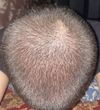
A user is upset about hair loss due to seborrheic dermatitis and DUPA, which prevents a hair transplant. They mention using jojoba oil and discuss treatments like Minoxidil, finasteride, and RU58841.
OP underwent a hair transplant (HT) and has been using finasteride for one year. Despite having thin hair, OP is happy with the results and feels more confident.
ABS-201 shows promise for male hair regrowth by blocking the prolactin receptor, with higher expected efficacy than current treatments. The discussion also covers dosing differences between macaques and humans for hmi115, highlighting a significant dosage disparity.
The conversation discusses alternatives for hair loss treatment for someone allergic to finasteride, suggesting options like hair systems, topical anti-androgens such as CB-03-01, RU58841, and kx-826. It highlights the challenges faced by individuals allergic to anti-androgen inhibitors and the need for more information on this topic.
HMI-115, a potential treatment for hair loss that has been reported to produce significant regrowth in bald areas. It is the closest thing to a cure currently available and has raised hope that it could make hair transplants obsolete.
New hair loss treatments, including Breezula, VDPHL01, and PP405, are nearing Phase 3 trials, offering hope for effective solutions. Current treatments like finasteride and minoxidil remain effective, but early intervention is crucial.
PP405 is a safer alternative to JXL069 for hair loss treatment because it penetrates the skin effectively and degrades in the blood, avoiding systemic toxicity. JXL069, when forced into the body, can cause dangerous side effects like lactic acidosis due to its inability to degrade safely.
TDM-105795 showed promising hair growth results, with higher efficacy than placebo and minimal side effects. It activates dormant hair follicle stem cells and may maintain gains without immediate loss, unlike minoxidil.
Dihydrotestosterone (DHT) impacts various skin conditions, including Androgenetic alopecia and seborrheic dermatitis, by causing overactivity in sebaceous glands. Topical medications Tacrolimus and Clobetasol can reduce these inflammatory conditions, and treatments like RU58841, Minoxidil, and Finasteride may also be beneficial.
Swelling after a hair transplant is normal and can be reduced with ice packs, head elevation, and possibly corticosteroids. The user had a no-shave FUE procedure and is using oral finasteride and minoxidil.
A 41-year-old doctor shared his positive experience with a 4,100 graft hair transplant, highlighting the importance of a skilled doctor for a natural hairline. He mentioned a confidence boost and the occasional use of finasteride post-transplant.
The conversation humorously suggests that elites with full hair are suppressing a hair loss cure to maintain their dating advantage. It mentions treatments like hair systems, hair transplants, and medications such as Minoxidil and finasteride.
A person shared their hair regrowth journey using HIMS topical treatments with finasteride, minoxidil, hormone replacement therapy (HRT), and microneedling. They also discussed their transition as a transgender woman and the positive impact of HRT on hair recovery.
Intermittent fasting may suppress hair follicle regeneration, but opinions vary on its impact on hair loss. Some users report no negative effects or even hair improvement while using treatments like finasteride and minoxidil.
The conversation discusses preventing infection from derma stamping for hair loss treatment, with suggestions to reduce needle depth and consider alternatives like tretinoin. The user experienced irritation possibly from zinc chloride and stopped using the shampoo and derma stamping.
The user is concerned about hair loss despite taking finasteride and has a hair transplant scheduled. They experience scalp itching and burning, which hasn't been relieved by various treatments, and another user suggests using ghk-cu & ahk-cu serum and Koshine kx-826/pyrilutamide for relief.
The conversation discusses hair loss treatments, specifically Regenera stem cells and exosomes from 'Cellgenic' umbilical cord donors. The user has been using topical minoxidil 5% and 0.001% estradiol for a year without seeing effects, and another user mentions the importance of microneedling.
The conversation discusses a user's plan to inject NAD+ and GHK-Cu into their scalp to improve hair health, with concerns raised about the risks of infection and necrosis. Alternatives like finasteride, dutasteride, microneedling, oral minoxidil, and scalp massages are suggested.
Exosomes combined with fractional picosecond laser treatment were effective in treating androgenetic alopecia and promoting repigmentation in white hair patches. The role of exosomes in hair repigmentation, particularly in conditions like poliosis, is not well-studied.
The conversation discusses concerns about the effectiveness of RU58841 due to high temperatures during delivery. A user reassures that the heat will not affect its efficacy.
27-year-old female experiences aggressive hair thinning and hirsutism despite normal testosterone levels. Spironolactone and 2% minoxidil were ineffective; high DHEA sulfate levels may be the cause.
The conversation discusses the potential for developing a biologic "DHT sponge" to neutralize DHT in the bloodstream as a treatment for hair loss, suggesting it could be more targeted and have fewer side effects than current treatments like finasteride and dutasteride. Concerns include the complexity, cost, and potential side effects of such a treatment, as well as skepticism about its feasibility and market interest.
Lichen Planopilaris (LPP) is an autoimmune condition causing permanent hair loss and fibrosis, often misdiagnosed. Treatments include pioglitazone, topical corticosteroids, anti-inflammatory medication, and Jak inhibitors.
Eli Lilly's drug baricitinib showed effectiveness in treating alopecia areata, with higher doses resulting in significant hair regrowth compared to placebo. The treatment is not for male pattern baldness.
GHK-Cu is a potent inhibitor of the type 1 5-alpha reductase enzyme in hair follicles, which may reduce hair loss without the side effects associated with type 2 5-alpha reductase inhibitors. The user previously experienced side effects with 5-alpha reductase inhibitors and is considering GHK-Cu as an alternative.
An 18-year-old noticed hair thinning at 17, started finasteride 5 months ago, and saw shedding stop but no regrowth. They suspect male pattern baldness due to family history and are concerned about thinning on the back and sides, possibly due to inflammation.
A 17-year-old is addressing hair loss with finasteride, topical minoxidil, and microneedling. They are considering adding GHK-Cu to their regimen, but others advise caution with finasteride due to age.