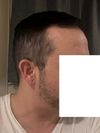
The conversation is about someone's hair regrowth progress using Hims serum from February 25th to April 6th. Users commented on the noticeable improvement and potential for full hair recovery.
A user shared their journey from balding to using a hair system, expressing satisfaction with the results despite the costs. They mentioned trying finasteride but stopped due to side effects, and now enjoy increased attention from women with the hair system.
A person had a successful hair transplant in Turkey with 3200 grafts using FUE and DHI techniques, and is satisfied with the results after 9 months. They have been using finasteride for 7 years to maintain hair health.
The user has been using dutasteride and finasteride but still experiences hair loss and high DHT levels. They plan to try topical finasteride and RU58841 while continuing dutasteride to see if topicals are more effective.
The user has been using a finasteride and minoxidil combo spray from Hims for four months, with positive results and no side effects. They apply four sprays nightly, targeting the crown and front of the scalp.
Dutasteride is associated with increased blood glucose, HbA1c, LDL cholesterol, and liver enzyme activity, potentially leading to diabetes, NAFLD, and liver metabolism changes. The conversation highlights concerns about these adverse effects and calls for more studies, including on finasteride.
The user, Virtual_Force3845, shared their progress pictures after using Hims Fin/Min Spray consistently for 3-4 months. They are excited about the progress and have not experienced any side effects. Other users in the conversation shared their own experiences and asked questions about the treatment.
The user experiences histamine intolerance with alcohol-based hair loss treatments like Rogaine foam and seeks alternatives. Suggestions include alcohol-free and PPG-free topical minoxidil or finasteride, and trying Spectral products with different solvents.
User "hairplsrn" shares their hair loss journey, trying various treatments like finasteride, minoxidil, and dutasteride, but experiencing worsening hair loss. They decide to get a partial frontal hair system and continue medication, while others offer support and advice on staying on medication and focusing on overall confidence.
GHK-Cu peptide injections are discussed for hair growth, but users report mixed results and suggest focusing on DHT management first. Some users combine GHK-Cu with treatments like Minoxidil and Dutasteride, but emphasize its benefits for skin rather than hair.
User got a hair system after hair transplant and finasteride didn't meet their needs. Hair system cost $200, initial install $150, and user is satisfied with the results.
User discusses Alfatradiol (17a-Estradiol) as a potential hair loss treatment with mixed results. Concerns include low dosage, receptor theory, and possible increased aromatase activity on scalp.
The user is 2 months post-hair transplant with 6,000 grafts using the DHI method and is using oral finasteride, minoxidil, and vitamins. They are seeking feedback on their progress.
The user is using finasteride, minoxidil, and dutasteride for hair loss, but stopped dutasteride due to side effects. They plan to have a hair transplant in December 2024 at Vanity Hospital in Istanbul, aiming for at least 4500 grafts.
The user maintained hair with finasteride for 4.5 years and noticed some progress with dutasteride after 6 months, experiencing reduced chest and facial hair. They did not use minoxidil and reported no side effects from either treatment.
The user experienced a sudden decrease in hair density after starting alfatradiol while already using finasteride. Another user mentioned that initial shedding can occur with hair loss treatments, but it may not last long.
A user has been taking finasteride for 5 months with no improvement in diffuse hair loss and suspects high levels of prolactin, cortisol, progesterone, and DHEAS, as well as iron, might be contributing to the issue. They are also taking vitamin D to address a deficiency.
A user shared their experience with a 2000 FUE hair transplant at Hasson and Wong, noting significant improvement 7.5 months post-op. They also used finasteride and dutasteride to slow hair loss.
Visible hair improvement after 10 weeks using minoxidil, estradiol enanthate, acetophenide algestone, and bicalutamide. The user is a 25-year-old male with reduced testosterone levels, expressing a preference for less masculinity.
The user is pleased with their hair transplant results after six months and seeks feedback. The conversation is positive, with others affirming the success of the procedure.
A user in the UAE is facing customs issues with ordering Fluridil (Eucapil) and is considering ordering smaller quantities or switching to Pyrilutamide. They are also using finasteride daily to maintain hair and are unsure of Fluridil's effectiveness.
A user shared their hormone levels to gauge if they can use finasteride for hair loss without issues. Their hormone levels are mostly within the reference ranges.
Gut microbiota significantly influences androgen metabolism, impacting hair loss treatments like finasteride. Probiotics, dietary changes, and fecal microbiota transplants may help manage DHT levels and improve hair health.
The user experienced severe side effects from finasteride, including hormonal imbalances and cognitive issues, leading to a recommendation to stop its use. They plan to follow up with tests to rule out a pituitary tumor and are considering topical treatments as alternatives.
Stopping antihistamines may resolve neurological side effects when using finasteride. Users experienced muscle aches, headaches, and lethargy when combining the two.
A user had a failed hair transplant with 2800 FUE grafts at a clinic in Turkey, where finasteride was used, and the procedure was poorly executed by technicians rather than the main surgeon. The user later sought repair from a more experienced doctor, highlighting issues with large clinics that handle multiple patients daily.
The user has been using finasteride and minoxidil for 5 years to prevent hair loss and is considering adding dutasteride for regrowth or opting for a hair transplant. Suggestions include trying dutasteride, oral minoxidil, microneedling, and possibly a hair transplant for better results.
HairClone aims to rejuvenate miniaturizing hair follicles through follicle banking and cell expansion, with treatments potentially available in the UK by 2022. The process involves extracting, storing, and cloning hair follicles, but full regenerative treatments will take many years to develop.