Search
for
Sort by
Community Join
330-360 / 1000+ resultscommunity 2 months results: Dut 0.5mg / Oral min 2.5mg / Dut+PRP mesotherapy / microneedling
User's 2-month hair loss treatment includes Dut 0.5mg, oral min 2.5mg, Dut+PRP mesotherapy, microneedling, and other products. Dermatologist increased min dose to 5mg, expecting better results at 6-month mark.
community So is hmi-115 a flop? There are no news about effectiveness. What do you guys think?
Hair loss discussion includes treatments Minoxidil, Finasteride, and RU58841. Users question effectiveness of HMI-115 and consider waiting longer for results.
community People who don’t microneedle, why?
Microneedling is often combined with minoxidil for hair growth, but concerns about scalp damage, pain, and effectiveness deter some users. Alternatives like finasteride, dutasteride, tretinoin, and laser treatments are preferred by others.
community Microneedling for maximum results?
Microneedling is discussed as a favorable hair loss treatment, with no consensus on whether to glide or remove the device between areas. Scalp irritation varies by individual, and some users report no need for gel during the process.
community Microstamp guide?
Microneedling for hair loss, with concerns about cost and conflicting information on protocols. The user is unsure about purchasing and reusing microneedling stampers.
community How Does Exosome Therapy Work for Hair Loss?
Exosome hair therapy involves injecting stem cell-derived exosomes into the scalp to boost hair follicle regeneration and repair. Exosomes, which are not stem cells but products of them, contain bioactive chemicals and specific growth factors that promote new blood vessel formation, increase cell proliferation, reduce inflammation, and improve tissue repair, all crucial for hair health.
community Intravenous (IV) Delivery of Exosomes for Hair Growth
The conversation discusses using intravenous delivery of exosomes for hair growth. It mentions treatments like Minoxidil, finasteride, and RU58841.
community 2-month HMI-115 results from the Chinese trial
HMI-115 shows promising hair growth and thickening in just 2 months. Results are positive but need more time for confirmation.
community 4 months minox + fin +microneedling
A user's progress with treating hair loss, using minoxidil, finasteride and microneedling. The user experienced impressive results after four months of treatment, and mentioned that stopping recreational drugs and losing weight helped their hair regrowth.
community A Theory on Why Microneedling Works
Microneedling may enhance hair regrowth by transferring stem cells to dormant follicles, improving the effects of minoxidil. Users discuss using microneedling with needle lengths around 1.5mm to stimulate hair growth.
community Jason Sorgi - Boston Hair Restoration- Crown MicroFUE (full detailed breakdown).
A user shared their positive experience with a crown MicroFUE hair transplant at Boston Hair Restoration, highlighting the smooth procedure, minimal pain, and significant growth over 12 months. They used oral minoxidil, finasteride (transitioning to dutasteride), PRP sessions, and a LaserCap, achieving excellent results and full confidence.
community What's going on with hmi115? The Phase 2 was concluded Nov2024 but no news
Hmi115, a prolactin receptor blocker, showed promise for hair growth, but results from Phase 2 trials have not been published. ABS-201, an AI-based analog, is expected to begin trials in December 2025, while commercialization of treatments like PP-405 is anticipated around 2027.
community 4 months on topical Fin/Min, once a week microneedle roller for the past 6 weeks
A 29 year old user's progress with topical Fin/Min and microneedling treatments to improve hair loss over the span of 4 months.
community Starting over at 40 with microneedling
A person had success with micro-needling for hair growth but stopped and noticed hairline recession. They plan to restart treatment at age 40, using micro-needling, oral minoxidil, finasteride, a laser cap, topical minoxidil with tretinoin, collagen, and other supplements.
community Male, 40+ Years old, Results with Stimufield PEMF hat stacked over minox+fin spray
A 40+ year-old male used finasteride and minoxidil sprays daily, later adding a PEMF hat to his routine, resulting in noticeable hair regrowth in the crown area after 6 months. He plans to continue the treatment and update at 12 months.
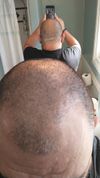
community (M49) 4 month progress - Fin 1 MG, microneedle once a week
The user reported noticeable hair improvement over four months using 1 mg of finasteride and weekly microneedling. Progress photos from October 2024 to January 2025 show positive changes.
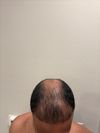
community Seeking Advice After FUT Hair Transplant in 2021 – Considering FUE
The user is unhappy with the results of a FUT hair transplant from 2021, noting uneven hair texture and persistent thinning. They are considering a FUE procedure and have been using finasteride for a year, previously used minoxidil, and currently use Toppik for concealment.
community PRP or Stem Cell therapy for hair growth?
community Chinese reseachers successfully create hair follicles in-vitrofor autologous transplantation in vivo
Chinese researchers have successfully created hair follicles in vitro, potentially offering unlimited hair for transplantation and a cure for hair loss. They plan to test these follicles in vivo on human scalps.
community microneedling efficacy for male pattern baldness?
Microneedling, when combined with finasteride and topical minoxidil, can enhance hair regrowth for male pattern baldness, especially at the temples. Users report varying success with needle depths between 0.5mm and 1.5mm, with stamps preferred over rollers to minimize scalp damage.
community What do you guys think about hair mesotherapy with dutasteride?
Hair mesotherapy with dutasteride is popular in Europe and can be effective, especially when combined with oral dutasteride. Some users suggest using topical dutasteride with microneedling as an alternative, though it may be painful.
community Platelet-rich plasma injection (PRP) question?
Hair loss discussion includes PRP procedures. Some say it's not worth the money.
community Electrical devices like violet ray for hair regrowth
The conversation discusses using a violet ray device for hair regrowth, citing a case where zinc ion treatments showed promising results. It also mentions similar devices like the Growcombr and niostem helmet.
community Summary of future treatments from 2020
Hair loss treatments include finasteride, minoxidil, microneedling, dutasteride, CB-03-01, RU-58841, and experimental options like KY-19382 and stem cell therapy. Some treatments are considered ineffective or risky, such as ketoconazole, PRP, and low-level laser therapy.
community Someone had success with Stemoxydine and microneedling ?
Treatments for hair loss, such as finasteride and minoxidil, as well as alternatives like stemoxydine and microneedling.
community Wednesday after micro needling through Friday today.
The user is using oral and topical minoxidil, finasteride, dutasteride, and considering adding rosemary and pumpkin saw palmetto to their regimen. They report significant hair growth, especially with dutasteride, and are considering increasing their dose and adding RU58841.
community where and how to do Verteporfin after HT
The conversation is about a user planning to undergo a hair transplant and seeking information on clinics that perform Verteporfin treatment. A user suggests Dr. Barghouthi might offer this service.
community Microneedling must reach the stem cells in the upper hair shaft
Microneedling should target depths of 0.5mm to 1.5mm for hair loss, with weekly sessions at 1mm recommended. Combining microneedling with Minoxidil is common for improved results.
community TGF-Beta. Good or Bad? Help for treatment investment
TGF-B affects hair growth, both causing stem cell division and death depending on amounts. Amplifica's treatment injects Scube3 to increase TGF-B for hair growth.