Search
for
Sort by
Community Join
450-480 / 1000+ resultscommunity [M19] Before and After Treatment
A user's progress pictures showing the results of taking Fin (0.5 mg per day), Min (5 mg per day) and microneedling with Dr. Pen Ultima M8; another user asked when the regrowth was noticed, and commented on the hair appearing darker.
community How often to microneedle for optimal results
Microneedling for hair loss is discussed, with users suggesting different frequencies and needle lengths, such as 1.5mm every 3 to 6 weeks or 1.0mm weekly. Some users recommend less frequent sessions to avoid scalp damage and soreness.
community Is microneedling really that effective?
Microneedling's effectiveness for hair growth is debated, with some users reporting positive results when combined with minoxidil and finasteride, while others experienced scarring and no benefits. Needle depth and frequency vary, with some suggesting 0.5-1mm as effective, but caution is advised to avoid overuse and potential harm.
community 1 yr update of 2300 FUE hair transplant in Seoul, Korea. Dr.Ko's work.
A user shared their successful 1-year update after a 2300 FUE hair transplant in Seoul, Korea, praising Dr. Ko's work for achieving a natural-looking hairline. The conversation includes admiration for the results and inquiries about the procedure's cost and requirements.
community [M25] About a year on fin/min/microneedling progress pics
A 25-year-old shared progress after a year using oral finasteride, topical minoxidil, and microneedling, noting significant hair improvement despite periodic shedding. The user experienced body hair loss as a side effect but reported no other issues and plans to continue the treatment.
community Veradermics VDPHL01: why isn’t anyone talking about it?
Veradermics' new hair loss treatment, VDPHL01, is likely a modified release oral minoxidil, which has received $75 million in funding for clinical trials. Despite skepticism about investing in a known treatment, some believe it could offer improved efficacy and reduced side effects.
community One month in, and LLLT is seemingly working
The user experienced hair loss possibly due to scalp damage and tried natural treatments with limited success. They reported noticeable hair thickening after using a laser treatment device, suggesting it may be effective, especially for those on finasteride.
community 6 months of finasteride and ghk-cu
The conversation is about hair loss treatment progress using finasteride and GHK-CU over six months. Users discuss application methods and share experiences with GHK-CU and AHK.
community 2 years progress. Fin and min and microneedling
The conversation discusses a user's two-year hair regrowth progress using finasteride, minoxidil, and microneedling. One user asks for a timeline of progress, another comments on hair length, and the original poster mentions using microneedling sporadically.
community Microneedling regime – frequency and depth
Microneedling frequency and depth, with suggested protocols involving 0.3mm every day before applying topical treatments like Minoxidil or Finasteride, and 0.5-1.5mm once or twice a month for wounding.
community Which hairsurgeon - except Dr. Barghouthi - is using Verteporfin right now?
A discussion on the use of Verteporfin as a hair restoration treatment and whether there are any other doctors or clinics using it currently, aside from Dr. Barghouthi. Treatments such as Minoxidil, Finasteride and RU58841 were also mentioned.
community 8 month update. Topical fin/min, topical dut, mk677, RU, micro needling
User shared 8-month hair loss treatment progress using topical fin/min, topical dut, mk677, RU, and microneedling. They experienced watery semen as a side effect but saw significant improvement in hair growth.
community Microneedling Minoxidil Finasteride (3 Month Report)
The conversation discusses hair regrowth using microneedling, Minoxidil, and Finasteride over a three-month period. Specific treatments mentioned are microneedling, Minoxidil (Min), and Finasteride (Fin).
community Is it possible to get a DHI transplant in America?
The conversation is about hair transplants in America, specifically the availability of DHI. The user is currently using finasteride and plans to use microneedling, oral castor oil, and eventually undergo FUE or DHI.
community 5 months of 1mg Fin, weekly 1.5mm microneedling and daily 2mg copper peptide injections
The user shared progress pictures after 5 months of using 1mg finasteride, weekly 1.5mm microneedling, and daily 2mg copper peptide injections. They discussed their hair loss treatment and results.
community 2450 grafts FUE hair transplant. Dr.ko from Newhair Institute, Korea. 1 year result
community What is the deal with "longitudinal partial follicular unit transplantation"
Longitudinal partial follicular unit transplantation involves extracting part of the donor follicular unit, allowing the donor area to be overharvested without noticeable hair loss. The conversation questions if this method is practiced in clinics or if it's theoretical, and whether it relates to hair cloning or multiplication.
community DUT mesotherapy in Canada, any good references ?
The conversation is about finding reputable clinics in Canada or near the US border that offer DUT mesotherapy for hair loss. The user is seeking recommendations and cost information for these treatments.
community Results of 9 1/2 months of finasteride 1mg daily and 0.5mg dutasteride weekly along with RU58841 daily and microneedling weekly
Finasteride and Dutasteride used in combination with RU58841 and microneedling, as a treatment for hair loss. There was discussion on progress of the treatment and potential other methods to consider.
community Microneedling monotherapy shown more effective at 0.5mm than 1mm and 1.5mm in recent 6 month study
Microneedling at 0.5mm is more effective than at 1mm and 1.5mm for hair loss. Users discuss switching to 0.5mm and combining it with Minoxidil.
community Is this regrowth? Doing PRP + exosomes
User doing PRP with exosomes for hair loss, sees possible regrowth after two treatments. Another user suggests providing before and after pictures for better assessment.
community 12 months of progress on fin (and 10 months microneedling)
A user's 12 month progress on finasteride and 10 months of microneedling for hair loss treatment, which has resulted in improved temple areas with no side effects from the finasteride. They have not used minoxidil yet but are considering it for further gains. DHT blocking drugs such as finasteride and dutasteride are recommended to maintain regrowth results.
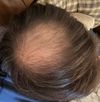
community Dutasteride and Minoxidil User Considering Microneedling vs HT for Crown
The user is considering microneedling versus a hair transplant (HT) for crown hair loss while currently using dutasteride and oral minoxidil. They are hesitant about microneedling due to potential scarring but are open to trying it before deciding on a hair transplant.
community Is IGF-1 the reason why some people don't respond well to min-fin treatment?
A user who didn't respond well to minoxidil and finasteride is considering the role of IGF-1 in hair loss treatment effectiveness. They discuss the potential of using HGH to improve hair growth and other health issues, referencing several sources that suggest IGF-1 levels may influence hair loss and treatment response.
community "After ten years of scientific research, Japanese personal care player, Shiseido has patented its RepliCel Hair-01 (RCH-01) hair regeneration technology."
The conversation discusses Shiseido's RepliCel Hair-01 technology for hair regeneration, which aims to stop hair loss with minimal regrowth. Treatments mentioned include Minoxidil, finasteride, and RU58841.
community biolabshop RU58841 source legit??
The conversation is about using Biolabshop's RU58841 product, which includes GHK-Cu and melatonin, to improve hair quality and combat hair loss. The user has previously used finasteride, minoxidil, and Anageninc’s RU58841 with success and seeks feedback on the new product, especially from those on anabolic steroids or hormone treatments.
community Hair transplant results after 6 months - 4100 grafts (full DHI)
A hair transplant experience after 6 months, with 4100 grafts, which took 3 months to stop looking obvious and included finasteride treatment. It also discusses the differences between DHI and FUE methods.
community 3 months oral min. 2month fin and hrt. 1x per week microneedling
A 29-year-old is using oral minoxidil, finasteride, hormone replacement therapy (HRT), and microneedling for hair regrowth. They started balding at 20, worsened at 25, and are transitioning with testosterone blockers.
community 3 and a half months on Fin MWF, min daily and microneedling once a week.
A user's progress with treating hair loss over 3.5 months, which involves taking finasteride MWF, minoxidil daily and microneedling once a week. There was positive feedback from other users regarding the results.