Search
for
Sort by
Community Join
90-120 / 1000+ resultscommunity HairClone (UK) finally begins offering its Dermal Papilla Cell Hair Multiplication procedure to humans. In Guatemala.
HairClone is offering a Dermal Papilla Cell Hair Multiplication procedure in Guatemala, raising questions about its effectiveness and regulatory reasons for the location. Users express skepticism and curiosity about the treatment's success and potential costs.
community Promising stem cell treatment
community Anger and frustration as I finally learn my diagnosis.
A young female diagnosed with Lichen planopilaris (LPP) experienced years of misdiagnosis and ineffective treatments, including a hair transplant and other procedures. She is considering litigation due to the misdiagnosis and has learned that LPP is chronic, hair loss can be stopped with ongoing medication, but lost hair cannot regrow.
community What is this pigmentation around my follicles?
The conversation discusses potential causes of pigmentation around hair follicles, suggesting sebum buildup, autoimmune conditions, or dermatitis. Treatments mentioned include finasteride, dutasteride, and an anti-inflammatory diet, with a recommendation to consult a doctor for a proper diagnosis.
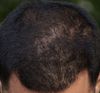
community Weird Hair Loss Pattern – Worth a Biopsy?
The user is experiencing a strange hair loss pattern despite using dutasteride for 3 years and minoxidil with tretinoin for 1.5 years. They recently added microneedling and are considering a scalp biopsy to understand the cause.
community post transplant / post finasteride
community Epibiotech will now offer off-the-shelf allogeneic hair multiplication treatment in South Korea
Epibiotech will offer off-the-shelf allogeneic hair multiplication treatment in South Korea, using dermal papilla cells from donors to grow hair in balding areas. This method is cheaper and less invasive than traditional hair transplants.
community Joining clinical study for Clascoterone (Breezula)
The conversation is about a user considering joining a clinical study for Clascoterone (Breezula) after experiencing no results with topical finasteride and minoxidil, and side effects from oral finasteride. The user is seeking advice on clinical study participation and experiences.
community 3.5 Month Diffuse Thinning Progress ( Same lighting attempt)
community Why do Hair Transplant procedures take a rectangle from the donated area?
community What happened to Dr Wrassman and the Hairy Mole cure?
User discusses potential hair loss cure involving growth factors from a hairy mole. Dr. Wrassman responds, saying clinical trials may happen in 2022.
community Pilose antler extracts promotes hair growth in androgenetic alopecia mice by activating hair follicle stem cells via the AKT and Wnt pathways
community Berlin scientists growing hair from adult stem cells
community Can we trust l’oreal clinical study on Stemoxydine 5%? They conducted/founded the research on the Same molecule that they sell, research could be biased!? L’Oreal reported clinical study that showed an increase of 4% in hair density on the patients treated with stemoxydine for 3 months
Hair loss discussion includes treatments like Minoxidil, Finasteride, and RU58841. L'Oreal's study on Stemoxydine 5% claims a 4% increase in hair density after 3 months, but some users question potential bias.
community Pre Fin Bloodwork To Check Other Potential Issues
A user preparing to start finasteride for hair loss wanted to check for any abnormal bloodwork related to hair loss. They shared their blood test results and learned from another user that their doctor prescribed finasteride without any preliminary tests.
community DHT Itch flareups and information
community [24M] Legendary Stress Thinning Recovery (7 months on 5% topical 2x per day)
community Hormone level test results before starting topical liposomal finasteride: is my DHT level too high?
The conversation discusses using topical liposomal finasteride for hair loss, with concerns about high DHT levels. The user's DHT level is above the normal range, which may affect hair health.
community Keratin fibers helped me to combat the cosmetic effect of hair loss
Hair loss discussion includes treatments like hinoki tree oil and procyanidin b2. Experiences and effectiveness of these treatments are shared.
community mallia therapeutics 8T3 scd83 molecule for ffa/lpp mainly and aga
A user applied the 8T3 product for hair loss, targeting LPP and AGA, and plans to update on its effectiveness. The product uses a saline buffered phosphate vehicle, suitable for those intolerant to ethanolic vehicles.
community Here are my scalp biopsy results? What does this mean?
The user is experiencing progressive hair thinning despite using finasteride and dutasteride. A biopsy confirmed male pattern baldness, and minoxidil was suggested as an additional treatment.
community WHITE STUFF COMING OUT OF SCALP
The conversation discusses hair regrowth after a health condition, with the appearance of white substance on the scalp. Suggestions include it being sebum or White Piedra, with a recommendation to try Nizoral.
community HLT Megathread on HMI-115 (key takeaways in comments)
HMI-115, a newly discovered hair loss treatment that could potentially be effective for those with diffuse thinning and telogen effluvium. It is based on prolactin receptor antagonist signaling and has already undergone Phase I trials in women, with potential commercialization by 2027.
community Alfatradiol 1% study rebuttal.
Alfatradiol is often discussed at a 1% concentration, but studies typically use 0.025%. Some users report success using it as a topical treatment alongside other hair loss treatments like finasteride.
community Chinese reseachers successfully create hair follicles in-vitrofor autologous transplantation in vivo
Chinese researchers have successfully created hair follicles in vitro, potentially offering unlimited hair for transplantation and a cure for hair loss. They plan to test these follicles in vivo on human scalps.
community New Study and Product: Tomorrowlabs HSF
New product Tomorrowlabs HSF targets hair loss through HIF pathway indirectly by removing scalp iron. Minoxidil and Stemoxydine also relate to HIF pathway.
community Thickening up a spot on the crown with S5 cream
community Liquid Chromatography–Mass Spectrometry (LC-MS) VS Enzyme-Linked Immunosorbent Assay (ELISA)
Finasteride and Nizoral shampoo with Ketoconazole are used for hair loss treatment. Liquid Chromatography–Mass Spectrometry (LC-MS) is recommended over Enzyme-Linked Immunosorbent Assay (ELISA) for more accurate DHT testing.
community M46 - 3 week progress on HIMS serum
A 46-year-old male shared his 3-week progress using HIMS serum with Finasteride 0.3% and Minoxidil 6%, showing improvement without noticeable shedding. His routine includes vitamins, a healthy diet, and specific hair care practices like microneedling and using caffeine solution.