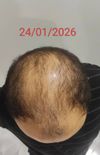
A 34-year-old male is experiencing hair loss on the sides of his head, with inflammation and itchiness, while the top remains thick. He is using topical dutasteride and keto shampoo to address the issue.
The conversation discusses using topical cetirizine as a treatment for androgenetic alopecia (hair loss). Specific treatments mentioned include Minoxidil, finasteride, and RU58841.
Diffuse thinners often experience more hair regrowth with DHT blockers like finasteride, possibly due to less DHT sensitivity and the presence of miniaturized, not completely bald, follicles. However, regrowth varies widely among individuals, influenced by factors like genetics, the stage of hair loss, and treatment methods such as minoxidil, microneedling, and dermarolling.
The user experienced noticeable hair regrowth after using finasteride for 2 years, oral minoxidil for 1 year, and recently starting dermarolling. The right temple shows significant improvement, while the left remains similar.
A user shared progress pictures 12 months after a hair transplant and daily use of dutasteride. The conversation discusses the quality of comparison photos and the use of hair fibers.
A user shared their 6-month update after a 5000-graft hair transplant at Sule Hair Clinic in Istanbul, noting a smooth procedure and ongoing growth without using finasteride or minoxidil. Some users expressed concerns about the decision to avoid these treatments, predicting potential future hair loss issues.
The user is using dutasteride, estradiol cypionate, microneedling, oral minoxidil, and plans to add ketoconazole for hair regrowth. They are questioning if the improvement is due to actual regrowth or just better photo angles.
Scientists have successfully grown functional hair follicles in the lab, marking a significant advancement in hair regeneration research. A user shared their personal experience with hair loss treatments, including Minoxidil and Finasteride, and plans to share a detailed protocol for hair restoration.
A new stem cell method for culturing hair follicles is being developed as an alternative to Minoxidil, finasteride, and RU58841. There are concerns about its cost and accessibility despite plans for commercialization.
A 30-year-old male has been on finasteride/dutasteride for 3 years, with stable but still receding hairline, and blood tests showing high total testosterone but normal DHT and free testosterone levels. Despite challenges in gaining muscle, he maintains a good physique with a consistent lifting routine and recently improved results with creatine.
The user experienced hair loss since 2019 and tried finasteride, dutasteride, RU58841, and ketoconazole shampoo without success. A scalp biopsy showed scarring and inflammation from folliculitis, indicating chronic inflammation was affecting treatment effectiveness.
Clascoterone in Winlevi, a topical AR antagonist, is being re-examined due to concerns about HPA axis suppression in adolescents, but it's unlikely to be banned for adult use in androgenetic alopecia (AGA). The European Medicines Agency recommended refusing Winlevi for acne vulgaris, but this may not affect Breezula's approval for AGA.
The user is experiencing hair loss and confusion over conflicting medical advice, with treatments including minoxidil, finasteride, and topical corticosteroids. They are unsure about the necessity of a biopsy and the timing of using minoxidil, while also considering the impact of potential androgenetic alopecia and telogen effluvium.
The conversation discusses the potential of a new hair loss treatment, GT20029, which may prevent hair loss by destroying androgen receptors on the scalp. Users express hope for the treatment's success and speculate on its usage routine, effectiveness, and possible side effects.
The user is experiencing progress in hair growth using 0.5mg Finasteride, 5mg Minoxidil, and 1mg Biotin daily but is also developing gynecomastia. They plan to continue the treatment for six months unless the side effects worsen.
The user has been using oral finasteride, topical minoxidil, and a dermaroller for hair regrowth, noticing most improvement between months 3 and 4. Other users commented on the positive results and shared their own treatment routines.
The conversation is about the claim that oral minoxidil can make hair grow on bones. The conclusion is that this claim is not true, as evidenced by the user's head being bald while the body is furry.
A user who has been using the "Big 3" hair loss treatments (ketoconazole, minoxidil and finasteride) for 2-3 months and is hoping to see positive results. The other user commented that they look like a hyper responder and asked if they were using oral or topical fin/min.
Finasteride can affect hormone levels, potentially causing symptoms like puffy nipples and testicular pain, and may result in elevated prolactin and high testosterone. The user is seeking interpretation of these changes after taking finasteride.
The user discusses their experience with hair loss despite taking estrogen and cyproterone, and estimates needing around 3000 grafts for a feminine hairline. They are considering getting the procedure done in Turkey due to high European costs.
A user shared their positive experience with a 4200-graft hair transplant performed by Dr. Heena Kudyar, noting significant improvement in hairline and density by month 9. The user did not mention using medications like Minoxidil, Finasteride, or RU58841.
A 26-year-old man who had a hair transplant and used minoxidil with good results is now experiencing shedding and considering finasteride. He's concerned about high progesterone and mild erectile dysfunction before starting the treatment.
Hair loss sufferers becoming hyper aware of shedding, and the various treatments available for reducing shedding. The conversation also discussed differentiating between shedding and balding, as well as the potential side effects from using certain treatments.
OP shared an 8-month update on hair transplant results, using Dutasteride, oral Minoxidil, and Biotin. OP also discussed a simple skincare routine with Cerave products and sunscreen.
Lab-grown hair using iPSCs is being explored, but practical applications are limited. Finasteride is suggested as the only current effective treatment.
A user shared their positive experience with a 2200 graft FUE hair transplant at DiStefano Hair Restoration in Worcester, MA, praising Dr. Heinis and his staff for their care. The user is also using oral Dutasteride, topical Minoxidil, and vitamins D and B.
The user shared a 4-month update on hair loss treatment using finasteride, minoxidil, and derma stamps, showing significant progress. The user experienced no side effects and plans to continue the treatment, updating monthly.
A 43-year-old male with advanced hair loss is experimenting with alternative treatments, including red light therapy, microneedling, scalp massages, an oil mix, and ketoconazole shampoo, after previously experiencing side effects from finasteride and minoxidil. He noticed some minor changes with red light therapy but remains skeptical about significant improvement.
The conversation is about a user sharing their positive experience with Scalp Micropigmentation (SMP) for hair loss, highlighting the natural look achieved by a specialized artist. The procedure cost $2600 and was done by Alex Corona in Panama City Beach, FL.