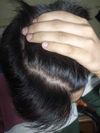
A 17-year-old is concerned about hair loss and shares photos for opinions. A user responds that the hair looks normal but is hard to assess from the images.
The conversation is about the release of Phase 3 trial results for pyrilutamide in China for treating hair loss. The user is inquiring if the actual results have been posted, noting that a recent release did not contain them.
The user used 0.5 mL of 0.5 mg of Pyrilutamide for 60 days for hair loss, but didn't notice any hair growth. They shared their hormone panel results and are seeking advice on next steps.
A hair transplant without using finasteride or similar medications may lead to unnatural results and further hair loss. Financially capable individuals are advised to stabilize hair loss with medication before considering a transplant.
Kintor announced Phase 3 results for pyrilutamide, a hair loss treatment, in China. The conversation is focused on this announcement and its implications for hair loss treatment.
A user has been taking finasteride for 5 months with no improvement in diffuse hair loss and suspects high levels of prolactin, cortisol, progesterone, and DHEAS, as well as iron, might be contributing to the issue. They are also taking vitamin D to address a deficiency.
The efficacy of various hair loss treatments, including Finasteride and Dutasteride, with personal anecdotal evidence about potential side effects. It also includes advice to get a male hormone blood panel done before starting treatment, and lifestyle changes to minimize side effects.
Han Bio plans to start Phase 1 clinical trials for a hair growth treatment in 2027 after successful results in mice. Many users express skepticism about the effectiveness of treatments that work on mice but not on humans, and discuss existing treatments like finasteride and minoxidil.
PP405 shows promise in treating severe hair loss, with 31% of users experiencing over 20% hair density increase in four weeks, faster than minoxidil and finasteride. Some users are skeptical about the results' significance and long-term efficacy.
The conversation discusses new hair loss treatments like stem cell therapy, exosome treatments, and DHI, with mentions of GT20029, Amp303, and Plated PRP Serum as promising options. It also notes the use of dutasteride, topical finasteride, and minoxidil, but the focus is on non-hormonal innovations.
The conversation discusses concerns that Anagenic's version of GT20029 might not be as effective or safe as Kintor's, with comparisons to issues faced by pyrilutamide. The chemical structure of the drug has been published.
A user shared their experience with hair loss treatments, finding success with a topical hair serum containing GHK Cu and AHK Cu, which reduced shedding. They avoided hormonal treatments like finasteride and minoxidil, and noted skepticism from others about non-traditional treatments.
Hair loss may be linked to blood flow issues, but DHT is considered the main cause. Treatments used include finasteride, RU58841, minoxidil, vitamin D3, microneedling, and dutasteride, but hair loss persists.
A user who experienced positive results from using finasteride and dutasteride to treat their hair loss, with 2000 grafts being transplanted in the temples area for further improvement. They also discussed cost and other treatments such as minoxidil.
A user shared their 5-month progress in treating hair loss using HIMs topical finasteride and minoxidil, micro-needling with a 1.5mm needle, and RU-58841. The post includes progress pictures showing improvement from a NW7 hair loss stage.
The potential of using a specific antibody, HMI-115, as a treatment for hair loss alongside traditional treatments such as minoxidil and finasteride. The user suggests trying either a 240 mg or 30 mg dose to see if it works.
A 26-year-old male with high testosterone is experiencing diffuse hair thinning despite using a comprehensive treatment regimen including dutasteride, oral minoxidil, RU58841, ketoconazole shampoo, microneedling, and low-level laser therapy. Suggestions include adjusting dutasteride dosage, monitoring iron levels, and consulting a dermatologist for further evaluation.
The conversation is about the potential side effects of using verteporfin in conjunction with a hair transplant. Specific treatments discussed include verteporfin, a hair transplant (HT), minoxidil (Min), finasteride (Fin), and RU58841 (RU).
He Shou Wu (Fo Ti) extract was found to prolong the hair growth phase, inhibit 5-alpha-reductase (like finasteride), reduce androgen receptors, and increase growth factors, potentially outperforming minoxidil in recovering hair follicle size after DHT exposure. Two compounds, emodin and TSG, are identified as responsible for these effects and warrant further investigation.
The conversation discusses hair loss treatments, focusing on the use of topical minoxidil, microneedling, finasteride, and dutasteride, while debating the role of testosterone and DHT in hair loss. It also touches on the potential liver health impacts of these treatments and the genetic sensitivity of hair follicles to androgens.
User discusses frustration with hair loss treatments and lack of progress. Emphasizes importance of measuring blood hormone levels to understand treatment effectiveness and side effects.
Researching the release of phase 2 trials for pyrilutamide, a potential hair loss treatment, and discussing other treatments such as Minoxidil, Finasteride, and RU58841.
Hair loss discussion involves experimenting with Sulforaphane from broccoli sprouts and possibly procyanidin b2. People seek updates on progress and if it's worth adding to treatment stack like microneedling.
The conversation is about gathering serum DHT data from individuals taking dutasteride to investigate its efficacy, especially in cases with unexpectedly low DHT reduction. The aim is to explore potential genetic factors affecting drug metabolism.
A treatment containing Wnt and Follistatin was found to be safe and effective for hair regrowth in a Phase 1 clinical trial. Specific treatments discussed include Minoxidil, Finasteride, and RU58841.
PP405 is a new hair loss treatment targeting dormant hair follicles, with ongoing trials. Some users consider stopping finasteride and minoxidil to join trials, while others doubt its effectiveness.
The conversation discusses the uncertainty of the legitimacy of minoxidil products in the EU market and mentions baricitinib as an approved, but expensive alternative. A method to test for real minoxidil involves mixing it with bleach to see if it turns orange or brown.
A group buy for testing a compound targeting Twist1 protein as a potential hair loss treatment. Inhibiting Twist1, which keeps hair follicles in growth phase, may prevent hair loss with minimal side effects.
A 38-year-old female is experiencing hair loss despite having almost undetectable DHT levels after using dutasteride. Suggestions include checking for PCOS, thyroid issues, adjusting diet, considering the impact of birth control, and trying treatments like tretinoin, redensyl, retinol, and minoxidil with derma stamping.