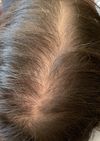
Personal experience with Procyanidin B2 shows it's ineffective for hair loss. Viviscal Pro supplement tablets, containing Procyanidin B2, didn't help after 8 months of use.
Whether using both Fluridil and Alfatradiol together could be more effective than either one alone as a hair loss treatment, given their different mechanisms of action.
A double blind, placebo-controlled study that looked into the potential effectiveness of topical fluridil for treating male androgenetic alopecia, showing increased anagen to telogen ratios with no reported side effects on libido or sexual performance.
Microneedling stimulates hair growth through stem cell activation during wound healing, not just increased blood flow. Other methods like showers or supplements don't replicate this effect.
The user reported using Morr-F (topical finasteride and minoxidil), microneedling, castor and coconut oil, rosemary oil, and various supplements. They observed some hair regrowth, particularly fine hair on the crown and hairline, after four months of needling and three weeks of Morr-F.
The conversation is about the effectiveness of Breezula for hair loss, with skepticism expressed due to lack of scientific proof and mixed results from those using Breezula and RU58841. Some are waiting for clinical trial results before trying treatments like Breezula and SM04554.
Copper peptides, specifically GHK-Cu, are discussed as a potential addition to hair loss treatments, possibly working synergistically with Minoxidil to convert vellus hair into terminal hair. The effectiveness and credibility of copper peptides are questioned due to the lack of widespread discussion and potential conflict of interest from the product's creator.
A potential treatment for hair loss that involves injecting fat into the scalp; the role of testosterone and estrogen in thinning fat tissue under the skin; research on using lard to treat androgenic alopecia, as well as PRP + ACELL/amniotic stem cell treatments; and ongoing clinical trials by doctors involved in the study.
PTD-DBM is a Korean-developed treatment for hair loss, with limited information available and some users testing it personally. A user purchased PTD-DBM for $115 and plans to test it on their temples, but its effectiveness and authenticity remain uncertain.
The conversation discusses potential hair loss treatments, including Setipiprant, Bimatoprost, and Follicept. The user encourages signing up for Follicept, which may come to market soon.
The user is taking dutasteride and minoxidil for hair loss but is concerned about continued hair shedding and lack of visible results. Others advise that shedding is normal, suggest better photo documentation for comparison, and recommend patience as results may take longer to appear.
Hair restoration after FUE surgery, with discussions on using finasteride, dutasteride, and oral minoxidil for hair maintenance and growth. Users share experiences with these treatments, noting varying side effects and effectiveness.
The user has been using finasteride for six years and minoxidil for three years with no noticeable hair regrowth. Suggestions include switching to dutasteride, considering a hair transplant, and trying microneedling.
A new plant-based serum is claimed to regrow hair in weeks, but users are skeptical about its effectiveness and the reliability of the study. Ingredients like Centella Asiatica and IGF-1 are mentioned, but many doubt the serum's superiority over existing treatments like Minoxidil and finasteride.
A 24-year-old male experienced side effects like low libido and ED after starting finasteride post-hair transplant and is seeking alternatives to reduce scalp DHT. Suggestions include topical finasteride, Xpecia, DHT-reducing shampoos, and switching to dutasteride, with some users reporting fewer side effects with these alternatives.
The user has been dealing with hair loss since middle school and has tried various treatments like mesotherapy, PRP, and red light therapy without success. Currently, they use minoxidil, finasteride, and dutasteride but are considering a hair transplant due to limited improvement.
GT-20029 is discussed as a potential hair loss treatment, with concerns about its safety and systemic absorption compared to finasteride. Users express skepticism about its effectiveness and safety, noting that it may not surpass existing treatments like finasteride and minoxidil.
A potential treatment for alopecia involving a protein that calms hair follicles has shown promise in rats, but skepticism remains about its applicability to humans. Many users express doubt about the timeline for effective hair loss treatments, comparing it to past unfulfilled promises.
A 23-year-old has been using finasteride 5mg daily since age 19 and added dutasteride 0.5mg twice a week to prevent hairline recession. They report no side effects and credit early treatment for maintaining their hair.
Microneedling combined with 5% Minoxidil and finasteride significantly improves hair growth compared to using Minoxidil or Minoxidil with finasteride alone. The combination treatment is safe and effective, but further research is needed due to small sample size and short study duration.
Hair cloning is seen as a distant and potentially less relevant solution for hair loss due to its high cost, invasiveness, and the advancement of other treatments like Minoxidil and finasteride. Many believe that by the time hair cloning becomes viable, other less invasive and more effective treatments will be available.
OP reports that after 3 months on 2.5mg dutasteride, their hair has stopped falling out and is thick again, but they are considering stopping due to potential mood and energy side effects. Other users discuss experiences with finasteride, dutasteride, and side effects, with some suggesting lower doses or alternative treatments like topical applications.
A new hair loss treatment using dermal exosomes can restore up to 90% of lost hair in mice. Users discuss potential human trials and compare it to Minoxidil and Finasteride.
The "DHT itch" is real and likely due to inflammation at the hair follicle, exacerbated by increased testosterone or androgens. Treatments mentioned include dutasteride, minoxidil, finasteride, and various topical solutions.
Onion juice helped with hair loss but was smelly and inconvenient. The user now uses dutasteride and minoxidil, finding them more effective and practical.
Dutasteride users should get yearly kidney and liver tests, especially young people. General health checkups are not common in the UK, but such tests are recommended as a precaution.
Red light therapy is scientifically proven to promote hair growth by increasing strand density and thickness, and it's an additional treatment to DHT blockers like minoxidil and finasteride. Some users are skeptical about the cost and effectiveness of commercial devices, despite studies showing benefits.
The conversation discusses a 6-month hair loss treatment update using 1mg finasteride and 5% minoxidil daily. Some users apply minoxidil once or twice a day, and there's no mention of using a dermaroller or dermastamp in the treatment.
The conversation discusses the potential connection between baldness, heart disease, and high blood pressure. Treatments mentioned include Minoxidil, Spironolactone, and Finasteride.
Ashwagandha may increase testosterone, which can convert to DHT and potentially affect hair loss, but using dutasteride should mitigate this concern. Users suggest that occasional Ashwagandha use is unlikely to impact hair loss significantly when on dutasteride.