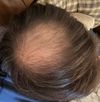
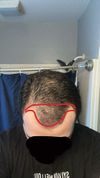
Female with aga tried minoxidil 5% and spironolactone, no success yet. Gladyator96 suggests waiting 6 months, adding tretinoin or dermarolling with minoxidil.
PP405 is moving to late-stage trials, showing potential for hair regrowth, with 31% of male patients experiencing a 20% increase in hair density. Veradermics is developing an oral minoxidil version, and there is interest in combining treatments for better results.
A user with diffuse thinning alopecia uses a custom full cap wig for an active lifestyle, costing $450 and lasting about 10 months. They share their positive experience with the wig as an alternative for those for whom treatments like Minoxidil, finasteride, or RU58841 don't work.
A user ordered RU58841 from a Chinese supplier, found it to be less than 99% pure, and plans to try a different seller next time. Concerns were raised about impurities, but the user believes they are likely inactive fillers rather than harmful substances.
A user discusses a company, Roots by Genetic Arts, that offers a genetic test for hair loss to create personalized treatments, and is curious about its legitimacy and the science behind it. The company tests 16 genes related to hair loss and compounds a topical treatment based on the results.
A woman experiencing severe hair loss since age 20 is seeking advice on hair transplants for women. Minoxidil hasn't worked for her, and she's considering shaving her head or getting a wig.
Before starting hair loss treatment, it's suggested to undergo various blood and health tests to minimize side effects. The checklist includes tests for kidney function, liver enzymes, blood sugar, vitamins, hormones, and more.
VDPHL01 shows faster and stronger hair growth compared to standard minoxidil, with no major side effects reported. Users discuss combining it with other treatments like dutasteride and finasteride for better results, while expressing skepticism about the effectiveness of PP405.
Breezula (clascoterone) Phase 3 hair loss trial results are delayed, with no official updates yet. The acne version is approved, but hair loss results are still pending.
The user is considering microneedling versus a hair transplant (HT) for crown hair loss while currently using dutasteride and oral minoxidil. They are hesitant about microneedling due to potential scarring but are open to trying it before deciding on a hair transplant.
A Silicon Valley-backed company aims to cure hair loss. Exciting advancements include mRNA therapies, gene editing, hair cloning, AR degraders, anti-androgens, cell-based rejuvenation, and AI-based drug discovery, with hopes for FDA approval of GT20029 within 10 years.
A 24-year-old has been using Minoxidil and finasteride for 1.5 years with mild improvement but is being rejected for hair transplants due to age and diffuse thinning. They are seeking advice on what to do next.
A 30-year-old male with thinning hair and an itchy, oily scalp found that hydrocortisone cream eliminated dandruff and itching and seemed to thicken his hair. He avoided minoxidil and finasteride due to potential side effects and noted that Nizoral and Head & Shoulders worsened his symptoms.
The user is considering adding RU58841 to their current hair loss treatment of finasteride and minoxidil, but is concerned about potential side effects like hairline recession and shedding. Some users report positive results with RU58841, while others experience side effects such as chest pain and dizziness.
RepliCel's potential hair loss treatment may cost around $1000 and aims to protect hair follicles from DHT, possibly reversing some miniaturization. It is not considered a cure and may be most effective in early hair loss stages, with its main advantage over finasteride being the lack of sexual side effects.
The user is seeking advice on a hair loss treatment called Ell Cranell, which contains Alfatradiol. Another user shared information from a study stating that Alfatradiol only slows down or stabilizes hair loss, but does not increase hair density or thickness.
DHT promotes beard growth but causes scalp hair loss due to inflammation and fibrosis. Treatments like finasteride and minoxidil help with hormonal signals and blood flow but don't address underlying inflammation.
Exploring hair loss treatments beyond DHT, including Minoxidil, pyruvate, Gt20029 targeting androgen receptors, and vasodilators. Other options like Kx826, adenosine signaling, growth factor topicals, and microneedling are also discussed.
A new hair cloning breakthrough suggests a potential cure for hair loss, though skepticism remains about its availability and cost. Users discuss the possibility of unlimited hair grafts for transplants and express hope for future developments.
A South Korean company, Therazyne, has developed a promising hair loss treatment using a WNT chain surrogate that binds to Frizzled 7, with human follicle testing expected soon. Current treatments like minoxidil and finasteride are not seen as cures, and while optimism exists for future solutions like PP405, approval processes are lengthy.
A user has been taking finasteride for 5 months with no improvement in diffuse hair loss and suspects high levels of prolactin, cortisol, progesterone, and DHEAS, as well as iron, might be contributing to the issue. They are also taking vitamin D to address a deficiency.
The conversation discusses the removal of Breezula phase II 12-month results by Cassiopea and the search for the original data. Concerns were raised about potential negative long-term effects on hair growth, such as androgen receptor upregulation.
Users discuss alternatives to DHT blockers for hair loss, suggesting minoxidil, microneedling, natural DHT blockers, and scalp massages. Some explore RU58841, ketoconazole, hair transplants, and hair systems due to side effects from finasteride and dutasteride.
User deciding between oral and topical minoxidil, concerned about hypertrichosis and myocarditis interaction. They're using topical finasteride, LLLT, natural oils, dermastamping, and scalp massage, and considering adding oral minoxidil.
Breezula shows promise in stabilizing hair loss and potentially promoting regrowth at the one-year mark, offering hope for those who can't tolerate 5AR inhibitors. Its local targeting of androgen receptors could be a significant advancement if it avoids systemic side effects.