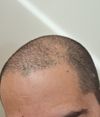
Hair regrowth and gender transition using finasteride, estrogen, and spironolactone. Significant hair regrowth and personal transformation were achieved through hormone replacement therapy.
Maneup GHK-Cu peptide was used for hair loss, resulting in some hair growth in the receded hairline, but the new hairs were dry and split easily. Users discussed their experiences with this treatment.
The user has been using 1MG finasteride, 5% minoxidil, LLLT, and derma stamping for a year to improve hair density for a potential transplant. They are considering switching to dutasteride and are unsure whether to proceed with a transplant now or wait for more growth.
A group buy for hair loss treatments including Harmine 19a, TM5614, Abiraterone Acetate, and others. A compound, BMS-202, that can potentially reverse gray hair is also mentioned.
A 46-year-old man is using minoxidil, finasteride, and derma rolling for hair regrowth but is unsure of the results and considering a hair transplant. Many suggest he looks good bald and recommend continuing treatment or trying scalp micropigmentation.
A 26-year-old is experiencing hair thinning and has received conflicting diagnoses of androgenetic alopecia and telogen effluvium. They are considering treatments like dutasteride, oral and topical minoxidil, and are unsure whether to start treatment or pursue further diagnosis like a scalp biopsy.
A user shared their experience with a Long Hair DHI Hair Transplant, receiving 2,750 grafts. They plan to continue using Dutasteride and Topical Minoxidil post-surgery.
Scalp biopsies are crucial for diagnosing hair loss conditions like Diffuse Unpatterned Alopecia (DUPA) and retrograde hair loss, as treatments like finasteride and dutasteride may not be effective if other conditions are present. Combining PPAR-GAMMA agonists with retinoids could improve treatments for conditions like Lichen Planopilaris.
The conversation is about the delay in receiving updates on the HMI-115 phase 1 trial for hair loss. No specific treatments are mentioned in the conversation.
The user is considering a hair transplant to increase hair density after using finasteride and minoxidil for two years. They prefer a natural hairline and are unsure if a transplant is suitable for overall thinning.
A 57-year-old man uses a hair system, not a hair transplant, and likely had cosmetic procedures. Discussions include the effectiveness of hair systems and finasteride side effects.
The user has been using a hair loss treatment protocol including topical dutasteride, minoxidil with tretinoin, ketoconazole shampoo, microneedling, a laser cap, and vitamin D for 15 weeks, showing impressive progress. Feedback suggests continuing medical therapy for 12-24 months before considering a hair transplant.
A user created a free AI-powered hair transplant simulator to help visualize post-transplant results, seeking feedback and offering it as a tool for clinics. Users discussed its usefulness, limitations, and the requirement for email and phone verification to prevent abuse.
GHK-Cu peptide injections are discussed for hair growth, but users report mixed results and suggest focusing on DHT management first. Some users combine GHK-Cu with treatments like Minoxidil and Dutasteride, but emphasize its benefits for skin rather than hair.
A user experienced significant hair shedding and thinning 10 months post-hair transplant despite using minoxidil and topical finasteride. They are considering switching to oral finasteride or dutasteride and are also dealing with scalp conditions like seborrheic dermatitis.
The conversation discusses why the difference between donor and balding hair isn't studied more to find a cure for hair loss. Treatments mentioned include Minoxidil, finasteride, and RU58841.
A user did not respond to finasteride, dutasteride, and oral minoxidil for hair loss after four years of treatment and is considering scalp micropigmentation (SMP). Other users suggest the hair loss pattern may indicate alopecia areata and recommend seeing a dermatologist.
The user is considering a hair transplant at 25 after experiencing hair loss despite using finasteride, minoxidil, and recently starting dutasteride. They are advised to continue DHT blockers post-transplant to prevent further hair loss and are considered an ideal candidate for a transplant.
The user has high DHT levels despite using dutasteride, which may not be effective due to potential damage or spoilage. They are considering a hair transplant if DHT levels don't decrease after two years.
The user has been using oral finasteride for over a year and recently added GHK-CU for two months, seeing progress but seeking further improvement, especially on the hairline. They discuss sourcing GHK-CU, its effects, and the importance of third-party testing, while considering additional treatments like dutasteride and hair transplants for better results.
A person suspects their friend had a hair transplant instead of stem-cell injections due to a noticeably straight hairline. The discussion includes opinions on hair transplants, societal perceptions, and suggestions like using finasteride to maintain hair.
A 16-year-old is experiencing hair loss and is using minoxidil, finasteride, and plans to add RU58841, while considering other treatments like MK-677 and microneedling. Concerns are raised about the potential impact of these treatments on puberty and development.
The conversation discusses concerns that Anagenic's version of GT20029 might not be as effective or safe as Kintor's, with comparisons to issues faced by pyrilutamide. The chemical structure of the drug has been published.
The conversation is about treatments for androgenetic alopecia, focusing on hyperresponders. Treatments include Minoxidil, finasteride, RU58841, leg training, and cold therapy.
The user experienced significant hair regrowth over 10 months by using 1.5mg oral finasteride and minoxidil daily, along with weekly derma stamping, after a previous hair transplant and initial thinning. The conversation highlights the importance of using DHT blockers post-transplant to maintain results.
Whey protein isolate may worsen androgenetic alopecia (AGA) due to its potential to increase DHT levels, but finasteride use has helped maintain hair. Some users suggest avoiding protein supplements due to possible contaminants and additives that could affect hair health.