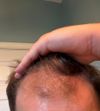
User shared 126-day progress using Fin/Min/Niz/Microneedling for hair loss. Others discussed microneedling depth, results timeline, frontal coverage, and switching to Dutasteride.
The conversation discusses affordable low-level light therapy (LLLT) products for hair loss, with users debating the effectiveness of red LEDs versus lasers. The original poster is already using finasteride, minoxidil, ketoconazole, and microneedling, and is seeking budget-friendly LLLT options to add to their regimen.
Hair cloning and new treatments like ET-02, Veradermics (vdphl01), and wound-induced hair neogenesis show promise but are not yet widely available. Current effective treatments include minoxidil, finasteride, and dutasteride, with early intervention being crucial for better outcomes.
A 28-year-old male reports progress in hair regrowth using 5mg Minoxidil and 0.5mg Dutasteride, noting improvement in the crown area. Another user shares similar positive results since starting treatment in January.
The user reported significant hair density improvement after 35 days using finasteride (1.25 mg) and 5% minoxidil. Some users are skeptical, while others believe the progress is genuine.
The user has been using dutasteride for 8 months and added oral minoxidil 1.25mg for 4 months, seeing improved hair density despite minor shedding. They are considering increasing the minoxidil dose to 2.5mg due to concerns about side effects.
The user is 6 months post-hair transplant and uses finasteride, oral and topical minoxidil, along with supplements like omega-3, vitamin D3, and zinc. They are experiencing significant shedding and seek advice on whether the medications are effective and if the shedding will settle.
The conversation discusses making oral minoxidil from minoxidil powder as a backup plan due to the unavailability of packaged oral minoxidil in Turkey. The user has a capsule machine and some chemistry knowledge but lacks professional equipment.
The user has been using 1.25 mg of oral minoxidil and finasteride since September 2025 to address diffuse hair thinning, and is considering trying a new shampoo. Other users suggest increasing the minoxidil dose and trying dutasteride.
A user is experiencing accelerated hair loss and is struggling to maintain their mohawk. They are seeking alternatives to Minoxidil and Finasteride, considering a hair transplant, and looking for a doctor in Berlin who can prescribe Finasteride.
A 28-year-old shared impressive hair regrowth results after 5 months using 1mg oral finasteride every other day, 2.5mg oral minoxidil daily, a 1mm dermastamp weekly, and daily scalp massages. The user is hopeful for continued progress.
The user is experiencing hair loss at the hairline and is using finasteride, but considering minoxidil due to lack of improvement. Replies suggest that minoxidil may be more effective for hairline maintenance, especially when used in combination with finasteride.
The group buy for CB-03-01, a topical anti-androgen for hair loss, was postponed and refunded due to issues with the product's form and solubility. The product, also known as Breezula, is an alternative to finasteride with fewer side effects, but its official release is delayed until 2021.
The user is using a hair recovery treatment with 0.5 mg dutasteride, 5 mg biotin, 5% topical minoxidil, and dermarolling twice a week. They are considering using a 1.5 mm dermaroller and red light therapy.
The conversation discusses using oral Minoxidil, topical Minoxidil with RU58841, Finasteride, and serioxyl for hair loss. It also asks for opinions on the effectiveness of other treatments like Setipiprant, Dutasteride, and Spironolactone, and thoughts on HMI-115 and GT20029 trials.
This user has had 5 months of progress with treatments of Hims Topical .3% Finasteride and 6% Minoxidil, which seem to be helping their hair loss. Other users have given positive feedback on the results.
The user shared progress pictures after a year of treating hair loss with 5% minoxidil, then a combination of minoxidil/finasteride topical, and microneedling at 1.5mm bi-weekly. They plan to switch to oral finasteride and more frequent microneedling at a shallower depth while continuing the current regimen.
PTD-DBM therapy for hair loss is being developed by Dr. Kang-Yell Choi, with human testing planned in South Korea. Some clinics in the U.S. offer PTD-DBM/valproic acid therapy, but it hasn't completed trials yet.
A 35-year-old man underwent a hair transplant with Dr. Patty at HairTran Clinic in Bangkok, receiving 4,037 grafts primarily for his crown area. The procedure cost 188,700 THB, with an additional 12,000 THB for optional PRP treatment, and he plans to update with progress pictures in a year.
Significant hair improvement was achieved using 1.25mg finasteride and 5mg oral minoxidil daily, with no side effects. The user increased the minoxidil dosage to 7.5mg after noticing minor thinning and plans to continue the routine.
The user is using 5% minoxidil, 1mg finasteride, and a 1.5mm dermaroller 1-2 times a week for hair growth, noting improved growth speed and density. They avoid applying minoxidil immediately after dermarolling due to skin irritation.
A user shared their 5-month hair loss treatment progress, using 1mg finasteride, daily GHK-CU injections, keratin/biotin/MSM supplements, Pura D’Or shampoo and conditioner, Ayurvedic oil, ketoconazole thrice weekly, and weekly microneedling with topical GHK-CU. The post includes progress pictures.
A 21-year-old is using 5mg Minoxidil, 1mg Dutasteride, Nizoral, and occasional microneedling for hair loss, seeing improvement on the left side of the scalp. They stopped microneedling due to scalp inflammation and are awaiting a dermatologist appointment.
The user has been taking oral minoxidil and finasteride for 10 months with no hair growth but no further hair loss. They are considering adding rosemary oil and possibly returning to a topical solution.
Oral minoxidil can cause a stronger heartbeat, which may lessen over time, but if it persists or worsens, consulting a professional is advised. Reducing the dose or switching to a topical form might help.
A 19-year-old using topical minoxidil and dutasteride reports significant hair growth and shedding. Minoxidil caused new facial hair growth, and the user hopes for thicker hair regrowth.
The conversation discusses the ineffectiveness of dutasteride in halting hair loss for the user and explores the potential of PP405, which works through a different mechanism. Suggestions include considering a biopsy to determine the cause of hair loss and exploring other treatments like RU58841.