Search
for
Sort by
Community Join
930-960 / 1000+ resultscommunity “You can’t regrow hair that’s gone.” HMB
User regrew lost hair using microneedling, minoxidil, finasteride, Nizoral, fish oil, and collagen peptide. Progress was slow but constant, and patience was important.
community Finasteride 1 mg,4 months progress result
A user experienced positive hair growth results using 5% topical minoxidil for a year and 1 mg finasteride for four months but is considering stopping finasteride due to persistent side effects like libido loss. Others in the conversation discuss similar experiences, suggest trying topical finasteride to reduce side effects, and emphasize the importance of overall health and lifestyle.
community Best affordable tretinoin cream available in the US
Tretinoin can enhance minoxidil effectiveness by boosting the sulfotransferase enzyme. Users suggest sources for affordable tretinoin and mention a product combining tretinoin with minoxidil.
community Ghk-Cu results for hair loss pics what’s ur thoughts?
The conversation discusses using GHK-Cu for hair loss, with one user suggesting subcutaneous administration for better control. The effectiveness of topical application is questioned due to a lack of reliable reviews.
community I guess I’m cooked. 1mg fin/day 2.5 mg min/day + topical tretinoin (3x/week) + topical min/day. June 2023-june 2025
The user has been using 1mg finasteride daily, 2.5mg minoxidil daily, topical tretinoin three times a week, and topical minoxidil daily from June 2023 to June 2025 without noticeable improvement in hair loss. Suggestions include switching to dutasteride and increasing oral minoxidil to 5mg daily, but concerns about long-term health effects are raised.
community Galenic lotion. Science behind the components
A user is considering a hair loss treatment lotion containing minoxidil, adenosine, caffeine, melatonin, and azelaic acid, questioning the interaction between caffeine and adenosine receptors. Another user suggests adding a topical anti-DHT ingredient like spironolactone, noting it should not be taken orally by men.
community What happened to that drug that kills dht receptors in your scalp
A new therapy aimed at destroying DHT receptors in the scalp is still in early trials and may take at least 5 years to become available. A sugar-like solution similar to Minoxidil is also in early testing stages and not yet commercialized.
community Did pre-tests before starting finasteride, turns out I have abnormally high estrogen
A 23-year-old with high estrogen levels is considering starting finasteride for hair loss and plans to use a low dose topical treatment while also seeking to lower estrogen levels. They will consult an endocrinologist for further guidance.
community switching to Kirkland Min from Online Pharmacy min?
The user is considering switching from an expensive topical hair loss treatment containing 8% Minoxidil, 0.3% Finasteride, Retinoic Acid, and Hydrocortisone to a cheaper Kirkland brand Minoxidil. They are concerned about the effectiveness of the lower concentration and the absence of additional ingredients.
community So basically we will know the efficacy of HMI-115 in 3 months after the phase II study concludes in China?
Hair loss discussion mentions HMI-115 efficacy in 3 months after Phase II study. Users discuss treatment effectiveness and mention massive regrowth in previously bald areas.
community Is Vitamin B6 + Pyridoxine the same as P5P? Want to use it to reduce my Prolactin.
The user is considering using P5P to reduce high prolactin levels and is questioning if oral minoxidil could be contributing to the issue. They are also debating whether to switch from oral to topical minoxidil.
community 23M losing ground very after seeing improvements
A 23-year-old male was using 0.5 mg of dutasteride daily, 10% minoxidil twice daily for 4-5 months then once daily, and vitamin D for a month for hair loss treatment but saw a decline in results. It's suggested that the decline may be due to reducing minoxidil application to once a day and a doctor's visit is recommended for further advice.
community KX-826 , a small change in the pipeline
KX-826 is undergoing trials for hair loss treatment, showing similar effectiveness between 0.5% and 1.0% dosages, with mild side effects compared to finasteride. Users discuss combining KX-826 with other treatments like minoxidil and clascoterone for better results.
community cb-03-01 research chem (winlevi/clascoterone cream)
The user is considering using CB or clascoterone for hair loss, potentially as an alternative to RU. They're also contemplating asking a dermatologist for topical clascoterone cream to apply to their temple.
community VDPHL-01 is Overrated and Ridiculous. This is just Oral Minoxidil.
VDPHL-01 is essentially a slow-release oral minoxidil, which is already known to work for hair growth. The formulation includes other ingredients like Medrogestone, Valproic acid, Setipiprant, and Cetirizine, but their effectiveness and necessity are questioned.

community Seeing tiny black hairs after using topical minoxidil
The user noticed tiny black hairs after using 5% topical minoxidil for 1.5 months and is unsure if it's due to the treatment. Another user suggests continuing minoxidil for at least 6 months and mentions that combining it with tretinoin and finasteride may improve results.
community Tried Fin/Min..Gave me bad sides..what options do I have now?
The user experienced heart palpitations from using Fin (0.1%) and Min (10%) and is seeking alternatives. Options suggested include PRP or Mesotherapy, with a recommendation to try topical Fin without Min.
community What blood test to do before starting fin?
A user is considering starting finasteride for hair thinning but is concerned about side effects like low libido and gynecomastia. They plan to consult a dermatologist and are advised to test DHT, testosterone, and estradiol levels.
community Alfatradiol anyone? Anyone added it to their regimen and found it helps?
Alfatradiol helps reduce hair shedding and itching, and is effective for mild hair loss. Users combine it with treatments like fluridil, minoxidil, and sometimes consider finasteride.
community Help in figuring out carrier for topical finasteride!!!
OP is considering using Stemoxydine or the Ordinary Multi Peptide Hair Serum as a carrier for topical finasteride, avoiding minoxidil due to palpitations. They plan to crush finasteride pills into a 30 ml solution.
community Overwhelming amount of anti-androgens
The conversation discusses the effectiveness of anti-androgens for hair loss, with a preference for topical treatments like RU58841 over oral options due to better scalp concentration and fewer side effects. Topical finasteride at 0.1% may provide some results, especially when combined with a topical androgen receptor antagonist like RU58841.
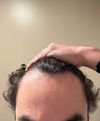
community M20 with Hair Loss - Clascoterone an Option?
A 20-year-old is experiencing hair thinning and is considering Clascoterone and Minoxidil as treatments, avoiding finasteride due to concerns about fertility and hormones. A suggestion was made to use Clascoterone for local DHT targeting and combine it with Minoxidil for maintenance and regrowth while avoiding systemic side effects.
community My doctor lowered my Minoxidil from 5mg to 2.5mg
A user discussed their doctor lowering their Minoxidil dose from 5mg to 2.5mg, expressing concerns about losing hair gains. Other users suggested that 2.5mg is safer long-term and speculated the doctor is being cautious about side effects.
community Fin/Min/Biotin Progress Pics and symptoms
The user is experiencing progress in hair growth using 0.5mg Finasteride, 5mg Minoxidil, and 1mg Biotin daily but is also developing gynecomastia. They plan to continue the treatment for six months unless the side effects worsen.
community Retinol or tretnoin with minoxidil?
Combining retinol or tretinoin with minoxidil for hair loss treatment. Users discuss the potential benefits and effectiveness of this combination.
community Copper peptides: went to a free dermatologist checkup, She told me to get Copper peptides, does it work?
Copper peptides may help with hair thickness and health, but their effectiveness in reducing DHT is uncertain. Minoxidil is being used, but finasteride is not available due to legal restrictions; ketoconazole shampoo is recommended for managing Malassezia-related issues.
community Thoughts on my dermatologist only giving me methionine for AGA?
A dermatologist prescribed methionine with vitamins for hair loss, but the user is doubtful and plans to seek finasteride in France. The user is unsure why finasteride or minoxidil wasn't prescribed, suspecting concerns about side effects or strength.
community Huge Group Buy is Now Live with New and Existing Treatments
A group buy for hair loss treatments including Harmine 19a, TM5614, Abiraterone Acetate, and others. A compound, BMS-202, that can potentially reverse gray hair is also mentioned.
community Apparently azelaic acid inhibits DHT, what are the side effects?
Azelaic acid is discussed as a DHT inhibitor with no reported sexual side effects, but its effectiveness and absorption as a topical treatment are questioned. The user is interested in azelaic acid due to concerns about finasteride affecting penile health.