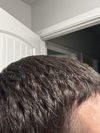
The user is seeking alternative hair loss treatments due to side effects from finasteride and minoxidil. They are inquiring about the availability of gt20029 from u-lab.
Dutasteride effectively stops hair loss but can cause side effects like sexual dysfunction, muscle mass changes, and testicle shrinkage. Adjusting the dosage may help manage these side effects, but long-term health effects remain a concern.
A person considering finasteride for hair loss checked their hormone levels before starting treatment. They are concerned about the potential increase in estradiol and its effects, as well as the impact on their sex hormone-binding globulin (SHBG) and free testosterone levels.
A user shared their baseline bloodwork results before starting Finasteride 1mg every other day, seeking comparison with others who have done similar tests. They are interested in any changes observed after beginning the treatment.
A user is curious why their DHT levels are not higher despite using 400mg of testosterone without finasteride, and wonders if zinc or GHK-Cu injections could be influencing this. Another user suggests that more testosterone typically leads to more DHT, but the user might be fortunate not to exceed normal DHT levels.
The conversation is about a user interested in participating in hair cloning clinical trials due to their fine hair and previous positive experience with clinical trials. They are seeking information on how to volunteer for such trials.
A 21-year-old is using finasteride and previously used minoxidil for hairline concerns, considering a hair transplant despite no visible balding. They are advised to continue finasteride as a preventive measure.
A user on finasteride for hair loss is considering topical dutasteride to further reduce scalp DHT and is using various other topicals as substitutes for minoxidil due to concerns about the safety of their cats and potential heart side effects from oral minoxidil. They are exploring whether a once-weekly application of topical dutasteride would be effective.
The user experienced hair loss after chikungunya and started PRF (platelet-rich fibrin) injections with injectable Dutasteride, noticing new hair growth. They are hopeful for continued improvement.
The user has severe diffuse thinning on the scalp and is using finasteride, topical minoxidil, dermarolling, tretinoin, and Nizoral without satisfactory results. They are considering a hair transplant but are concerned about the cost and the number of grafts needed.
The conversation suggests using a dropper to apply minoxidil to the scalp without force for a less messy application compared to sprays or other methods.
For early hair thinning, users suggest starting with finasteride alone and considering minoxidil later if needed. Some users advise against minoxidil due to long-term dependency, while others recommend scalp massages and alternatives like red light therapy.
A 24-year-old male using topical finasteride for hair loss is experiencing thinning despite treatment and has high estrogen levels. He is seeking advice on whether high estrogen could be causing hair loss and how others with high estrogen levels have addressed it.
Using PRP or Exosome treatments alongside Finasteride/Dutasteride and Minoxidil may not significantly enhance results. Dutasteride and oral Minoxidil are considered more effective options.
The user is experiencing hair shedding despite using finasteride, minoxidil, and microneedling, and is concerned about the non-linear progress. Other users share similar experiences, suggesting shedding is normal and cyclical, with some recommending less frequent microneedling.
The user has been using a hair solution with 0.3% finasteride and 5% minoxidil, along with microneedling, but is experiencing more thinning on one side. Suggestions include checking application techniques and ensuring microneedling is not overdone.
A 31-year-old man with a long history of hair care is considering a hair transplant and is worried about using Finasteride and Minoxidil due to potential side effects. He seeks advice on whether to start Finasteride before or after a transplant and how to test for sensitivity to these treatments.
A 22-year-old is using a hair loss treatment protocol including dutasteride, microneedling, 10% minoxidil, 0.1% finasteride topical, a healthy diet, and a hair multivitamin. Users discuss the effectiveness of microneedling and the intensity of the treatment.
Hair loss treatments, specifically, discussing the effectiveness and side effects of finasteride, minoxidil, and RU58841 in various microdoses. It also includes an updated graph which provides information on how different doses affect DHT levels, scalp skin and serum androgen levels, as well as hair count.
Finasteride users cannot donate blood due to potential risks to pregnant women, requiring a one-month cessation before donating. Dutasteride requires a six-month deferral, and topical applications are not restricted.
RU58841 is preferred over finasteride for blocking DHT on the scalp, especially for those with aggressive MPB. Creatine is associated with increased hair shedding, even when using RU58841.
The user switched from finasteride to DIY dutasteride mesotherapy and topical minoxidil due to side effects. They report improved well-being and no hair loss worsening after stopping finasteride.
User asks about CB-03-01 for hair loss treatment and mentions using topical Dutasteride, TRT, and considering mixing CB-03-01 with Fluridil. CB-03-01 is sold at a high price, and user considers trying a lower concentration.
Topical finasteride results in plasma levels 100 times lower than oral finasteride, potentially reducing systemic side effects. Users report similar efficacy with fewer side effects, suggesting a preference for topical application.
The conversation discusses an extensive hair loss treatment regimen including dutasteride, GT20029, RU58841, pyrilutamide, minoxidil, microneedling, ketoconazole shampoo, and experimental compounds. The user humorously describes their approach as a comprehensive strategy to combat hair loss while maintaining hair growth.
A trial of verteporfin for hair regeneration, with pictures comparing the original and current status, as well as links to other resources discussing the efficacy of this treatment in combination with Minoxidil, Finasteride, and RU58841.
The user shared their experience with CB-03-01 (Breezula/Clascoterone) for hair loss, noting reduced shedding and improved hair appearance but experiencing significant sleep disturbances and low energy due to HPA axis suppression. They decided to stop using it due to these side effects and are waiting for GT20029 as an alternative.
An 18-year-old male using minoxidil and finasteride is experiencing increased hair loss, possibly due to a shedding phase from finasteride. He also takes zinc, magnesium, calcium, and vitamin C, and is concerned about hair loss from his temples.
A user is discussing making a DIY topical finasteride solution using ingredients like water, alcohol, propylene glycol, ethanol, and glycerin, and is concerned about the stability of the mixture. Other users suggest that the solution will work and discuss the importance of propylene glycol for drug dissolution and factors like temperature and light affecting finasteride stability.