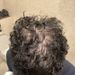
A 16-year-old has been using Minoxidil for a year, which initially worked but is now less effective as hair loss continues. They are concerned about ongoing hair loss and are unable to use finasteride.
The conversation discusses a live stream presentation on Pelage PP405 for hair regrowth, with skepticism about its effectiveness compared to minoxidil. Some users express doubt and suggest sticking to proven treatments like minoxidil, finasteride, and RU58841.
High-dose Lysine and Histidine supplements caused curly/kinky hair and shedding due to Elastin dysfunction. Minoxidil, white tea, and dark grape juice were mentioned as treatments to inhibit Elastase and mimic Lysyl Oxidase.
Blocking DHT is not a complete solution for hair loss; instead, altering the scalp's response to DHT may be more effective. Topical finasteride and minoxidil are current treatments, but future approaches may involve bioengineering, gene therapy, and inflammation control.
Dr. Tsuji and Riken announced a hair cloning cure with a 98.9% success rate, expected to be released in 10 years. Users expressed hope and skepticism about the affordability and timeline of the treatment.
The post discusses the potential of upregulating aromatase to treat hair loss, suggesting that increasing CCL2 levels through Vitamin D or microneedling might help. The user questions why microneedling doesn't work for everyone, especially those with advanced hair loss.
The conversation is about hair loss treatments, including minoxidil, finasteride, dutasteride, tretinoin, stemoxydine, adenosine, castor oil, baicalin, and bimatoprost. The user shares their nightly and morning routines and discusses the role of DHT in hair loss.
The post is an update on the user's hair loss journey. They have a strong hair follicle that has remained unaffected by hair loss for almost 3 years. The user is starting finasteride and using ketoconazole, alfatradiol, and oral castor oil for hair maintenance.
The user is using a hair loss treatment regimen including Avodart (dutasteride), oral minoxidil, LLLT caps, vitamins, and ketoconazole shampoo, and is considering adding dermarolling and RU58841. They are experiencing unwanted body hair growth from minoxidil and are planning for a future hair transplant.
The user has been using Him's chewable finasteride (1.2mg) and minoxidil (3mg) for six months and has seen some hair regrowth but is considering switching to dutasteride. Others advise patience, suggesting that significant results often take 12 to 18 months, and recommend sticking with the current treatment longer before making changes.
Transplanting mice skin to humans is not feasible due to immune rejection, but some suggest genetic modification or immune suppression could make it possible. Xenograft hair transplants are discouraged.
A user successfully improved their hairline after 15 months using topical minoxidil and dutasteride. Some commenters question the necessity of treatment given the user's original hair condition, while others support early intervention.
A user shared their 1.5-year progress after a FUE crown transplant, using dutasteride and oral minoxidil, which improved their hairline and stabilized hair loss. They experienced dizziness from topical minoxidil but had no side effects from finasteride, dutasteride, or oral minoxidil.
A user shared their 16-month hair regrowth progress using finasteride, oral minoxidil, and micro-needling, noting significant improvement and minor side effects like stray ear hairs. Consistency in treatment was emphasized, with noticeable hair improvement within the first 6 months.
The conversation discusses that dutasteride may be more effective than finasteride for frontal hair loss due to higher 5ar Type 1 enzyme activity in that area. Some users question the validity of this information, while others confirm it with additional sources.
Minoxidil alone is not effective for significant hair regrowth; combining it with finasteride or dutasteride is necessary. Additional treatments like hair transplants, microneedling, or oral medications are recommended for better results.
Dutasteride may inhibit androgen receptors in addition to reducing DHT, potentially explaining its effectiveness over finasteride for hair loss. Concerns about its impact on muscle growth are debated, with some suggesting no significant effects.
A 23-year-old male experienced significant hair and beard growth using oral minoxidil (2.5mg) and finasteride (1mg) daily, with some initial shedding and a reduced libido. The treatment also unexpectedly thickened his eyebrows.
The post and conversation are about hair transplant tips and experiences. The user emphasizes thorough planning, essential packing, and post-surgery care, and regrets not using finasteride earlier.
The conversation is about a user expressing concerns over the safety of a new drug called Pyrilutamide (also known as KX-826) for hair loss. The user will only trust the drug if it's permitted by EU regulations and sold by a reputable company.
The conclusion of this conversation about hair loss is that genetics play a significant role in determining hair loss, and specific treatments like finasteride may not be effective against certain compounds like masteron and trenbolone.
Hair follicles can potentially produce more hair strands with treatments like Minoxidil and finasteride. Notable improvements in hair density are possible, but achieving multiple strands per follicle is uncertain.
A peptide from Japanese water chestnut fruit may help with hair loss by suppressing DHT's effect on hair follicle cell death, potentially serving as a finasteride alternative. The treatment's effectiveness and safety in humans remain uncertain.
The user is considering blood tests to understand their receding hairline and is exploring brewer's yeast for its biotin content. They have been using topical Minoxidil, biotin, collagen, and microneedling, but are avoiding oral Finasteride and Dutasteride.
A user's hair loss journey and their results from 9 months of the treatments finasteride and minoxidil, as well as biotin supplementation. People discussed side effects, taking progress pictures, and providing support to other users on their own journeys.
The user had high DHT levels after 8 months on dutasteride, questioning the drug's authenticity. They got dutasteride from a legitimate source and will update on progress.
Breezula is a potential hair loss treatment, but recent updates suggest it may not be as promising as initially thought. Some users express skepticism about its effectiveness based on past results.
The user shared progress pictures of their hair growth after using finasteride, oral minoxidil, and undergoing a hair transplant with 4,200 grafts in Istanbul. They reported thicker hair and noticeable crown regrowth, with no side effects from the treatments.
Male pattern baldness and diffuse thinning can both be forms of androgenetic alopecia (AGA), and it's important to consult a doctor for proper diagnosis. Treatments like Minoxidil, Finasteride, and biotin are discussed, but their effectiveness varies, and side effects are a concern.