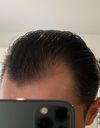
The conversation discusses hair thinning and treatments like Minoxidil, finasteride, and RU58841. The user is concerned about distinguishing between natural hair parting and actual thinning.
A user is experiencing hair regrowth after treating vitamin D, B12, and B9 deficiencies, noticing some improvement after 9 months. They are unsure if further improvement will occur or if they have reached the end of progress, with a possibility of androgenetic alopecia (AGA) being suggested.
An 18-year-old has been using 5% topical minoxidil for 2 months for hair loss, with a history of vitamin D deficiency and thyroid imbalance. Users suggest starting finasteride and blocking DHT for androgenetic alopecia (AGA).
The user is 10 days post-hair transplant, pleased with the results so far, and hopes for increased density. The procedure was done at Vanity Hospital in Istanbul, with around 3400-3750 grafts used.
A 38-year-old female is experiencing hair loss despite having almost undetectable DHT levels after using dutasteride. Suggestions include checking for PCOS, thyroid issues, adjusting diet, considering the impact of birth control, and trying treatments like tretinoin, redensyl, retinol, and minoxidil with derma stamping.
Vitamin D deficiency can hinder hair recovery, and addressing it may help with hair loss. Hair loss may result from various issues like excess DHT, vitamin deficiency, or scalp inflammation.
User experienced hair loss since 16, used Fin, Minox, and Nizoral with success but stopped due to side effects. Now using Pur D'or shampoo, Rogaine foam, scalp massages, volumizing spray, and dermarolling for hair maintenance.
A 21-year-old underwent a hair transplant with 1100 grafts and uses oral minoxidil and topical dutasteride to maintain hair. They experienced side effects with oral finasteride but not with their current regimen.
The conversation is about a female seeking advice on using bicalutamide for female pattern hair loss (FPHL) and considering switching from pumpkin seed oil pills to a stronger treatment. She is looking for dosage information to discuss with her dermatologist.
Exosomes combined with fractional picosecond laser treatment were effective in treating androgenetic alopecia and promoting repigmentation in white hair patches. The role of exosomes in hair repigmentation, particularly in conditions like poliosis, is not well-studied.
A 57-year-old man uses a hair system, not a hair transplant, and likely had cosmetic procedures. Discussions include the effectiveness of hair systems and finasteride side effects.
A 21-year-old shares their one-year progress using finasteride for hair loss, experiencing initial shedding but eventual regrowth, especially on the crown. They consider switching to dutasteride due to continued hair loss at the front temple and mid-scalp areas.
A 33-year-old female with androgenic alopecia experienced alopecia areata patches after PRP treatment. She is seeking others' experiences with PRP worsening alopecia areata.
The user is using minoxidil, finasteride, dermarolling, and other treatments for hair regrowth, showing promising results in the temple area. Despite some skepticism, there is optimism about potential improvement.
The user is experiencing excessive hair thinning and is unsure of the cause. They are seeking opinions on treatments like Minoxidil, finasteride, and RU58841.
The conversation discusses GT20029 as a potential cure for hair loss and includes information on specific treatments used. Minoxidil, finasteride, and RU58841 are mentioned as related treatments.
Finasteride is effective for DHT/AR-driven hair loss but not for chromosome 20-driven cases, where treatments like minoxidil, prostaglandin analogs, and low-level laser therapy may be more beneficial. Genetic testing can help determine the underlying cause of hair loss to tailor treatment effectively.
A user suggests that deeper microneedling with Verteporfin injections might help regrow hair in areas with scar tissue, alongside a DHT blocker. Another user explains that hair loss might be due to reduced Wnt/β-Catenin signaling and suggests that treatments like Minoxidil, Finasteride, and microneedling could potentially reverse it.
Injectable GHK-CU and BPC157 were discussed for hair loss, but users did not notice significant hair changes. BPC157 was noted to help with shoulder issues.
The user experienced hair thinning in the middle of their head despite using finasteride and minoxidil and having a hair transplant. They are concerned about the thinning and considering shaving their head, while being advised to continue treatment and manage stress.
FCE 28260 (PNU 156765), an under-explored 5α-reductase inhibitor, showcases promising results in research by Giudici et al., outperforming well-known treatments like Finasteride in reducing the conversion of testosterone to DHT. Its superior efficacy, demonstrated through lower IC50 values in both natural and human recombinant enzyme studies, suggests it could offer more effective management of DHT-related conditions. Additionally, its lower molecular weight hints at better potential for topical application, potentially offering advantages in treating conditions such as androgenic alopecia. Despite its potential, it has not advanced in development, possibly due to financial limitations, leaving its therapeutic prospects and side effect profile largely unexplored.
The conversation discusses hair loss treatments, focusing on a new slow-release oral minoxidil compared to topical minoxidil and finasteride. The results show that twice-daily dosing of the new treatment is slightly more effective than once-daily, but concerns about cost, side effects, and the accuracy of reported results remain.
PP405 is a new hair growth stimulant different from Minoxidil, currently in phase 2 trials. Users discuss its potential, safety concerns, and the long wait before it might be available.
The user experienced hair thinning and was diagnosed with alopecia incognito and male pattern baldness. They are using minoxidil, finasteride, and dutasteride scalp injections, reporting gradual improvement with no side effects.
Pelage Pharmaceuticals announced positive Phase 2a trial results for PP405 in hair loss therapy. The conversation discusses the delay in publishing full results and the need for further trials and approvals.
PP405 is a potential hair loss treatment that may activate dormant hair follicles, but there are concerns about its effectiveness, cost, and side effects. Users discuss treatments like minoxidil, finasteride, and RU58841, expressing skepticism about PP405's long-term success and accessibility.
The conversation is about finding a clearnet vendor for clascoterone, also known as Winlevi, for hair loss treatment. The user is seeking recommendations via direct message.