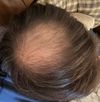
User reports 12-week progress with HIMS spray, Minoxidil, micro-needling, and biotin. Notable baby hairs on crown and temples, hoping for further improvement.
The post is about a user's progress in treating hair loss using HIMS FIN/MIN spray and dermarolling. One user suggests taking the 1mg finasteride pill instead of using the topical spray, while another warns against microneedling every day.
PRP treatment for hair loss shows some evidence of effectiveness, with HT surgeons using it post-op to promote growth. Microneedling is mentioned as a cheaper alternative.
L. reuteri, a probiotic, is being explored for its potential benefits in treating androgenic alopecia, possibly enhancing finasteride's effects and reducing inflammation. The user combines this with finasteride, oral minoxidil, and other supplements, noting some improvement in hair loss.
The user is treating hair loss with dermarolling, a laser helmet, scalp massages, and Nizoral. They stopped using minoxidil and finasteride and are considering pumpkin seed oil and sulforaphane.
Hair loss treatments discussed include Minoxidil, Finasteride, RU58841, ass hair transplant, topical Viagra, castration, and transitioning to female. A user mentions an experimental drug called M4U-5 (Mousteride) that turns you into a mouse.
A 33-year-old male is documenting his hair regrowth progress using minoxidil, red light therapy, copper peptides, and micro-needling, with noticeable improvement in hair thickness and coverage. He plans to add a topical finasteride/minoxidil spray and aims for a shadow on his scalp rather than a full head of hair.
The user experienced noticeable hair regrowth using topical minoxidil and a dermaroller within a month. They are advised to consider DHT inhibition for lasting results.
Rhamnose may promote hair growth and pigmentation, suggesting it as a potential hair loss treatment. The conversation discusses its potential alongside known treatments like Minoxidil, finasteride, and RU58841.
PP405 shows promise for hair regrowth, with new hairs observed in 66% of patients in just 27 days. The discussion also mentions Minoxidil, finasteride, and RU58841 as potential treatments.
A new hair loss treatment, PP405, is moving from phase 2A to 2B in clinical trials, sparking discussions about its potential to regrow dormant hairs and its impact on existing treatments like Minoxidil and finasteride. Some users express skepticism, while others are hopeful about its future effectiveness.
Pp405 is discussed as a potential hair loss treatment, with humorous suggestions about rectal administration for increased effectiveness. Users joke about unconventional methods and express willingness to try anything for hair regrowth.
Microneedling combined with minoxidil and finasteride shows significant hair regrowth, though opinions on its effectiveness vary. Some users report substantial benefits, while others highlight the need for more research and consistency in application.
The conversation discusses interest in participating in PP405 trials for hair loss treatment, with users expressing uncertainty about eligibility due to location. Participants are eager for updates and willing to pay for shipping if trials are limited to America.
The user is experiencing irritation from using PG with RU58841 and is seeking alternative solutions like K&B in the UK. They report redness, itchiness, and flaky skin from the current treatment.
Hair loss discussion includes Amplifica, a new treatment by Dr. Rassman and Dr. Plikus using molecules from hairy moles. No progress updates mentioned.
High frequency ultrasonography and HR-MRI can help identify hair shedding causes like inflammation and fibrosis. The conversation discusses the potential of using these technologies to evaluate treatments like Verteporfin for hair regeneration.
New hair loss treatments PP405 and VDPHL01 are discussed with skepticism and hope, alongside existing treatments like minoxidil and finasteride. Users express frustration over limited progress since the 1980s but remain cautiously optimistic.
The user experienced positive hair growth results using microneedling with rosemary and mint oil, without Minoxidil, Finasteride, or RU58841. They switched from a dermaroller to a microneedling pen and targeted different scalp areas weekly.
PP405, a potential hair loss treatment, is facing delays in releasing Phase 2 results, causing frustration among users who compare it to past failed treatments. Despite skepticism, some remain hopeful about PP405's future, while others discuss alternative treatments like Clascoterone and its expected market release.
miR-205, a tiny RNA, can stimulate hair growth by softening aging hair follicle stem cells in mice. Future tests aim to see if this can work in humans.
The user experienced significant hair regrowth after one year on male-to-female hormone replacement therapy (HRT) and nine months using minoxidil and finasteride. They noted a reduction in body hair and attributed much of the hair regrowth to the addition of minoxidil.
GHK-Cu peptide injections are discussed for hair growth, but users report mixed results and suggest focusing on DHT management first. Some users combine GHK-Cu with treatments like Minoxidil and Dutasteride, but emphasize its benefits for skin rather than hair.
The user shared minimal results from using JXL-069 for hair loss, noting a slight lengthening of vellus hairs and plans to switch to a prodrug variant due to limited effectiveness. They also mentioned using finasteride and minoxidil, which have plateaued in results.
The conversation discusses using a combination of redensyl, capixyl, and procapil (RCP) for hair loss, with some users also mentioning minoxidil and finasteride. Users shared mixed experiences, with some suggesting "RevivHair Max Hair Stimulating Serum" for better results, while others reported no noticeable effects from using products like The Ordinary Multi-Peptide Serum.
RU58841, a potential hair loss treatment, was not commercialized due to marketability issues and lack of long-term safety data. Concerns about its formulation and delivery methods further complicate its use.