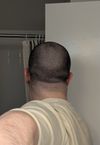
The user is treating hair loss with dermarolling, a laser helmet, scalp massages, and Nizoral. They stopped using minoxidil and finasteride and are considering pumpkin seed oil and sulforaphane.
The user stopped using finasteride and RU58841 and is considering CB-03-01 for androgenic alopecia but is concerned about the cost and effectiveness, especially at a lower dose than in clinical trials. They are also using minoxidil, micro-needling, and nizoral shampoo but are unsure about the correct application method for CB-03-01.
, you can find it online with a script
This user was discussing their progress with hair loss treatments including 5mg oral Minoxidil and combining 3mg oral Minoxidil with MTF HRT. They also discussed side effects of increased body hair in other parts of the body.
A 28-year-old has been using oral dutasteride 0.5 mg, topical minoxidil 5%, and Cafune shampoo for 104 days with positive results and is considering adding microneedling. No side effects from dutasteride have been reported.
A 24-year-old shares progress on hair regrowth after 3 months using 2.5mg oral minoxidil, 0.5mg dutasteride, and scalp injections of dutasteride, minoxidil, and vitamins every two weeks. They are uncertain if the improvement is due to actual regrowth or just longer hair.
The user does not respond well to minoxidil and is seeking an alternative to Tretinoin to upregulate sulfurtransferase activity for hair loss treatment. No specific alternative treatments were mentioned.
A US federal judge ruled that using patients' stem cells for medical treatments is not under FDA jurisdiction, potentially speeding up development of stem cell-based hair loss therapies. Some users are optimistic about increased research and development, while others express skepticism about the ruling's impact on safety and efficacy standards.
The user is using Dutasteride 0.5 mg, Minoxidil 5%, and Microneedling for almost 5 months to address hair loss. They are considering a hair transplant for the front and crown areas due to thinning and a high hairline.
User regrew lost hair using microneedling, minoxidil, finasteride, Nizoral, fish oil, and collagen peptide. Progress was slow but constant, and patience was important.
FCE 28260 (PNU 156765), an under-explored 5α-reductase inhibitor, showcases promising results in research by Giudici et al., outperforming well-known treatments like Finasteride in reducing the conversion of testosterone to DHT. Its superior efficacy, demonstrated through lower IC50 values in both natural and human recombinant enzyme studies, suggests it could offer more effective management of DHT-related conditions. Additionally, its lower molecular weight hints at better potential for topical application, potentially offering advantages in treating conditions such as androgenic alopecia. Despite its potential, it has not advanced in development, possibly due to financial limitations, leaving its therapeutic prospects and side effect profile largely unexplored.
Yunce Medical, a Chinese company, is developing hair multiplication technology similar to Stemson Therapeutics, with potential for quicker availability due to favorable regulations. Users express skepticism and hope for future advancements in hair loss treatments.
A user is seeking help to purchase and ship Alpecin DMG to the United States due to issues with eBay sellers. They prefer Alpecin DMG over minoxidil because of concerns about minoxidil's effects on insulin production, as they have diabetes.
Hair loss treatments discussed include Fluridil, Minoxidil, Stem, Niz, Viviscal, Broccoli Sprouts, and Derma. One user claims most treatments are ineffective, while another supports Eucapil.
A user shared their positive experience with hair regrowth using minoxidil, hormone replacement therapy, and cyproterone acetate during their male-to-female transition. Another user discussed their successful hair transplant after transitioning and using finasteride, highlighting the challenges of hair loss and regrowth during transition.
The user reported significant hair regrowth after one month using Cécred edge drops, microneedling, and finasteride, despite skepticism from others. They had previously tried minoxidil, finasteride, PRP, and other treatments with limited success.
The user has been using topical finasteride and minoxidil for about 5 months and feels progress on the back of their head has stalled, while the front and top look good. They are considering whether to let their hair grow out despite feeling the contrast is awkward.
GHK-RU58841 is used for hair loss, with positive results when combined with finasteride, stemoxydine, redensyl, and alfatradiol. Users report effectiveness after adding finasteride.
The user used finasteride but stopped due to side effects, then used topical minoxidil for 13 months, and later added KX826/pyrilutamide for 8 months. They experienced shedding after starting pyrilutamide and use minoxidil and KX826 once daily.
The user is concerned about hair loss despite taking finasteride and has a hair transplant scheduled. They experience scalp itching and burning, which hasn't been relieved by various treatments, and another user suggests using ghk-cu & ahk-cu serum and Koshine kx-826/pyrilutamide for relief.
User asks about CB-03-01 for hair loss treatment and mentions using topical Dutasteride, TRT, and considering mixing CB-03-01 with Fluridil. CB-03-01 is sold at a high price, and user considers trying a lower concentration.
Copper peptides, specifically GHK-Cu, are discussed as a potential addition to hair loss treatments, possibly working synergistically with Minoxidil to convert vellus hair into terminal hair. The effectiveness and credibility of copper peptides are questioned due to the lack of widespread discussion and potential conflict of interest from the product's creator.
Hair mesotherapy with dutasteride is popular in Europe and can be effective, especially when combined with oral dutasteride. Some users suggest using topical dutasteride with microneedling as an alternative, though it may be painful.
Clascoterone 5% topical solution is effective and safe for long-term use in treating male pattern hair loss. Cosmo Pharma aims for EU and US approval, with a potential US release in late 2027 or early 2028.
A 26-year-old male with grade 3 hair loss is using 2.5 mg oral minoxidil, 1 mg finasteride, 5% minoxidil, ketoconazole shampoo, and kLM d3. He plans to post progress pictures every 6 weeks and is seeking suggestions.
The conversation discusses organizing group buys and tracking progress for Kx-826 Pyrilutamide, a hair loss treatment. Participants express optimism about upcoming results and concerns about self-reporting bias.
The conversation is about a person considering participating in a study for Clascoterone, a topical cream for hair loss, and seeking advice on potential side effects. They have mild hair loss and are not currently using other treatments like finasteride.
EDHARRINGTON's journey to regrow his hair using finasteride, topical minoxidil, and micro-needling treatments over 4 years, with others commenting their support and admiration for his results.
User reports hair loss improvement with twice-weekly 0.25mg Fin, twice-weekly Min, weekly 0.5mm microneedling, and daily massages. Unconventional regimen contradicts typical advice but may reduce side effects.
The conversation is about finding a clearnet vendor for clascoterone, also known as Winlevi, for hair loss treatment. The user is seeking recommendations via direct message.