Search
for
Sort by
Community Join
990-1000 / 1000+ resultscommunity Topical bimatoprost or latanoprost
OP is considering adding topical bimatoprost or latanoprost to their hair loss treatment, which already includes oral minoxidil, and is seeking reliable sources for these products. Users discuss the effectiveness and sourcing of these treatments, with some using bimatoprost for both hairline and eyelashes, and others planning to use latanoprost mixed with finasteride.
community People who apply peppermint oil, rosemary… how frequent?
The conversation is about the frequency of applying peppermint oil and rosemary for hair loss and what carrier oil is best to use. People are sharing their results from using these treatments.
community Topical Exosomes w derma roller??
The conversation discusses using topical exosomes with a derma roller for hair loss. Users also mention minoxidil for treatment.
community Ru vendor? Looking for a cheaper source
The conversation is about finding a cheaper source for RU58841, with a suggestion to use Chemyo. One user suggests that RU58841 may not be necessary.
community Making topical Fin without Minoxidil
A user is asking if they can make topical finasteride using just water or isopropyl alcohol, as they don't have access to minoxidil or other ingredients. They have 1mg finasteride pills and are seeking advice on how to use them topically.
community Clinical Trial: N-Acetyl-Cysteine for Treatment of AGA in Men
N-Acetyl-Cysteine (NAC) is being explored for treating hair loss, but users report mixed results. Some also mention using Quercetin and Resveratrol without significant hair improvement.
community Custom topical from Rootsbyga.
A user received a custom topical treatment for hair loss from Rootsbyga, which includes minoxidil and possibly other ingredients to enhance its effectiveness. The initial test cost $120, and the monthly topical costs around $70, with concerns about long-term use of steroids like hydrocortisone.
community PP405 (Everychem 3HP) Anecdotes - Please assemble and share your story
PP405 (Everychem 3HP) may help with hair regrowth, with mixed user experiences. Users often combine it with minoxidil and finasteride, but there are concerns about its efficacy and side effects.
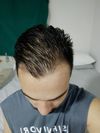
community Is Dut enough or should I add Min?
The user is considering adding minoxidil to their current dutasteride treatment to recover lost hair, particularly in the temple areas. Other users suggest that minoxidil is necessary for better results, with one user sharing their positive experience using a combination of minoxidil, dutasteride, and other treatments.