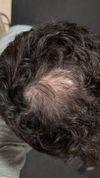
The conversation is about organizing hair regrowth results using a standard format in a single post for easier access. Treatments mentioned include oral minoxidil, oral finasteride, and dermarolling.
A user shared their experience with a second hair transplant by Dr. Gokhan Gur, focusing on the midscalp and crown with 1849 grafts. Their current treatment includes dutasteride, finasteride, oral and topical minoxidil, and Nizoral shampoo.
The conversation is about someone's three-year experience with irregular derma rolling, Minoxidil, and Redensyl for hair loss, hoping to thicken areas with fine hair.
Microneedling, ketoconazole, and tretinoin are discussed as hair loss treatments, with tretinoin favored for its long-term benefits and potential to turn minoxidil non-responders into responders. Microneedling is recommended for initial use, ketoconazole for dandruff, and tretinoin for continuous use due to its skin benefits.
Body hair transplants may look better if kept very short. People with limited donor regions or waiting for Verteporfin or FAK Inhibitors could consider this option.
The conversation is about hair regrowth using topical minoxidil, microneedling, and vitamin supplements. The user is hesitant to use DHT blockers like finasteride due to concerns about hormonal side effects.
Oleic acid and microneedling are being explored for hair regrowth, but results are mixed. Addressing DHT and fibrosis is crucial, with treatments like finasteride, minoxidil, and scalp massage also discussed.
Hair transplant recipients are concerned about whether dormant follicles are permanently damaged by incisions, but some believe undamaged follicles could still regrow if a treatment like PP405 is effective. Opinions vary on the impact of transplants on original follicles, with some suggesting treatments like finasteride can help regrow hair.
Injectable GHK-CU and BPC157 were discussed for hair loss, but users did not notice significant hair changes. BPC157 was noted to help with shoulder issues.
The conversation is about using a topical serum for hair loss with ingredients like finasteride and minoxidil, and the option to exclude retinoic acid and hydrocortisone due to concerns about long-term effects. One user prefers using only finasteride, avoiding minoxidil and retinoic acid, and plans to remove hydrocortisone in future orders.
The conversation is about hair regrowth treatments, including ketoconazole, vitamins, fish oil, collagen, pumpkin seed oil, rosemary, and dermal rolling. Users suggest trying finasteride and intense weight training to enhance results.
The individual has experienced a sore, stiff, and itchy scalp with hair loss for 4.5 years, and has noticed increased thinning and miniaturized hairs, especially at the temples. They have tried ketoconazole shampoo without success and are considering finasteride for treatment.
The user had a hair transplant in 2021 with 1600 grafts and is currently using finasteride, minoxidil, biotin, and collagen. They are considering another transplant in Turkey to address a bald spot and improve coverage in the front and middle.
The conversation discusses microneedling techniques and the use of Minoxidil, copper peptides, EGF, FGF, ceramides, and hydration serums to enhance hair growth. It explores optimizing scalp conditions and the potential benefits of various compounds in conjunction with microneedling.
Microneedling for hair loss, discussing whether to continue after achieving desired results. Concerns about scalp inflammation and advice to research further are mentioned.
The post discusses a successful hair loss treatment involving a hair transplant, finasteride, and minoxidil. The user underwent a 2000 graft hair transplant at the hairline in a clinic in Sweden.
A 31-year-old has been using finasteride, dutasteride, and oral minoxidil for hair loss. They noticed a sudden triangular thinning patch on their scalp and are seeking advice, questioning if it could be medication-related.
Eleven days after a hair transplant, the user has removed all scabs and plans to resume Oral Dutasteride and Oral Minoxidil. They will also start using a serum provided by the clinic and are sharing progress and clinic information privately to avoid negative comments.
Derma-stamping can damage the scalp if done incorrectly; use 0.5-1.5 mm needles and avoid pressing too hard. It can enhance Minoxidil absorption when done weekly, with results visible in 3 to 6 months.
The user has seen positive results after 16 months of using topical Finasteride/Minoxidil, microneedling weekly, and Tretinoin for hair loss. There are no reported side effects, and the user advises that the effectiveness of microneedling depends on the pressure applied.
Significant hair regrowth was achieved using RU58841, minoxidil, and microneedling during a high-dose steroid cycle. The user reported no side effects from RU58841 and plans to continue the regimen.
A user shared their experience with oral minoxidil and finasteride for hair loss, taking 7.5mg of minoxidil and experiencing excessive hair growth all over their body without major side effects. Some users suggested lower doses for safety, while others shared their own experiences with hair growth in different areas and side effects.
A 35-year-old male experienced significant hair improvement using microneedling, finasteride, minoxidil, and keto shampoo. He adjusted his microneedling routine for better results.
The user experienced significant hair regrowth using minoxidil, microneedling, and estrogen, leading to a need to tie their hair back. They attribute the success to estrogen suppressing testosterone, alongside their routine of minoxidil, microneedling, and supplements.
Hair loss is linked to scalp fibrosis and tension, which result from chronic mechanical stress and androgenic signaling. Treatments include blocking androgens with finasteride, promoting hair growth with topical minoxidil, and improving scalp mobility through exercises.
A user shaved their transplanted hair during quarantine and shared positive results after one year, using Minoxidil 5%. They had 1,500 hairs transplanted via the DHI method with no visible scarring.
The user changed their hair loss treatment in October/November, experienced increased shedding, and now sees no new hair growth, with a worsening condition and a possible bald spot. They also have severe seborrheic dermatitis, which may be affecting their scalp and hair loss.
The user has been using Minoxidil, finasteride, and a dermaroller for a year with little effect on hair loss. They are considering a hair transplant and are questioning the number of grafts needed and the feasibility of transplanting onto a partially bald scalp.
A user shared their 5-month progress in treating hair loss using HIMs topical finasteride and minoxidil, micro-needling with a 1.5mm needle, and RU-58841. The post includes progress pictures showing improvement from a NW7 hair loss stage.
A person with hair loss due to seborrheic dermatitis saw improvement after treating the condition and using 5mg oral minoxidil, topical minoxidil, collagen, biotin, and vitamins. They are asking if the progress is real, and others have noted the oral minoxidil as a significant treatment.