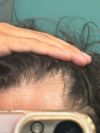
User seeks participants for Verteporfin group buy. Verteporfin, FDA approved, may regenerate hair follicles and sweat glands through heavy microneedling.
The conversation discusses using hair follicle dermal papilla exosomes for hair loss treatment. It inquires about purchasing options for this treatment.
Increased Malassezia and Cutibacterium in the scalp microbiome are linked to higher sebum production and inflammation in androgenetic alopecia (AGA). Treatments include ciclopirox shampoo, benzoyl peroxide shampoo, clobetasol propionate, calcipotriol, minoxidil, finasteride, and dutasteride.
Finasteride and dutasteride can cause psychiatric side effects like depression and suicidal thoughts in some users, especially those with a history of mental health issues. While some users experience positive hair growth results, others face severe psychological effects, raising concerns about their safety and the need for careful monitoring.
A 26-year-old from the UK is experiencing increased hair thinning despite using dutasteride and topical minoxidil. They are considering additional treatments like ketoconazole shampoo, oral minoxidil, and possibly RU58841, while seeking advice on managing side effects and exploring other options.
A user experiencing diffuse thinning since age 18 describes their hair as unhealthy, dry, thin, and hard, with texture changes cycling between good and bad every few weeks. They are not on any medication, only taking vitamins and supplements.
Hair loss affects confidence, with discussions on treatments like finasteride, minoxidil, and RU58841. Emphasis is placed on self-acceptance and building confidence beyond appearance.
Hair loss sufferers becoming hyper aware of shedding, and the various treatments available for reducing shedding. The conversation also discussed differentiating between shedding and balding, as well as the potential side effects from using certain treatments.
Hair loss treatments include finasteride, minoxidil, microneedling, dutasteride, CB-03-01, RU-58841, and experimental options like KY-19382 and stem cell therapy. Some treatments are considered ineffective or risky, such as ketoconazole, PRP, and low-level laser therapy.
The conversation discusses potential vitamin deficiencies leading to hair loss, with a focus on Vitamin D and iron. Some individuals are using finasteride and minoxidil for hair loss, while others consider vitamin supplementation due to deficiencies.
A user's experience with hair loss treatments such as finasteride, ketoconazole, and oral minoxidil that have not yielded any results; other users suggest shaving the head or getting a wig, while others offer additional advice such as seeing a dermatologist, checking thyroid levels, switching to dutasteride and adding needling, and trying stemoxydine.
The user has been dealing with hair loss for 10 years, worsened by psoriasis, and uses minoxidil and finasteride. They seek advice on managing psoriasis and hair loss, with suggestions to see a dermatologist, try different shampoos, and be patient.
The user is experiencing severe hair loss due to gut malabsorption and is seeking advice on nutrient testing and supplementation. They have low Vitamin D and Ferritin levels and are asking for recommendations on additional nutrients and blood tests to consider.
The user is considering a hair transplant and is using topical finasteride, minoxidil, antiandrogens, ketoconazole shampoo, and serenoa repens. They are deciding between surgeons Dogan Turan and Bruno Pinto, and are concerned about the technique and potential complications due to diffuse hair loss.
The person is experiencing sudden hair loss for six months and treatments like dutasteride, minoxidil, and vitamins are not working. Another person suggests the hair loss might not be androgenetic alopecia but could be telogen effluvium or an inflammatory condition.
The user is experiencing hair shedding after using minoxidil and is considering switching to dutasteride while planning to increase their oral minoxidil dose. They also use nicotine pouches, Vyvanse, and GHK-Cu, and have noticed thicker eyebrows and lashes from oral minoxidil.
How little the average person knows about hair loss and how it can be an unfairly stigmatized issue, even by people with little knowledge of it themselves. Some specific treatments that were discussed include finasteride, RU58841, dutasteride, minoxidil, pyritinol, dermarolling, and diet/lifestyle changes.
After a second session of Platelet-Rich Plasma (PRP) treatment for hair regrowth, the user is experiencing increased shedding of thick and dark hairs and is concerned about whether this is temporary. They are seeking others' experiences with PRP, specifically regarding the duration of shedding and eventual positive outcomes.
The user has been using finasteride and minoxidil for over three years, switched to oral minoxidil, and recently started dutasteride and dermarolling but still experiences thin hair. They are seeking suggestions for improving their hair condition.
The mechanism of Androgenic Alopecia and practical applications of treatments like Minoxidil, Finasteride, RU58841, dermarolling, scalp massages, anti-fungals, progesterone, estrogen, PPAR-γ activators, reducing oxidative stress, and scalp exercises. It explains why DHT is important in AA and how other factors might be involved such as hypoxia, increased DKK-1 expression, morphological changes to the scalp, skull growth during childhood/puberty, and blood flow.
TE (telogen effluvium) is often misunderstood and is triggered by severe stress or trauma, not minor daily inconveniences. Most hair loss cases are due to male pattern baldness (AGA), and treatments like Minoxidil and finasteride can help.
A 21-year-old male with a thyroid condition noticed his hair thinning uniformly without a receding hairline. He is considering using a 5ARI to prevent further baldness if he starts TRT.
A 36-year-old man with androgenetic alopecia suspects copper and zinc deficiencies may be accelerating hair loss and is supplementing copper to address this. He is also monitoring blood sugar levels due to previous prediabetes concerns and plans to test for insulin resistance.
Hair loss progress pictures can be misleading due to differences in lighting, hair length, and wetness, making it hard to accurately assess changes. Treatments mentioned include minoxidil and finasteride, with some users expressing skepticism about their effectiveness.
A 25-year-old with AGA experienced hair thinning and dandruff, stabilized with topical finasteride and minoxidil but saw minimal regrowth. They seek advice on styling and consider oral minoxidil and microneedling for denser hair.
The conversation discusses interest in peptides for hair loss, specifically mentioning ahkCU and ghkCU. A user is considering adding ghkCU to their treatment regimen.
The conversation discusses a new model for understanding androgenetic alopecia (AGA), linking it to dietary and lifestyle factors similar to PCOS, and highlighting the role of DHT, vascular damage, and inflammation. Treatments mentioned include Minoxidil, finasteride, and RU58841.
The post discusses a user's 6-month progress using topical finasteride (0.08%) and minoxidil (5%) once a day, combined with scalp micropigmentation (SMP). The user hopes for improved hair growth as they let their hair grow out.
The user is concerned about having a straight, low hairline after a hair transplant and is unable to take finasteride due to high estrogen and prolactin levels. They have used minoxidil with limited success and are considering further transplants to lower the hairline, while others suggest the risks of using up donor hair too quickly.
A user plans to experiment with creating new hair follicles using methods like derma rolling, applying lithium chloride, tannic acid, and various other substances including caffeine, ketoconazole, and raspberry ketones. They also consider using anti-inflammatories, immunosuppressants, and DHT inhibitors to potentially improve results.