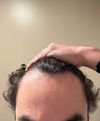
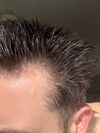
A user found that vitamin D deficiency was causing their hair loss and saw improvement after taking D3 supplements. Others noted that while vitamin D can affect hair, male pattern baldness usually requires treatments like finasteride.
The user experienced hairline recession despite using topical finasteride/minoxidil and is considering whether misapplication was the cause. They are exploring options after experiencing side effects from oral finasteride, including possibly returning to the topical formulation with adjusted application methods.
The user has been on finasteride for 8 months and minoxidil for 3 months, experiencing minor regrowth at the temples but overall worse hair loss, with constant shedding and itching. They are concerned about thinning on the sides and nape, questioning if it's diffuse unpatterned alopecia (DUPA) and seeking advice on what to do next.
The user shared their 6-month hair loss progress using topical minoxidil, oral minoxidil, finasteride, and microneedling. They noted thicker eyebrows and eyelashes but also increased body hair.
The conversation discusses the use of Verteporfin in hair loss treatment. It suggests that Verteporfin could potentially regenerate hair follicles instead of forming scars, providing an unlimited donor supply for hair transplants.
The user is managing hair loss with oral finasteride, recently switching to dutasteride, and topical minoxidil, but faces challenges due to seborrheic dermatitis. They seek advice on effective regrowth methods that don't worsen their condition, with suggestions including various shampoos like Vichy Dercos and ketoconazole.
A new topical treatment, PP405, shows promising results for hair regrowth, potentially outperforming existing treatments like finasteride and minoxidil. However, it may still need to be combined with DHT blockers for optimal results, and its long-term effectiveness remains uncertain.
Microneedling before a hair transplant may harden the scalp and affect blood circulation, potentially impacting graft growth. Some users report successful transplants after microneedling, while others advise caution and consulting with a surgeon.
A 30-year-old man with hairline recession is considering using 1% Clascoterone cream on his hairline while awaiting a 5% Breezula product. He has been using oral Minoxidil for four years but stopped using Finasteride due to side effects.
A user's progress with their hair loss treatment, which includes finasteride and nizoral, as well as the potential for using minoxidil; other users providing advice based on their own experiences; and others discussing how buzz cuts can make diffuse thinning look worse than it is.
Treatments for hair loss, including topical immunotherapy, regenerative treatments, laser and light-based therapies, oral supplements, intralesional steroids, and new drugs like finasteride and minoxidil.
The conversation discusses using USB microscopes for scalp photos and provides a link to an overview of trichoscopy. Treatments mentioned include Minoxidil, finasteride, and RU58841.
A 38-year-old female is experiencing hair loss despite having almost undetectable DHT levels after using dutasteride. Suggestions include checking for PCOS, thyroid issues, adjusting diet, considering the impact of birth control, and trying treatments like tretinoin, redensyl, retinol, and minoxidil with derma stamping.
People making comments on others' hair loss, and the different strategies used to deal with it. Treatments mentioned include finasteride and minoxidil.
The conversation discusses why CB-03-01, a potential hair loss treatment, isn't widely discussed despite evidence of its effectiveness and safety. Some users mention other treatments like melatonin, procianidin b2, and RU58841, debating their effectiveness and safety.
A 16-year-old diagnosed with male pattern baldness (MPB) was prescribed hair vitamins, vitamin D, a non-ketoconazole shampoo, and redenysl + serum, with a suggestion for GFC or IHRF treatments. Some users recommended minoxidil, ketoconazole, and derma stamping, while others advised against certain treatments until the age of 18.
Topical finasteride may have higher systemic absorption and lower efficacy when using a Propylene Glycol/Ethanol formulation compared to the hydroxypropyl chitosan (HPCH) formulation. The safety profile of topical finasteride relies heavily on the HPCH formulation, and using standard solutions might lead to different pharmacokinetics.
The conversation discusses hair loss treatments for a woman experiencing androgenetic alopecia and seborrheic dermatitis, with suggestions including low-dose oral minoxidil, dutasteride, and hormone replacement therapy. The user is seeking advice due to intolerance to spironolactone and topical minoxidil, and concerns about low testosterone and DHT levels.
The conversation discusses the potential for Verteporfin to reduce scarring, making hairline lowering surgeries more viable for men with mild hair loss. The user suggests that if scarring can be minimized, men might opt for hairline lowering instead of using grafts for other areas.
A user with hair loss is considering starting a business selling hair loss treatments, including RU58841, low-dose topical finasteride with optional minoxidil and tretinoin, and topical melatonin. They are also contemplating offering Pyrilutamide and other unique topicals, seeking feedback on interest and suggestions for their potential store.
A user experienced hair loss after taking chromium and alpha lipoic acid supplements but stopped shedding after discontinuing them. They noticed thinning around the temples and started dermarolling.
An 18-year-old male experiencing hair thinning and loss is using oral minoxidil, topical minoxidil, finasteride, and a multivitamin as prescribed by a dermatologist. He's having difficulty applying the topical minoxidil effectively due to his hair length, as he feels a lot of it stays on his hair instead of reaching the scalp.
A user named Mmherak is experiencing hair loss, with low B12 and iron deficiency, and has been recommended minoxidil and spironolactone by dermatologists. Other users suggest seborrheic dermatitis or dandruff, recommending treatments like Nizoral shampoo, ketoconazole, and Selsun Blue.
The user noticed hair thinning and has been using a treatment with minoxidil 2%, hydrocortisone butyrate, and 17 alpha estradiol for three months, seeing some regrowth. The user had dermatitis, now cured, which worsened the hair loss.
A 25-year-old woman is experiencing hair loss and is unsure if it's due to iron deficiency or female pattern baldness, as diagnosed by her dermatologist. She is considering using Minoxidil but is hesitant and seeks advice on whether increasing her iron levels could help.
A user who initially had positive results with oral finasteride, topical minoxidil, and microneedling for hair loss, but experienced side effects like fog and depression. After stopping and losing progress, they restarted with topical treatments and microneedling, reporting good results and no side effects.
The user is experiencing rapid hair loss despite using dutasteride, minoxidil foam, and ketoconazole shampoo, and is concerned about waiting longer to see results. A suggestion was made to consult a dermatologist for a tricoscopy and consider higher doses of dutasteride, while also checking for nutritional deficiencies and thyroid issues.
User losing hair for 3 years tried shampoos, minoxidil, derma rolling, finasteride, and Adegen's 15% minoxidil protocol without success. Another user suggests lowering finasteride dosage and trying topical non-steroidal anti-androgens like Fluridil, RU58841, and Breezula.
The user is experiencing diffuse hair thinning despite using finasteride and oral minoxidil, with no hairline recession or bald spots. Suggestions include checking for telogen effluvium, considering a JAK inhibitor for potential autoimmune issues, and conducting further tests to rule out other causes.