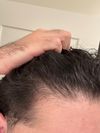
User started balding at 16 and began treatment at 18, using RU58841, minoxidil, derma rolling, and peptides. After 6 months, they experienced significant hair regrowth and are happy with the results.
The user experienced significant hair regrowth in 5 weeks using Minoxidil, Finasteride, Dutasteride, biotin, collagen, derma stamping, and a mixture of oils, leading others to label them a "hyper responder." Some users advised caution with microneedling frequency to avoid potential scarring.
A 7-month progress report of using finasteride and minoxidil, as well as keto dieting and derma stamping; the discussion also touched on RU58841 and its potential side effects.
OP uses microneedling, Minoxidil, and recently started RU58841 for hair loss. Users suggest adding finasteride, but OP is concerned about side effects.
A 20-year-old is experiencing hair shedding two months after starting 2.5mg oral minoxidil and topical finasteride. They notice thinning in areas where finasteride is applied but also see new baby hairs growing.
A user with alopecia areata is considering treatment options like injections or Olumiant but is concerned about cost and whether delaying treatment will lead to permanent hair loss. They are seeking alternative treatments that are more affordable for a college student.
The user experienced hair regrowth and thickening using 1mg oral finasteride, 3mg oral minoxidil, biotin, vitamin D, red light therapy, and microneedling. Some shedding occurred around 4-6 weeks into the treatment.
A user discusses using a serum called Dallixa, containing minoxidil-like and bimatoprost-like compounds, for hair loss and greying. The user's dermatologist advised against finasteride and suggested the serum might improve hair pigmentation.
Microneedling for hair regrowth, using a 1.0 dermastamp, is discussed with a focus on achieving slight redness without bleeding. Minoxidil is mentioned as an effective treatment when used after dermastamping.
User Tricky9555 tried various hair loss treatments for 8 months with no visible results. Others suggested considering a hair transplant, checking thyroid levels, and being patient for up to 24 months for potential results.
Osteopontin, a protein involved in hair growth on moles, may help with hair loss. However, it is also linked to Alzheimer's, cancer, and bone development, so caution is advised.
The user has been treating hair loss with Minoxidil, Finasteride, Derma stamping, Nizoral shampoo, and hair and nail vitamins for two months, experiencing mood swings from Finasteride that stabilized over time. They are seeking opinions on their progress.
The user has been using 1mg finasteride, 5% topical minoxidil daily, Nizoral shampoo, hair oils, and derma stamping at 1.5mm for hair loss. They plan to increase derma stamping frequency to 3-4 times a week for potentially better results.
The conversation discusses interest in participating in PP405 trials for hair loss treatment, with users expressing uncertainty about eligibility due to location. Participants are eager for updates and willing to pay for shipping if trials are limited to America.
The user experienced significant hair regrowth using topical finasteride/minoxidil and oral minoxidil/dutasteride, with some mild side effects that diminished over time. They plan to add microneedling to their regimen and have seen hair shedding cycles every six months, followed by thicker regrowth.
The user has been using finasteride, minoxidil, and a derma stamp for 3 months with significant improvement. They are now adding ketoconazole to their routine.
The user experienced significant hair shedding and dryness after starting minoxidil 8 months post-hair transplant, despite using finasteride and oils like castor and pumpkin seed oil. They expressed concern over the loss of density and the appearance of a failed transplant.
ShaneMorcs shared updated hair comparison photos and believes he's made progress. People commented on his improvement, asked about potential side effects, and inquired about the treatments he's using.
Three months into using Minoxidil, finasteride, dermarolling, tretinoin, and saw palmetto shampoo, the user is seeing baby hairs on their hairline and is hopeful they will thicken. Another user reports that their own baby hairs have been getting thicker and longer over time.
The user has been using finasteride since November 2024, topical minoxidil since January 2025, and oral minoxidil since December 2025, with some experimentation with microneedling and RU58841. Despite initial progress, the user experienced accelerated hairline recession and loss of density in recent months.
Zinc pyrithione and piroctone olamine are effective for reducing hair shedding, possibly more so than ketoconazole. There is a concern about zinc pyrithione shampoo interfering with minoxidil, but it's unclear if this is proven.
The user noticed increased hair loss over the past three years and is seeking advice. A suggestion was made to consult a dermatologist or trichologist and consider blood tests, particularly for vitamin D levels, to address potential androgenetic alopecia (AGA).
The user experiencing diffuse hair loss is using various treatments including RU58841, finasteride, minoxidil with tretinoin, anti-hair loss shampoo, and microneedling, and is considering adding peptides TB500, BPC157, and GHK-Cu. They have low growth hormone levels and are questioning its impact on hair loss, while another user suggests androgenic alopecia and androgens are likely the main cause of hair loss.
The user used microneedling, zinc, vitamin D3, biotin, magnesium, saw palmetto, pumpkin seed oil, and a DHT-blocker shampoo with biotin for hair loss. They are considering adding minoxidil due to stagnation in progress.
Hair loss treatments, specifically Minoxidil, Fluridil & Alfatradiol, Nizoral, Saw Palmetto, Hairmetto and Microneedling. The user mentioned they have seen a decrease in shedding and improvement in the quality/density of their hair since using this stack, but opted out of trying Finasteride due to potential side effects.
The user is experiencing hair thickening with oral minoxidil but notices worsening hairline and considers starting finasteride despite concerns about gynecomastia. They are also considering using Latisse on their hairline and seek advice on potential outcomes and experiences with these treatments.
A user's progress pictures showing visible hair growth results from taking Finast and Minoxidil, as well as using microneedling, Nizoral, and a multi peptide serum for hair density. The conversation also discussed how DHT is the cause of diffuse thinning.
A 23-year-old male is experiencing diffuse hair loss and miniaturization, possibly due to high IGE levels after using tofacitinib. He seeks advice and has not yet consulted a dermatologist.
The user has been using a topical spray containing minoxidil, finasteride, biotin, and ketoconazole for 5 months and noticed initial improvement but now feels progress has reversed. Another user reassures them that shedding is common and temporary, suggesting hair will likely improve in the coming months.