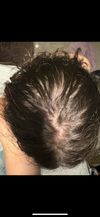
A user with low testosterone and mild gyno is considering finasteride for hair loss. Others suggest consulting an endocrinologist first and share experiences of finasteride not worsening gyno.
The user feels hopeless about hair loss despite using finasteride, dutasteride, minoxidil, and RU58841, and having a hair transplant. They are advised to maintain consistency in treatment, consider increasing dutasteride dosage, and explore topical solutions for better results.
Botox injections on the scalp may help with hair loss, as one small study showed improvement in 8 out of 10 subjects. Treatments mentioned include Minoxidil, finasteride, and RU58841.
A 15-year-old is experiencing uneven hair loss, with one temple receding significantly. They are considering using finasteride, minoxidil, or dutasteride to slow hair loss before visiting a dermatologist, and may consider a hair transplant in the future.
A woman experiencing hair loss and facial hair growth suspects PCOS or androgenic alopecia and is considering treatments like Rogaine, but is concerned about the cost. She has tried various hair care methods and is awaiting a hormone doctor appointment, while others suggest she may have a hormonal imbalance and recommend seeing a gynecologist or trying cheaper versions of Rogaine.
A 20-year-old feels defeated about hair loss and struggles with consistent minoxidil use due to ADHD. They plan to visit an endocrinologist for finasteride and consider shaving their head while continuing treatments.
The conversation humorously discusses inducing goosebumps to potentially reverse hair loss, with mentions of using cold therapy and muscle exercises. It also references other unconventional ideas like removing a testicle to lower DHT.
The user is considering using topical finasteride for thinning hair around the middle part, vertex, and crown, and is unsure if the whole scalp is thinning. Another user suggests oral finasteride is more effective than topical, and recommends consulting a dermatologist for proper treatment.
The user switched from finasteride to dutasteride while on TRT to protect against hair loss but is experiencing thinning hair. They are unsure if the issue is due to dutasteride or TRT.
After jaw surgery caused intense hair shedding and scalp itch, using pyrilutamide significantly reduced these symptoms. It's suggested to test pyrilutamide for authenticity before use, despite positive personal experience with the product from MV Supplements.
A user shared progress pictures 1.5 months after a hair transplant of 3500 grafts, using oral finasteride, topical finasteride, minoxidil, and vitamins. They are concerned about potential shock loss and the thinning appearance.
A user was prescribed a topical treatment for hair loss including Latanoprost, Minoxidil, Dutasteride, Hydrocortisone, and Progesterone, after using an oral Minoxidil and Finasteride combo without significant results. Concerns were raised about the long-term use of hydrocortisone, with suggestions to consult a doctor regularly.
The user reduced serum DHT by 60% using Advanced Trichology's natural DHT blocker but saw no improvement in hair loss. They are considering switching to finasteride due to its proven effectiveness in inhibiting scalp DHT.
The user added P5P (vitamin B6) to their shampoo to reduce scalp itch, which improved significantly. They have been using finasteride for hair loss but are exploring additional treatments like topical antiandrogens and prolactin inhibitors.
The conversation discusses the frustration of having excessive body hair while experiencing scalp hair loss, with mentions of treatments like finasteride, minoxidil, and hair transplants using body hair. Users share experiences and advice, noting the role of genetics and DHT in hair growth patterns.
The user is using a combination of hair loss treatments including dutasteride, minoxidil, RU58841, low-level laser therapy, ketokonozole, supplements, Viviscal, Nutrafol, microneedling, PRP, and scalp Botox injections, but is still experiencing hair shedding and thinning. Despite being on this regimen for two years, the user's hair condition is worsening, and they are seeking advice on what else they can do.
A user had a hair transplant 16 years ago and lost hair after stopping finasteride. They're now using a combination of treatments including oral dutasteride, topical and oral minoxidil, Pyrilutamide, and microneedling, and have seen improved density but are unsure if it's enough to grow their hair out. They also had a bad experience with scalp micropigmentation (SMP) and are considering redoing it.
The conversation discusses starting low-dose oral finasteride for hair loss, considering hormone levels and potential side effects like gynecomastia. Suggestions include using DIM for estradiol, vitamin B6 for prolactin, and lifestyle changes to optimize hormone profiles before starting treatment.
A user who has been using Pyrilutamide for 19 days, experiencing some hair thickening in the right temple and crown area but also having ball ache after microneedling; other users offer advice, caution and skepticism as to whether results can be seen in such a short time.
User discusses verteporfin for hair regrowth through "super microneedling" and preventing scarring. They mention a case of an old man regrowing hair after a head injury and suggest verteporfin could recreate this result.
A user's transformation from an accountant to a spartan with a full beard, discussing the potential of DUPA and alopecia areata, as well as treatments like vitamins, topicals, and natural treatments for potential regrowth.
The conversation is about a user concerned about hair thinning despite using finasteride, minoxidil, RU58841, and recently adding dutasteride. Most responses suggest there is no noticeable difference in hair loss, attributing concerns to paranoia, and recommend continuing the current treatment or adjusting expectations.
A South Korean company, Therazyne, has developed a promising hair loss treatment using a WNT chain surrogate that binds to Frizzled 7, with human follicle testing expected soon. Current treatments like minoxidil and finasteride are not seen as cures, and while optimism exists for future solutions like PP405, approval processes are lengthy.
The post discusses the theory that persistent dandruff in areas prone to hair loss could be a sign of hair follicles dying due to DHT, indicating balding. The responses vary, with some users noting improvements in dandruff and hair loss with treatments like Dutasteride, while others experienced hair loss without dandruff.
The conversation discusses using hair follicle dermal papilla exosomes for hair loss treatment. It inquires about purchasing options for this treatment.