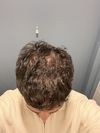
User "tresslessatbest" shares her experience with androgenic hair loss and treatments. She found success using men's Rogaine 5%, spironolactone, dermaroller, biotin, blackcurrant seed oil, prenatal vitamins, and Nizoral shampoo.
Hair loss may be linked to the TRPS1 gene and protein, not just DHT. Amplifica's AMP-303 targets mesenchymal stem cells and shows promise in treating hair loss, unlike Pelage's PP405.
The user "OP" is frustrated with hair loss despite using oral minoxidil, topical finasteride, and oral dutasteride. Other users suggest keto shampoo, lifestyle changes, and low light laser therapy.
The user is experiencing hair loss and confusion over conflicting medical advice, with treatments including minoxidil, finasteride, and topical corticosteroids. They are unsure about the necessity of a biopsy and the timing of using minoxidil, while also considering the impact of potential androgenetic alopecia and telogen effluvium.
A 33-year-old experienced hairline improvement using finasteride and minoxidil, later stopping minoxidil while continuing ketoconazole shampoo. Initial side effects included shedding, reduced libido, and anxiety, but these resolved, leading to a full hairline recovery.
The user is seeking opinions on whether their hairline changes indicate regrowth or hair loss, using treatments like Rogaine, finasteride, microneedling, and Nizoral. They mention inconsistent finasteride use, scalp massages, and lifestyle factors like caffeine, nicotine, stress, and high sugar intake.
A 28-year-old woman is struggling with Female Pattern Baldness and has tried various treatments, including Minoxidil and Spironolactone, without success. She feels frustrated with doctors' responses and is considering alternative treatments like light therapy but is losing hope in finding a solution.
A user shared their experience with hair loss, initially using finasteride and minoxidil without satisfactory results, and later switching to hair systems, which they plan to use indefinitely. The user and others discussed the positive reactions, maintenance, and normalization of hair systems for men.
The conversation is about hair regrowth using high-dose dutasteride, oral minoxidil, and microneedling. Users discuss seeing tiny hairs and hope they will become terminal, with advice to use derma rolling weekly for better results.
Hair multiplication or cloning is not available anywhere in the world. The conversation also mentions treatments like Minoxidil, finasteride, and RU58841 for hair loss.
PP405, a topical LDH inhibitor, has shown to stimulate hair follicle stem cell proliferation in humans with moderate hair loss. They are advancing to more detailed trials this year.
Early hair loss causes emotional distress, and common coping strategies like fitness and fashion are inadequate. Treatments like finasteride, minoxidil, dutasteride, hair systems, and scalp micropigmentation were tried but were unsatisfactory.
User experiences slow hair regrowth despite using finasteride, topical minoxidil, and supplements like biotin, zinc, and collagen. They seek advice on addressing overall slow hair regrowth.
The user is experiencing hair loss, possibly due to androgenic alopecia or telogen effluvium, and is considering treatments like Minoxidil, Finasteride, or RU58841. They also mention potential iron deficiency and sleep deprivation as contributing factors.
Hair loss journey of a 24-year-old man who tried Finasteride, RU58841, Dutasteride, and Minoxidil. Significant hairline recovery achieved after 18 months of various treatments.
The conversation discusses hair cloning progress and mentions treatments like Minoxidil, finasteride, and RU58841. Users also talk about hair transplants and their effectiveness.
The user is experiencing severe hair loss after starting Minoxidil 5% and is seeking advice, as their hair loss worsened following a second COVID infection. Despite normal hormone and vitamin levels, the user is considering additional treatments like Ketoconazole shampoo, massages, and low-level laser therapy.
The user experienced significant hair loss on the scalp, eyebrows, eyelashes, and pubic area, along with itchy, flaky skin and red patches. They have a history of eczema and dermatitis and suspect that stopping shampoo use and taking Ritalin may have contributed to the issue.
The conversation discusses the use of trichoscopy to predict hair loss patterns and inform treatment approaches. Treatments mentioned include minoxidil, finasteride, and dutasteride, with varying effectiveness based on gender-specific hair loss patterns.
User experienced hair loss due to anorexia and stress, leading to a difficult journey with wigs and self-esteem. Hair regrowth occurred with spironolactone, but recent hair loss returned, causing uncertainty and emotional struggles.
A user shared their long-term struggle with hair loss and various treatments, including Minoxidil, biotin, and dermarolling. They also discussed a disappointing experience with a hair health institute that provided dubious recommendations and expensive remedies.
A user is treating hair loss with Dutasteride, Minoxidil, RU58841, Derminator 2, Vitamin D, Biotin, and Zinc. After 6 months, there's no significant visual improvement, but the user feels less insecure about Retrograde Alopecia.
User is depressed about hair loss despite using topical minoxidil for 5 months and topical finasteride for 2 months, with no improvement. Others suggest trying oral finasteride, seeing a specialist for dandruff and oily scalp, and being patient.
A 28-year-old male using Tugain 10 minoxidil, Finpecia 1mg finasteride, Cipla Ketoconazole shampoo, and dermarolling 0.5mm weekly for 3-4 months is seeing some hair regrowth. Encouragement is given to continue the regimen.
The conversation discusses hair loss treatments, focusing on insulin resistance, microneedling with topical melatonin, and stress reduction. Users express skepticism about the advice, preferring proven treatments like minoxidil and finasteride, while some mention alternative methods like dermal incisions and verteporfin for reducing fibrosis.
A user is experiencing significant hair loss and scalp issues despite using Minoxidil, finasteride, and RU58841 since 2017. They switched to oral Minoxidil and are now on isotretinoin and topical corticosteroids for seborrheic dermatitis but continue to lose hair and seek advice on whether inflammation or treatment changes are the cause.
The conversation discusses GT20029 as a potential cure for hair loss and includes information on specific treatments used. Minoxidil, finasteride, and RU58841 are mentioned as related treatments.
A 16-year-old experiencing hair thinning noticed a shift from shedding long hairs to shorter hairs, while using Vitamin D, biotin supplements, ketoconazole shampoo, and improving diet. They are questioning if the short hairs indicate regrowth or androgenetic alopecia (AGA).
The user has tried various treatments for hair loss, including finasteride, dutasteride, and oral minoxidil, but is considering a hair transplant due to insufficient progress. Some users suggest that the treatments have at least stabilized hair loss, and recommend consulting clinics for a potential hair transplant while continuing medication.