Search
for
Sort by
Community Join
270-300 / 1000+ resultscommunity 09/23-05/26 fin oral and min top
The user shared progress pictures showing hair improvement from using oral finasteride and topical minoxidil between September 2023 and May 2026. Responses express amazement at the results.
community (30M) Hair transplant in Turkey 4200 grafts 15 months of progress
A user shared their 15-month progress after a hair transplant in Turkey, using 4200 grafts, topical Minoxidil, and Finasteride, and considering switching to oral Finasteride. They are mostly satisfied with the results but are contemplating further treatment for better density.
community 5 Month on Oral Min and Oral Fin
community Peak bald 2017. To a 2,000 FTE hair transplant without regiment last December. To now, 4 months later using fin, twice daily min 5%, and weekly .25 roll.
The user had a hair transplant with 2,000 grafts in 2017, and after four and a half months of using finasteride, minoxidil, derma rolling, and Boton shampoo, they are seeing hair regrowth including the return of their widow's peak. They are considering switching to RU58841 and a deeper derma rolling treatment.
community 30 M diffuse shining/bolding crown - stack
A 30-year-old with diffuse thinning and a balding crown is using a treatment regimen of a 2-in-1 pill containing finasteride, minoxidil, and biotin, along with various supplements. After two weeks, no side effects have been experienced, and updates with pictures will be posted monthly.
community March 22- August 22. Fin .5mg, min 5% once a day . 22 years old .
A user who has seen improvements in their hair loss after taking finasteride and minoxidil once a day for 5 months. Other users offered advice and support, with some cautioning about potential side effects of the treatments.
community 4600 FUT Hair Transplant 16 month post second surgery progress
The user had two FUT hair transplants with 4,600 grafts for increased density, costing about $11,000 each, and has been using oral minoxidil and finasteride for over five years without side effects. The results are natural-looking with no visible scarring, and the user finds the procedure valuable despite the cost.
community Fin transformation 6 months.Pretty excited for the 2 year mark
A 19-year-old male using 1 mg finasteride every two days for hair loss reports no side effects and believes maintaining his current hair condition is progress. Some users see no difference in hair regrowth, attributing changes to lighting.
community Who said GT20029 would be applied only few times per month?
The conversation discusses the safety and effectiveness of a hair loss drug, GT20029, and the possibility of infrequent application, with users hoping for once-daily use and speculating on the drug's duration of effect on the scalp. Specific treatments mentioned include Minoxidil, finasteride, and RU58841.
community 16 days. Topical Min 5% once a day • derma roller 0.25mm every day, 1mm once a week • Foligain Trioxidil shampoo (I let it rest for 10 minutes) • mix of supplements
The conversation is about a user's hair regrowth progress using topical Minoxidil 5%, a derma roller, Foligain Trioxidil shampoo, and various supplements like zinc, selenium, magnesium, B6, B7, saw palmetto, and D3 + K2. The user is seeking finasteride but faces prescription challenges in Italy.
community I'm 20 y.o. and losing hairs. Could you help me somehow?
A 20-year-old is experiencing hair loss and has tried Minoxidil, ketoconazole shampoo, dermarolling, Biotin, Selenium, Zinc, and a shampoo with various ingredients but is still losing hair. They had side effects from topical finasteride and are considering RU58841 but are concerned about past heart issues.
community I've been taking medicines for my hair loss at 18? Read description
A 22-year-old from India is using finasteride, Trichoton AT, and a multivitamin to address hair loss, noticing some regrowth. They are concerned about weight gain and the psychological effects of masturbation but find no strong evidence linking it to hair loss.
community TH07 by Triple Hair entering phase III trial
A new topical treatment, TH07, combining finasteride, latanoprost, and minoxidil, is entering phase III trials with promising early results. Some users express skepticism, noting the treatment uses existing products.
community 2500 grafts hair transplant with FUE. 1 year result by DR.KO from newhairclinic in korea.
A user shared their successful hair transplant experience with 2500 grafts by Dr. Ko in Korea, costing $8.7K, and mentioned using dutasteride and minoxidil post-surgery without side effects. The results were praised for looking natural, though some users questioned the graft count and photo authenticity.
community (MTF 35) 20 Months Feminizing HRT
A 35-year-old transgender woman experienced hair regrowth with feminizing HRT, adding dutasteride and bicalutamide, and plans a hair transplant for further improvement. Estrogen also improved skin appearance, and the user advises against cisgender men using feminizing HRT for hair regrowth.
community Fighting Fin!
Datwagg63 started taking finasteride for hair loss and supplements it with omega 3, vitamins, and a low-carb diet while lifting weights. InternationalBerry suggested adding minoxidil, as it's considered the second most effective treatment after finasteride.
community Early Hair Loss - Starting Fin (19M)
A 19-year-old experiencing early hair loss started using finasteride to address diffuse thinning, despite concerns about potential side effects. They also use T/Gel and OGX Thick and Full shampoo, and have a dermatologist appointment scheduled to explore possible allergies.
community 35M Hair transplant experience in TJ Mexico crosspost
A 35-year-old man shared his hair transplant experience in Tijuana, Mexico, choosing Artline for 5,000 grafts at a lower cost than U.S. clinics. He plans to use topical minoxidil and possibly microneedling for better results.
community AnagenInc says GT20029 is possible now
AnagenInc is ready to produce a hair loss treatment called GT20029 if there is enough demand. People are discussing combining it with other treatments like finasteride and minoxidil, and some are concerned about the legitimacy and safety of gray market products.
community M 20 taking 0.5 mg finasteride daily for 1 month will it even work for me ?
A 20-year-old is using 0.5 mg finasteride daily and 2% ketoconazole shampoo for sudden hair loss, noticing reduced hair fall after one month. Users advise patience, suggesting results may take 6-12 months, and some recommend considering additional treatments like minoxidil if needed.

community Using fin/min/dut and getting HT in December of 2024
The user is using finasteride, minoxidil, and dutasteride for hair loss, but stopped dutasteride due to side effects. They plan to have a hair transplant in December 2024 at Vanity Hospital in Istanbul, aiming for at least 4500 grafts.
community 24yr old student. 49 days(3rdFeb-24thMarch). Dates are below each pic
A 24-year-old uses microneedling, tretinoin, topical and oral minoxidil, and oral finasteride for hair growth, noticing baby hair growth and initial side effects that resolved. Another user shares a similar regimen, excluding finasteride.
community Where are we with GT20029 ? Realistic Timeline ?
GT20029 is anticipated to start phase III trials in Q3 2026, with potential public availability around 2029-2030.
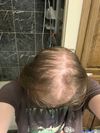
community 22m. Is it even worth it to try fin at this stage?
A 22-year-old is considering using finasteride for hair loss. The discussion involves evaluating the effectiveness of finasteride at this stage.
community When can we expect the next GT20029 update?
The conversation discusses the anticipation for updates on GT20029, a potential hair loss treatment. Users also mention using Minoxidil, finasteride, and RU58841.
community J.Hewitt to trial Hair Multiplication in Japan by end of 2019!
J. Hewitt plans to trial hair multiplication in Japan by the end of 2019. The technique was developed by German researchers at the University of Berlin and formed the company "TissUse."
community The hair I’ve kept (or lost?) over the last 20 years…
A 46-year-old man maintained his hair over 20 years using finasteride, dutasteride, and minoxidil, with plans for a hair transplant. He experienced some early side effects but found oral minoxidil improved hair thickness significantly.
community Mix topical finasteride with alfatradiol
The user wants to try using 0.025% topical finasteride every day by diluting their 0.1% topical finasteride with alfatradiol, and is asking if it's possible to mix them or if there are other options. They heard that alfatradiol might not be suitable for this purpose.
community Starting my journey after noticing thinning in crown and temples (M25)
Hair loss discussion; treatments include 0.5mg finasteride daily and 1.5mm dr pen weekly on scalp. Monthly progress updates planned.