Hair loss discussion includes Amplifica, a new treatment by Dr. Rassman and Dr. Plikus using molecules from hairy moles. No progress updates mentioned.
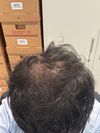
The user has been taking 1 mg of finasteride daily for four months and is questioning if they are experiencing hair regrowth, as suggested by their barber. Another user suggests taking better photos to assess the crown area more clearly.
A user had two hair transplant surgeries, using a total of 6850 grafts from the scalp, beard, and chest, costing around $20,000 USD, and is happy with the results, though the crown may not be as dense as the hairline. They experienced no scarring from the donor areas and noted that transplanted beard and chest hair are thicker and curlier.
Verteporfin shows promise in donor hair regeneration after 84 days. Combining Finasteride, Minoxidil, and Pyrilutamide with unlimited hair transplants is seen as a potential near-cure for hair loss.
The user is 2 months post-hair transplant with 6,000 grafts using the DHI method and is using oral finasteride, minoxidil, and vitamins. They are seeking feedback on their progress.
Corticosterone inhibits GAS6, affecting hair follicle stem-cell activity, with potential implications for stress-related hair loss. Ashwagandha and Vitamin K are suggested for reducing cortisol, but their effectiveness is debated.
A 42-year-old male shared his 1.5-year hair regrowth progress using 1.25mg finasteride daily and regular doses of minoxidil twice a day, and recently started using the Derminator 2. He also mentioned his battle with cancer and Cushing's syndrome, which affected his weight and hair.
The post and conversation are about skepticism towards a new hair loss treatment containing 2-deoxy-D-ribose, copper peptides, and exosomes, with concerns about the legitimacy of the product and its website. The treatment's effectiveness and authenticity are questioned due to lack of testing and transparency.
PP405 shows promise in treating severe hair loss, with 31% of users experiencing over 20% hair density increase in four weeks, faster than minoxidil and finasteride. Some users are skeptical about the results' significance and long-term efficacy.
The conversation discusses hair loss treatments, including minoxidil, finasteride, biotin, folic acid, zinc, micro-needling, niacin, and cipaxil, with the user preparing for a hair transplant. The user experiences side effects with topical finasteride and is hesitant to try oral dutasteride.
Whey protein may slightly increase hair loss in men with androgenetic alopecia (AGA) due to elevated IGF-1 and testosterone levels, but the effect is minimal compared to treatments like finasteride and dutasteride. Many users argue that whey protein's impact on hair loss is negligible and that maintaining a healthy lifestyle is more important.
Hair follicle regenerative therapy is being developed, with clinical trials planned in Japan, potentially allowing for hair cloning and eliminating the need for treatments like finasteride. If successful, the treatment could be available in Japan by 2025, but widespread access and affordability may take longer.
The conversation discusses the less impressive results of Pyrilutamide (kx-836) in phase 3 compared to phase 2, with a suggestion that a longer study might show more significant results. One user reports personal success with Pyrilutamide, experiencing no further hair loss and gradual regrowth.
A user named "Redbone2222" shares their positive experience with a hair transplant procedure of 2500-3000 grafts, along with the use of 1mg finasteride daily and 5% topical minoxidil. They express satisfaction with the results and believe that finasteride has been more effective for them than minoxidil.
A user experienced significant hair regrowth from Xeljanz after severe alopecia but can no longer afford it. They are seeking ways to obtain the medication despite its high cost and potential side effects.
A new hair loss treatment, KX-826, is being discussed as a stronger and safer alternative to RU58841 and finasteride. Opinions are mixed, with some users skeptical about its effectiveness and others considering it as part of their regimen.
Phase II for TDM-105795 for Androgenic Alopecia is set to begin in April 2023. The study aims to evaluate the efficacy and safety of TDM-105795 in male subjects.
The conversation discusses using shou wu chih or fo-ti/he shou wu for hair loss, with OP noticing stiffer beard and body hair. A user warns about potential liver damage from fo-ti and questions the effectiveness of alternative medicine.
A 19-year-old experiencing early hair loss started using finasteride to address diffuse thinning, despite concerns about potential side effects. They also use T/Gel and OGX Thick and Full shampoo, and have a dermatologist appointment scheduled to explore possible allergies.
The user started using topical minoxidil, oral finasteride, GHK-CU, and HGH in October, resulting in thicker hair and improved overall health. They experienced minor side effects like dehydration from HGH but reported benefits like clearer skin, better recovery, and muscle gain.
Various peptides are discussed for treating male pattern baldness, with some available for topical use like GHK-Cu and Ac-KGHK, while others remain in research stages. Users are interested in experiences and sourcing these treatments.
A 24-year-old had an FUE hair transplant in Liverpool at age 23, after starting finasteride at 20 to halt hair loss. The transplant involved 3000 grafts, and the user is satisfied with the results, noting increased confidence and no further hairline recession.
The conversation is about a user trying a new hair loss treatment, Ruxolitinib, alongside their existing regimen of finasteride, minoxidil, ketoconazole shampoo, and microneedling. They plan to apply Ruxolitinib to their temples daily for 1-2 months.
Bicalutamide and spironolactone are being compared for their effectiveness and safety in treating female pattern hair loss. The conversation seeks advice on which is better to use.
A user shared their 2-year results using only 0.5mg finasteride for hair loss, noting improvement after 8-10 months and no major shedding or side effects. They are 34 years old and have avoided using Minoxidil.
The user applies Rogaine foam, Toppik hair fibers, and Tresemme mousse to improve hair appearance and has restarted finasteride after a year off. They are considering a hair transplant and are working on self-esteem related to hair loss.
The user reports thicker and fuller hair after using finasteride, topical minoxidil, RU58841, and dermarolling for two years. Consistent lighting is noted as important for progress pictures.