Search
for
Sort by
Community Join
930-960 / 1000+ resultscommunity Skipped a week but still making Progress week 13 microneedling, min, tret, LLT, massages, Nizoral. NO FIN/DUT 40+ year old growing my hairline back.
A 40+ year old is regrowing their hairline using microneedling, minoxidil, tretinoin, low-level laser therapy, massages, and Nizoral, without using finasteride or dutasteride. They noted progress in hair growth below a birthmark, an area that hadn't seen growth since their teenage years.
community 1 year progress update on fin/min
community Peptides that Stop Hair Loss? | In-depth Literature Review Video
Peptides like TB500, KPV, GHK-CU, and BPC-157 are overhyped for hair growth with limited proven effectiveness in humans. Combining peptides with delivery methods like iontophoresis and sonophoresis shows promise, but many claims remain unproven.
community Setipiprant trial results
Setipiprant trial for hair loss failed, showing no difference between placebo and treatment. Discussion also noted placebo users reporting side effects.
community Soy Isoflavones and Capsaicin for Hair Growth
The conversation discusses using soy isoflavones and capsaicin for hair growth. It also mentions treatments like Minoxidil, finasteride, and RU58841.
community Genuine question about VDPHL01's long term safety that I haven't seen discussed here
Concerns about the long-term safety of VDPHL01, an extended-release minoxidil, due to potential risks similar to Cantu syndrome, were raised, highlighting the lack of monitoring for chronic connective tissue changes. The conversation suggests that while the treatment may improve hair growth, it could lead to issues not detected in short-term trials.
community Is this regrowth? Some before & after pictures. Fin (1mg) EOD Reduced scalp pain, You can check my profile for some better pictures, it’s been good or bad, I really don’t know. Let me know about this, Thanks in advance.
A user's progress in hair regrowth after taking finasteride (1mg) every other day, and the replies to the post offering support, advice, and encouragement.
community Groundbreaking complete hair regrowth wonder drug found!!!
A satirical post humorously discusses a fictional hair regrowth drug called PP405, with users joking about its effectiveness and bizarre presentation. The conversation includes humorous reactions and references to the absurdity of the content.
community New Hair Cloning Breakthrough! The hair loss cure is closer than ever!
A new hair cloning breakthrough suggests a potential cure for hair loss, though skepticism remains about its availability and cost. Users discuss the possibility of unlimited hair grafts for transplants and express hope for future developments.
community Hair Thickening and slight Regrowth (Ru58841, Fin, DUT, Minoxidil)
User experienced hair thickening and slight regrowth using RU58841, Fin, DUT, and Minoxidil. They plan to get a hair transplant in Turkey for further improvement.
community Everyone, reply with your stacks and rate your results from 1-10
community 14 Months Dut/Minox/Microneedling + 13 Months HRT
The user shared their hair regrowth journey using treatments like dutasteride, minoxidil, microneedling, tretinoin, Nizoral, silica, biotin, and hormone replacement therapy (HRT) with cyproterone and estradiol. They reported substantial hairline improvement and some crown thinning, with hopes for further progress.
community Most Underrated Hack for Hair Loss is Water
Filtered shower heads may improve scalp and hair health but do not affect male pattern baldness (MPB). Genetics and factors like DHT and scalp tension are more significant in hair loss.
community Fuck it. Everyone’s doing this shit and I live for giving people hope they didn’t have yesterday. Minoxidil + Finasteride for one year. (September 16,2021 – September 21, 2022). And I will keep going until I die. 🔥🔥🚀🚀 let me know what you think .
This user has experienced hair loss, and treated it with a combination of finasteride and minoxidil for one year. They have reported slight heart palpitations and headaches, which diminished after the third month of treatment.
community UK Shampoo recs - Piroctone Olamine
Piroctone Olamine at 1% is recommended for reducing scalp inflammation and encouraging hair growth. The user seeks recommendations for UK shampoos/conditioners containing this ingredient.
community Why do I have the feeling that this subreddit is flooded by Kintor employees?
Users discuss aggressive promotion of Koshine 826, suspecting Kintor employees are behind it. Concerns are raised about its effectiveness, with some preferring alternatives like finasteride and minoxidil.
community Hair Transplant (Feb 2024) Results
community What About my 3 months treatment of dut, min and biot
community Clascoterone 5% Delivers Strong Phase 3 Hair-Growth Results
Clascoterone 5% solution shows strong potential for hair growth, offering a new treatment for alopecia with minimal side effects. It blocks androgen receptors locally and may be available by late 2026 or early 2027.
community 11 months! Intensive and quality treatment. I have to say a big thank you to Minoxidil, and Propecia, and this wonderful sub... I'm 35 years old and my hair is back to 25 years old
A 35-year-old user shared their 11-month hair loss treatment success using Minoxidil and Propecia, noting their hair looks like it did at 25. Another user asked about the treatment, and the original poster confirmed using Propecia 1 mg and topical Minoxidil twice daily.
community DHT itch and sugar intake ! Anybody seen a link ?
Reducing sugar intake may lessen scalp itchiness associated with hair loss, even when using treatments like finasteride. Some users also report similar symptoms while on dutasteride.
community My 4100 grafts hair transplant surgery update
community 11 months on fin + min. Thoughts?
A user shared progress pictures after 11 months on finasteride and minoxidil, with intermittent microneedling. The community responded positively, noting significant hair regrowth and encouraging continued treatment.
community 9 month hairline progress (276 days of Fin, 75 days of Min)
Bishiop shares 9-month hairline progress using Finasteride for 276 days and Minoxidil for 75 days. Regimen includes daily Finasteride, topical Minoxidil, dermarolling, and specific shampoos/conditioners; experienced temporary side effects.
community RESULTS. Stick to the plan Fellas this is all about consistency
A user shared their hair regrowth progress, attributing success to a consistent routine using finasteride, hair growth oil, Hims shampoo, a derma roller, and 5000 mcg biotin pills. They emphasized the importance of representation for people with similar hair types and encouraged others to stick with their treatment plans.
community Signs of life. Ru, topical fin/min, mk677, micro needling
The conversation discusses using RU58841, topical finasteride/minoxidil, MK677, and microneedling as treatments for hair loss. MK677 is mentioned as a growth hormone that improves hair health and recovery from microneedling.
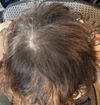
community Curious About Temple Baby Hairs Connecting After 5 Months Treatment
The user is pleased with their hair growth progress after 5 months of using Minoxidil, Finasteride, and RU58841, and is curious if the baby hairs at the temple will fully connect with the rest of the hair. It's uncertain if the connection will happen yet.
community Just shaved head to see scalp and...
community Dr Mehmet Demircioglu / Diamond Hair Clinic Istanbul, Turkey (9.5 Months Post-Op)
A user shared their positive experience 9.5 months after a hair transplant at Diamond Hair Clinic in Istanbul, Turkey, mentioning the use of dutasteride, vitamin tablets, and minoxidil shampoo. They expressed satisfaction with the procedure and would choose to do it again.