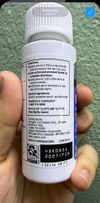
Fluridil, also known as Topilutamide or Eucapil, is discussed as a treatment for hair loss. It is noted as an androgen receptor antagonist, not a vasodilator.
The conversation discusses the potential of Verteporfin for hair regeneration and improving hair transplant surgery to leave no scars. Specific treatments mentioned include Minoxidil, Finasteride, and RU58841.
The conversation is about finding a solution for scalp inflammation related to AGA, with the user expressing frustration that Minoxidil and Finasteride do not address inflammation. The user has researched glucocorticoids and topical NSAIDs for reducing inflammation and seeks advice from specialists.
Verteporfin is discussed as a potential treatment for hair regrowth, but skepticism exists about its effectiveness in regenerating extracted hair follicles. The conversation also mentions the possibility of needing a hair transplant by 2028.
The conversation is about the lack of updates on GT20029, a potential hair loss treatment, and the user considering using dutasteride or RU58841 instead of minoxidil/finasteride due to the long duration of the latter treatments.
Verteporfin is being explored for its potential to improve hair transplant outcomes by reducing scarring and increasing donor hair follicles. There is skepticism about the results, with some claiming misleading presentation of evidence.
DutchFella1993 has been using a lotion with finasteride and minoxidil for hair regrowth with some success and is considering using ketoconazole shampoo daily to reduce scalp itchiness. There's concern about the harshness of daily shampooing and twice-daily lotion application, and one reply suggests that daily use of ketoconazole may damage hair and questions its effectiveness, while also noting that once-daily minoxidil application is sufficient.
The conversation is about choosing between gray market Pyrilutamide and the official Kintor version for hair loss treatment. Users share mixed experiences, with some finding both versions effective and others not seeing results.
Eirion Therapeutics is recruiting for phase 1 of ET-02 in Texas, which showed promising hair growth results in non-clinical studies. ET-02 demonstrated significantly more hair growth compared to Minoxidil.
Aminexil/Kopexil may help reduce hair loss by addressing perifollicular fibrosis in androgenetic alopecia, but it lacks the extensive clinical backing of finasteride and minoxidil. Some users find it effective, but availability and cost are issues, especially in the US where it's not FDA-approved.
A user is seeking advice on treating a chin scar with Verteporfin, noting that higher doses were more effective. Another user responds that they do not use it, without providing further explanation.
A discussion on the use of Verteporfin as a hair restoration treatment and whether there are any other doctors or clinics using it currently, aside from Dr. Barghouthi. Treatments such as Minoxidil, Finasteride and RU58841 were also mentioned.
The conversation is about someone inquiring if anyone has tried Olumiant or its active ingredient, Baricitinib, for hair loss, mentioning the cost and that they have ordered Baricitinib.
The conversation is about a user seeking help with hair regrowth treatments, specifically mentioning Setipiprant, Minoxidil, Finasteride, and RU58841. The user is trying to contact forum members for guidance on making and using these treatments.
User experienced hair regrowth after eliminating scalp itch with RU58841. Others discussed itch and hair loss connection, and effectiveness of combining RU58841 with 5AR inhibitors.
The user reported progress in hair loss treatment using oral finasteride, keto 2% shampoo, and vitamin D. They experienced reduced hair fall, fewer scalp issues, and hope for improved hair density.
The conversation discusses biannual SCUBE3 injections and microneedling as treatments for hair loss. Specific treatments mentioned include Minoxidil, Finasteride, and RU58841.
Koshine 826 (Pyrilutamide) is being used by several users to address hair loss, with mixed results on shedding and side effects. Some users report reduced shedding and no side effects, while others experience increased shedding and potential issues with libido and erectile dysfunction.
The conversation discusses the use of topical peptides ahk-cu and ghk-cu for hair loss. One user reported that while these peptides made their hair look thicker and improved scalp health, they did not notice significant hair growth.
PP405 is a safer alternative to JXL069 for hair loss treatment because it penetrates the skin effectively and degrades in the blood, avoiding systemic toxicity. JXL069, when forced into the body, can cause dangerous side effects like lactic acidosis due to its inability to degrade safely.
The post discusses using 2% ketoconazole shampoo as a competitive androgen receptor antagonist for hair loss, applied for 1.5 hours daily. The user questions its effectiveness and potential benefits compared to finasteride and minoxidil.
The user is struggling to find a reliable source to buy Kirkland Minoxidil in Canada, expressing concerns about the legitimacy of online sellers. They mention skepticism about websites like Kirkland Minoxidil Solution and Zecoya.
The conversation is about using adenosine, finasteride, and minoxidil for hair loss treatment. The user ordered a 0.75% adenosine solution and is currently using finasteride 1mg and minoxidil 5%.
The user experienced severe scalp itching and hair loss while on dutasteride, which they linked to caffeine and masturbation. They plan to cut out both to see if their hair density improves.
The conversation discusses various hair loss treatments, including minoxidil, finasteride, dutasteride, pyrilutamide, alfatrodial, and nizoral, with a focus on the potential of new treatments like gt20029 and breezula. There is optimism about novel treatments that don't have systemic effects, although skepticism remains about the effectiveness of some new drugs.
The user is using topical dutasteride, finasteride, minoxidil, and tretinoin but seeing no results or side effects. They also microneedle every two weeks but experience little bleeding, questioning if a thick scalp is preventing treatment effectiveness.
Using retinol with minoxidil may not be as effective as tretinoin, but retinaldehyde or adapalene could be alternatives. A micro-roller with minoxidil is suggested for better results.