Search
for
Sort by
Community Join
540-570 / 1000+ resultscommunity 4 months progress, fin/min daily
The user experienced significant hair improvement after 4 months of using 1.25mg finasteride daily and 5% Minoxidil foam. They reported no side effects and no noticeable shedding phase.
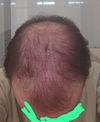
community From almost 0 to ?: A journey through hair regrowth - big 4
The user is using a hair regrowth treatment plan that includes finasteride, microneedling, minoxidil foam, ketoconazole shampoo, and piroctone olamine shampoo. They are seeking advice on the effectiveness of their regimen and dosage of finasteride, and are curious about others' experiences with piroctone olamine.
community It's amazing how fast Pelage are going through the trials for PP405. From phase 1 to phase 3 in just 3 years is incredible. It has to be the fastest in history
PP405 is progressing rapidly through trials, with mixed opinions on its potential effectiveness. Current treatments like minoxidil and finasteride are still widely discussed, with some users reporting positive results from new formulations.
community PP405 is a game changer. One for the history books. Era defining moment and Pelage know it.
PP405 is a new hair loss treatment that may outperform minoxidil and finasteride by growing thick hair in bald areas within four weeks. Its release is expected around 2028, but concerns about its long-term efficacy and cost remain.
community Are there any legitimate studies about Stem Cell treatments for MPB?
community Hmi-115 hair loss cure, how does it work? Is there a relationship between prolactin and DHT?
Hair loss linked to DHT and prolactin levels. Hmi-115 cure discussed, along with Minoxidil, Finasteride, and RU58841 treatments.
community If the main mechanism of microneedling is an increase in bloodflow to the scalp, shouldn't we be pursuing other actions which increase bloodflow? Sauna, cold showers, high dosage fish oil, hard cardio, heme-iron(red meats), HAND STANDS, foods high in NO (arugula), ginger, increased water consumption
Microneedling stimulates hair growth through stem cell activation during wound healing, not just increased blood flow. Other methods like showers or supplements don't replicate this effect.
community Thinking about signing up for the setipiprant clinical trials
The conversation discusses hair loss treatments, with the original poster considering joining a clinical trial for setipiprant after experiencing side effects from finasteride and disinterest in minoxidil. Some users express skepticism about setipiprant's effectiveness, while others encourage participation in the trial for potential benefits.
community Experienced Sleep Paralysis for the First Time After Starting Finasteride
A user experienced sleep paralysis after starting finasteride and is seeking others' experiences. Another user suggests finasteride might affect neurosteroids, potentially altering sleep patterns.
community Keratin microspheres - breakthrough
A gel of keratin microspheres promotes hair follicle growth, showing similar effectiveness to minoxidil in mice. The treatment activates hair growth pathways and reduces inflammation, with potential applications in drug delivery for hair-related disorders.
community Progress pics of using KX-826 .9% (pyrilutamide) for one year
The user experienced significant hair regrowth using KX-826 (pyrilutamide) 0.9% over one year, despite initial shedding phases. They reported no side effects and have stabilized hair loss with consistent use.
community Reason why placebo group got regrow on trial phase 3
Placebo hair regrowth might be influenced by propylene glycol in lotions or participants lying about using other treatments like minoxidil, finasteride, or microneedling. Being part of a study can also improve hair health due to lifestyle changes.
community OND-1 "Cyclosporine A” New hair loss treatment
Orient Bio is developing a PLGA formulated version of Cyclosporine A to stimulate hair growth without its immunosuppressant effects. Users discuss various treatments like Clascoterone, PP405, minoxidil, and tacrolimus, expressing hope for new developments and sharing personal experiences with these treatments.
community Vitamin D supplementation causing hair shedding?
community Reishi mushroom is theoretically 90,000x weaker than finasteride.
Reishi mushroom is significantly weaker than finasteride for inhibiting 5 alpha reductase, requiring much larger quantities to achieve similar effects. The effectiveness and safety of consuming large amounts of Reishi for hair loss are uncertain.
community 4 month regrowth protocol. Fin 1.25mg, ru, derma, keto, min, peppermint oil, fatty acids/oils.
The conversation discusses a 4-month hair regrowth protocol that includes finasteride (1.25mg), RU58841, dermarolling, ketoconazole, minoxidil, peppermint oil, and fatty acids/oils. Progress pictures are shared to show the results of these treatments.
community PP405 Hairloss Reversal and Hairline Restoration
PP405 may induce new hair growth but cannot revive completely dead follicles, and its effectiveness on hairlines is uncertain. It is expected to be available by mid-2028, but users are advised to manage expectations and consider using other treatments like minoxidil and finasteride.
community How to optimize Sulforaphane in your brocoli sprouts ~ 3.5 times more
The conversation discusses optimizing sulforaphane in broccoli sprouts by soaking them in water at 74 degrees Celsius for 10 minutes. It also mentions hair loss treatments like Minoxidil, finasteride, and RU58841.
community Spironolactine Update: 2 months (34, Female)
A female user's experience using Spironolactone to treat Female Pattern Hair Loss (FPHL) and Androgenic Alopecia, as well as discussing the effectiveness of the drug at different dosages.
community Finally jumped on Fin after decent regrowth using all natural regime (mechanical stimulation)
The user experienced good hair regrowth using natural methods and mechanical stimulation but decided to add finasteride to their regimen for better results. They are optimistic about further regrowth and plan to update on the effects of finasteride, noting no significant side effects so far.
community Protac degradation of the androgen receptor in mice shows good efficacy and no systemic drug could be found
The efficacy of degrading the androgen receptor through dermal application in DP cells, a delivery system for topical drugs that involves dissolving microneedles, and rosemary oil as an alternative anti-androgen.
community Pelage are going to do two phase 3 trials for PP405. How long will it take to complete two phase 3 trials?
Pelage plans to conduct two Phase 3 trials for PP405, a new hair loss treatment, which may take about a year to complete. Users discuss various hair loss treatments, including pyrilutamide, minoxidil, finasteride, and clascoterone, with some expressing impatience over the lengthy trial process compared to faster drug approvals like the COVID vaccine.
community Update for PP405 - phase 2b underway
PP405 is advancing to Phase 2b trials, showing promise from Phase 2a. It may be available in 3-6 years, with trials using a topical gel.
community New Light Therapy Can Suppress a Key Marker of Hair Loss by 92%
A new light therapy claims to reduce hair loss markers by 92% using a specific wavelength range. Users discuss the cost and effectiveness of devices, with some expressing skepticism and others considering alternative treatments like red light therapy and vitamin D exposure.
community TE turned into Scarring hairloss
The user experienced hair loss due to a crash diet and later developed scarring hair loss. They are now on finasteride, oral minoxidil, LDN, Zyrtec, and Oztela to reduce scalp inflammation and promote hair regrowth.
community Functional hair follicles grown from stem cells: Scientists have created natural-looking hair that grows through the skin using human induced pluripotent stem cells (iPSCs), a major scientific achievement that could revolutionize the hair growth industry.
Scientists have grown natural-looking hair from stem cells, potentially revolutionizing hair growth treatments. Concerns include cost, DHT resistance, and the need for future procedures.
community Has anyone used Magnesium L-Threonate ?
Magnesium L-Threonate may help treat balding by reducing DKK-1 expression without affecting DHT. Users discuss its potential effectiveness and application methods, with some considering trying it topically.
community Update to fin 0.25 mg, 4x/week
User reported initial hair regrowth with 0.25 mg finasteride taken four times a week, experiencing a second shedding phase, and no side effects. They also mentioned using RU58841 without success and plan to stop after a year.
community New (although questionable) paper: 5% topical spironolactone more effective than 0.1% topical finasteride
A questionable paper which suggests that 5% topical spironolactone is more effective than 0.1% topical finasteride for treating hair loss. It should be taken with a grain of salt due to the journal it was published in.