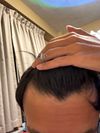
miR-205, a tiny RNA, can stimulate hair growth by softening aging hair follicle stem cells in mice. Future tests aim to see if this can work in humans.
L. reuteri, a probiotic, is being explored for its potential benefits in treating androgenic alopecia, possibly enhancing finasteride's effects and reducing inflammation. The user combines this with finasteride, oral minoxidil, and other supplements, noting some improvement in hair loss.
The conversation discusses using topical cetirizine as a treatment for androgenetic alopecia (hair loss). Specific treatments mentioned include Minoxidil, finasteride, and RU58841.
Scientists discovered a new T cell treatment that could regrow hair. Users are skeptical but hopeful, with some relying on finasteride and minoxidil in the meantime.
A user shared their 7-month progress on hair regrowth using a regimen of dutasteride, minoxidil, stemoxydine, microneedling, and keto shampoo. They noted significant improvement, particularly in vellus hair growth, and discussed the potential addition of RU58841, though they experienced side effects with it previously.
A 17-year-old experiencing hair loss is using Minoxidil but is hesitant about Finasteride due to potential side effects. Others recommend Finasteride for its effectiveness and suggest alternatives like vitamins and derma rollers.
The user was rejected from participating in a clinical trial for an extended-release oral Minoxidil due to having rheumatoid arthritis, despite initially being accepted. They had stopped using Dutasteride and Minoxidil to qualify but continued using other treatments like RU58841 and red light therapy.
A user is considering adding PRP and mesotherapy to their hair loss treatment and is deciding between two options: Promoitalia, which contains Phosphatidic acid, Riboflavin, and Superoxide dismutase, and the more expensive Melsmon, a human placenta derivative. They seek advice on which option to choose based on effectiveness and scientific backing.
The user is experiencing hair thinning and bald spots, using Nizoral, rosemary oil, fluocinolone, and receiving PRP treatments. They are considering oral minoxidil and finasteride but are hesitant due to age and financial constraints.
The user is considering using CB or clascoterone for hair loss, potentially as an alternative to RU. They're also contemplating asking a dermatologist for topical clascoterone cream to apply to their temple.
A young female diagnosed with Lichen planopilaris (LPP) experienced years of misdiagnosis and ineffective treatments, including a hair transplant and other procedures. She is considering litigation due to the misdiagnosis and has learned that LPP is chronic, hair loss can be stopped with ongoing medication, but lost hair cannot regrow.
The user experienced hair regrowth using topical minoxidil and finasteride, and later added oral finasteride for maintenance. They reported no side effects and found a specific shampoo helpful for scalp issues.
Pumpkin Seed Oil and Perilla Oil (with alpha-lipoic acid, linoleic acid, and oleic acid) are discussed as potential 5alpha-reductase inhibitors. The conversation focuses on their effectiveness for hair loss treatment.
A user with diffuse hair loss for a decade tried various treatments, including LLLT Helmet, supplements, topicals, and hair transplants. They found relief from scalp inflammation and itching using a topical solution made from crushed Xeljanz pills mixed with ethyl alcohol.
Dr. Kang-Yell Choi's company, CK Regeon, is developing a drug called KY19382 for hair regeneration, which involves creating fine wounds to activate stem cells. The drug is in the formulation development stage, targeting markets like the US and Korea.
A 17-year-old is experiencing hair thinning and is using minoxidil, ketoconazole shampoo, saw palmetto, and pumpkin seed oil. They are considering starting finasteride but are concerned about its effects on development and are seeking advice on whether to proceed with finasteride or switch to oral minoxidil.
Scalp hydration may influence hair growth by affecting the signaling pathways that control the hair growth cycle. Users suggest using facial moisturizer, aloe vera, and oils for scalp hydration.
Increasing the sult1a1 enzyme on the scalp may improve response to topical minoxidil. The user suggests using a baking soda solution, DMSO, and tretinoin to enhance enzyme activity and minoxidil effectiveness.
Osteopontin, a protein involved in hair growth on moles, may help with hair loss. However, it is also linked to Alzheimer's, cancer, and bone development, so caution is advised.
The conversation discusses a patent for using topical resveratrol and melatonin to treat androgenetic alopecia (AGA) and also mentions interest in topical sulforaphane as a treatment.
An arthritis drug, baricitinib, is discussed as a potential treatment for autoimmune alopecia, not androgenetic alopecia. Ritlecitinib is also mentioned as a possible treatment for scarring alopecia.
The user is using a comprehensive hair loss prevention regimen including Dutasteride, RU58841, topical treatments, red light therapy, microneedling, and supplements like Nutrafol, while avoiding Minoxidil. They also supplement with vitamin D and zinc and plan to start testosterone replacement therapy (TRT) in January.
The conversation discusses a 4-month hair regrowth protocol that includes finasteride (1.25mg), RU58841, dermarolling, ketoconazole, minoxidil, peppermint oil, and fatty acids/oils. Progress pictures are shared to show the results of these treatments.
A user's regimen to help with their diffuse thinning, which includes taking Pyrilutamide BID, 1mg finasteride daily, 2.5mg oral minoxidil daily, topical minoxidil since August 2021, LLLT every two days, topical fin, progesterone, melatonin, minoxidil (started one week ago), pumpkin seed oil and not dermarolling; other commenters suggested Nizoral for dandruff control and caution when using pre-mixed products with Pyrilutamide.
Hair loss treatments discussed include Minoxidil, Finasteride, and RU58841. HMI-115, a monoclonal antibody drug, is in phase 1 and 2 trials for different conditions, but its availability on the gray market is unlikely due to high production costs.
How diffuse unpatterned alopecia (DUPA) is not an invitation to self-diagnose oneself with aggressive AGA and that seeking a specialized dermatologist may help people experiencing hair loss. Treatment options discussed include topical clobetasol propionate, oral minoxidil, and discontinuing finasteride.
The conversation is about whether the phase 2 results for pyrilutamide, a potential hair loss treatment, were presented at a dermatology convention and inquiries about the completion of phase 3 trials. Specific treatments mentioned include pyrilutamide.
Exploring hair loss treatments beyond DHT, including Minoxidil, pyruvate, Gt20029 targeting androgen receptors, and vasodilators. Other options like Kx826, adenosine signaling, growth factor topicals, and microneedling are also discussed.
A quercetin-encapsulated and polydopamine-integrated nanosystem (PDA@QLipo) shows promise for treating androgenetic alopecia by reshaping the perifollicular microenvironment, outperforming minoxidil in hair regeneration. The nanosystem promotes cell proliferation, hair follicle renewal, and recovery by scavenging reactive oxygen species and enhancing neovascularity.