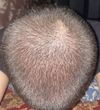
Adequate nourishment and hormone replenishment helped with hair regrowth. Vegamour and Novo blends hair vitamins were also used but likely not effective alone.
Diffuse thinners often experience more hair regrowth with DHT blockers like finasteride, possibly due to less DHT sensitivity and the presence of miniaturized, not completely bald, follicles. However, regrowth varies widely among individuals, influenced by factors like genetics, the stage of hair loss, and treatment methods such as minoxidil, microneedling, and dermarolling.
A user experienced significant hair regrowth after 5 weeks by taking zinc, vitamin D, and biotin supplements, correcting deficiencies that were contributing to hair loss and thinning. They report a decrease in hair shedding, faster hairgrowth, and a thickening of their hairline without using common hair loss medications like Minoxidil or Finasteride.
A user improved their hair health by taking 50,000 IU of vitamin D3 weekly due to a deficiency. Others discussed the potential link between vitamin D and hairgrowth, with some sharing similar experiences and emphasizing the importance of monitoring vitamin D levels and consulting with doctors.
A 29-year-old male experienced hair loss and found improvement using a combination of onion hair oil, castor oil, ketoconazole shampoo, and aloe vera gel with vitamin E, while discontinuing minoxidil and finasteride due to side effects. He emphasizes the importance of scalp massage and oiling for hairgrowth and reduced hair fall.
Some prefer hairsystems for better appearance and confidence, while others find them costly and inauthentic. Alternatives like minoxidil, finasteride, and hair transplants are also considered.
Finasteride is key for hair regrowth, supported by oral/topical minoxidil, Folexin, Nizoral/Head & Shoulders, and vitamin D. No side effects experienced; early intervention and patience are crucial.
Hair fibers impressively cover bald spots, boosting confidence. User started big 3 treatment (0.5mg fin, 1 time minoxidil 5% topical, ketoconazole 2%) for regrowth.
Finasteride, minoxidil, dermarolling, and topical antiandrogens are effective for hair regrowth. Future treatments may include CB0301 and hair cloning.
A 25-year-old experiencing hair thinning all over the body and head, despite using minoxidil and having low vitamin D levels, is advised to seek a second opinion from a dermatologist specializing in hair loss. The likely diagnosis is diffuse alopecia areata, which may require treatment with a JAK inhibitor.
An 18-year-old noticed hair thinning at 17, started finasteride 5 months ago, and saw shedding stop but no regrowth. They suspect male pattern baldness due to family history and are concerned about thinning on the back and sides, possibly due to inflammation.
The user is experiencing hair that doesn't grow past a certain length despite using minoxidil and finasteride for male pattern baldness. Suggestions include trying dutasteride, microneedles, and ketoconazole shampoo.
The user has been using finasteride, minoxidil, and Nizoral for hair loss but is not seeing much regrowth. Suggestions include trying oral minoxidil with dutasteride, and some users believe the hair looks better in recent pictures.
Having hair improves social interactions and treatment by others, with hair transplants and finasteride enhancing confidence and attractiveness. People often receive more positive attention after addressing hair loss.
The user has been using finasteride, minoxidil, ketoconazole shampoo, needling, and experimenting with retinol cream to treat hair loss. Despite these treatments, they observe many small vellus hairs that do not grow longer.
A user who didn't respond well to minoxidil and finasteride is considering the role of IGF-1 in hair loss treatment effectiveness. They discuss the potential of using HGH to improve hairgrowth and other health issues, referencing several sources that suggest IGF-1 levels may influence hair loss and treatment response.
The conversation is about hair regrowth using topical finasteride, minoxidil, and microneedling, with some users noticing new hairgrowth. The original poster also takes protein, biotin, and vitamin D supplements and prefers topical treatments due to concerns about side effects from oral finasteride.
A user reported hair regrowth after taking D3 vitamin pills and using anti-hair fall shampoo for four months. They were later advised to use 10% minoxidil, a hair spray, and a general vitamin pill containing iron, B9, and B12.
The user started using finasteride and minoxidil and noticed fine, spikey hairs on their scalp after oiling with coconut and blackseed oil. Responses suggest these fine hairs could indicate hair regrowth, but more time is needed to see results.
The user is experiencing hair loss and is considering using finasteride again, along with ketoconazole shampoo and curl cream, to manage their long hair. They are concerned about the appearance of new hairgrowth and the potential shedding phase from minoxidil.
Improving iron levels, particularly ferritin, can help with hairline recovery. The user experienced hairline improvement by increasing iron intake through diet changes, without relying on minoxidil.
Hair loss can cause significant stress and anxiety, leading individuals to try various treatments like microneedling, hair transplants, and lifestyle changes. Some people find peace by accepting hair loss and focusing on other aspects of life, while others experience ongoing distress.
Hair loss can be influenced by chronic low-level allergies, and treatments like fexofenadine or topical cetirizine may help with regrowth. The user avoids finasteride, dutasteride, and minoxidil, and has tried Regenera Activa and PRF sessions.
The conversation discusses hairgrowth treatments, with the original poster avoiding minoxidil due to health concerns and considering serums with positive reviews. Alternatives like topical caffeine and redensyl are mentioned as options.
Researchers are working on regenerating hair follicles using stem cells, but a cure for baldness is still years away. Current treatments mentioned include Minoxidil, finasteride, and RU58841.
Quitting smoking may improve the effectiveness of finasteride and minoxidil for hair regrowth. Smoking is harmful to hair health, potentially increasing hair loss and reducing regrowth.
The user is seeking opinions on whether their hairline changes indicate regrowth or hair loss, using treatments like Rogaine, finasteride, microneedling, and Nizoral. They mention inconsistent finasteride use, scalp massages, and lifestyle factors like caffeine, nicotine, stress, and high sugar intake.
Hair loss discussion includes treatments like Minoxidil, Finasteride, and RU58841. Users share experiences and support, mentioning that many people face hair thinning.
The conversation discusses whether sunlight exposure affects hairgrowth or loss, with mixed anecdotes and theories but no clear consensus. Some suggest moderate sunlight can benefit hair by providing vitamin D, while others doubt its effectiveness compared to treatments like Minoxidil or finasteride.
Sodium dodecyl sulfate, oleic acid, and palmitoleic acid may promote hairgrowth, but their safety and effectiveness for humans are uncertain. Users consider trying these treatments cautiously, exploring alternatives like ostrich oil and microneedling.