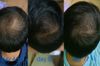
Topical Vitamin D3 may stimulate hair growth and has been used for Alopecia Areata. There is a question about the lack of research on its use for Androgenetic Alopecia (AGA).
A user's hair loss progress after 4 months of using a topical fin and min mix, with responses from other users about their experience with the same treatments.
After 13 years on finasteride, OP is experiencing reduced effectiveness and has started taking 0.5 mg of dutasteride weekly, noticing nipple sensitivity as a side effect. OP plans to increase the dutasteride dosage and retest hormone levels, while others suggest adjusting the dosage or trying different forms of dutasteride.
Women experienced severe reactions, including Topical Steroid Withdrawal (TSW), from using Winlevi (Clascoterone 1%) on their faces. Concerns were raised about the potential risks of higher concentrations, especially for hair loss treatment.
A user is using minoxidil, finasteride, and tretinoin for hair regrowth. They are advised to be patient for results and to check for vitamin deficiencies.
The user experienced hair loss due to undiagnosed anemia and has been taking iron and vitamin D3 supplements, which improved their energy levels but not hair regrowth. They are seeking advice on additional treatments or steps to restore hair after iron deficiency anemia.
A user reported increased shedding and some side effects like ball ache and potential watery semen after taking 0.25mg of finasteride daily for two months, but noted a high sex drive and considered the shedding a possible sign of new hair growth. Other users discussed dosage differences, with some suggesting starting with a smaller dose and monitoring effects, while others shared their experiences with no shedding or hair growth yet.
A user reported significant hair regrowth using only 1mg finasteride daily over 3.5 years, with no side effects. They stressed patience and consistency, seeing noticeable results after two years.
User reports 3 months of microneedling, minoxidil, finasteride, biotin, and zinc for hair loss. Others comment on great progress and suggest checking back after 1 year.
The user experienced increased hair density and improved hairline definition after 8 months of using 1mg finasteride and 5mg minoxidil (both oral and topical) daily, though the hairline recession hasn't reversed. They noticed fuller eyelashes and increased shedding, but overall hair growth is outpacing the loss.
An 18-year-old is using a high-dose treatment for hair loss, including 2.5 mg dutasteride, topical minoxidil, and injectable GHK-Cu, despite minimal hair loss. Many users suggest reducing the dutasteride dose due to potential side effects and recommend starting with finasteride instead.
A 24-year-old shared six-month progress on hair loss treatment using 1mg finasteride daily, 1ml 5% minoxidil once a day, and microneedling every two weeks. The hair appears stronger.
The conversation is about gathering serum DHT data from individuals taking dutasteride to investigate its efficacy, especially in cases with unexpectedly low DHT reduction. The aim is to explore potential genetic factors affecting drug metabolism.
A 21-year-old male has been using 1mg finasteride, 2ml minoxidil, and supplements for almost 3 months but is still experiencing hair loss. Responses advise patience and consistency, noting that initial shedding is common.
Reishi mushroom is significantly weaker than finasteride for inhibiting 5 alpha reductase, requiring much larger quantities to achieve similar effects. The effectiveness and safety of consuming large amounts of Reishi for hair loss are uncertain.
The user shared their personal experience with hair loss, hormone imbalances, and treatments including testosterone boosters, natural estrogen blockers, and DHEA. They suggest that low-dose finasteride and natural hormone therapy could reduce hair loss with fewer side effects.
A user is considering finasteride for hair loss and is concerned about its effects on DHT levels and potential side effects, including those from creatine. The user seeks advice on finasteride's impact on hair and body hair, given their high DHT and testosterone levels.
The user is experiencing diffuse thinning and inflammation despite using 2.5mg dutasteride daily, ciclopirox, and ketoconazole shampoos. They are considering treatments like hydroxychloroquine and JAK inhibitors due to suspected scarring alopecia and have faced challenges in obtaining a scalp biopsy.
The user is pleased with hair regrowth after taking daily tablets of 1.1 mg finasteride, 3 mg minoxidil, and 2.5 mg biotin for 3 months, with no side effects and some light shedding. The most noticeable improvement is at the crown, which was the main concern.
Ultrasound imaging can predict hair shedding and assess hair growth stages by analyzing hair follicle characteristics. The conversation also discusses using ultrasound for personal hair analysis and mentions the potential use of infrared emission for hair treatment.
Adding vitamins like zinc, iron, biotin, and vitamin D to finasteride and minoxidil may help with hair loss. Some users are skeptical about the study's validity due to its precise numbers.
Male pattern baldness (MPB) may be an early warning sign for type 2 diabetes due to its association with insulin resistance. Treatments discussed include testosterone therapy and finasteride, which affects hormone levels related to hair loss and insulin sensitivity.
The user has been using topical Minoxidil and finasteride for 5 months without seeing regrowth, despite ideal blood test results. They are seeking advice on what to do next due to frustration with continued hair loss.
Dutasteride raises scalp testosterone by 99%, which may not be ideal for those sensitive to all androgens. Some argue finasteride's balancing act might be better, while others believe dutasteride is superior for hair regrowth.
The user reports that after 4 months of microneedling, 10 months of Minoxidil, 2 years of finasteride, and using ketoconazole 3 times a week, their hair has become less dense in the treated areas. Despite initial shedding and continued treatment, they have not seen improvement and feel their body is resistant to the medications.
The potential availability of a new hair loss treatment called HMI-115, which has shown promising results in experiments on monkeys but is not yet available to the public. Replies cautioned against using unproven substances from shady labs.
The user experienced increased hair density after starting 1mg finasteride in February and 2.5mg oral minoxidil two months ago, along with 10mg biotin daily. They initially used topical minoxidil but switched to oral due to application difficulties and have seen improvements without significant side effects.
A 31-year-old male experienced hair shedding after rapid weight loss and stopping vitamins, despite using minoxidil and other supplements. He is considering Saw Palmetto and Pumpkin Seed Oil instead of finasteride due to trying for kids, and is concerned about high ferritin and DHEAS levels.