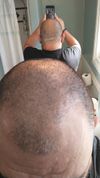
A user reported that taking iron polymaltose significantly reduced their hair loss. They also mentioned hair loss due to DHT and asked if hair loss from iron deficiency is permanent or temporary.
GHK-Cu peptide injections are discussed for hair growth, but users report mixed results and suggest focusing on DHT management first. Some users combine GHK-Cu with treatments like Minoxidil and Dutasteride, but emphasize its benefits for skin rather than hair.
Hope Medicine's announcement of the HMI-115 Phase II clinical trial for androgenetic alopecia in China; other related trials have been conducted or are ongoing in different countries, including Australia, US, and Europe. There is speculation that the product may be accepted across borders without additional testing.
The user reported noticeable hair improvement over four months using 1 mg of finasteride and weekly microneedling. Progress photos from October 2024 to January 2025 show positive changes.
The conversation discusses using ZIX, a combination of Zinc Sulfate and Vitamin B6, for hair loss. The user is considering liquid forms for better absorption and scalp health.
The conversation discusses the use of AlphaInfuse, a micro-infusion system with Panax ginseng and Eclipta prostrata extracts, for hair growth and its comparison to Minoxidil. The original poster seeks personal experiences and evidence of its effectiveness.
A potential new hair loss treatment, HMI-115, and the possibility of discontinuing finasteride in favor of it. The conversation also includes discussion about other benefits of using finasteride.
Epibiotech will offer off-the-shelf allogeneic hair multiplication treatment in South Korea, using dermal papilla cells from donors to grow hair in balding areas. This method is cheaper and less invasive than traditional hair transplants.
Switching to a DIY topical finasteride solution using ethanol, glycerin, and distilled water instead of propylene glycol for a gentler application. Users report positive results with both DIY solutions and a low PG minoxidil and finasteride product from India.
A user ordered Alpha Plus from Anagenica, expecting it to contain specific percentages of Fin, Estradiol, Minoxidil, and CB0301. However, the received product's label showed different percentages, including a surprising 25% CB, leading the user to question its safety and accuracy.
The user experiences an itchy scalp and finds relief using shampoo and Zyrtec, which helps with inflammation. They are unsure if the issue is related to histamines or seborrheic dermatitis.
The conversation is about obtaining and the effectiveness of Olumiant for treating hair loss, specifically for someone with early-stage alopecia areata concerned about hair loss around the face. The user is seeking clarity on how to get a prescription for Olumiant.
A dermatologist prescribed methionine with vitamins for hair loss, but the user is doubtful and plans to seek finasteride in France. The user is unsure why finasteride or minoxidil wasn't prescribed, suspecting concerns about side effects or strength.
Low Vitamin D can cause hair shedding, and taking 5000 IU of Vitamin D daily reduced shedding significantly. Vitamin D deficiency is common and correcting it can benefit overall health.
A user shared their 5-month hair loss treatment progress, using 1mg finasteride, daily GHK-CU injections, keratin/biotin/MSM supplements, Pura D’Or shampoo and conditioner, Ayurvedic oil, ketoconazole thrice weekly, and weekly microneedling with topical GHK-CU. The post includes progress pictures.
Vitamin D tests like D2, D3, and 25-hydroxyvitamin D are discussed before starting hair treatment. Vitamin D can be obtained from food, but overdose has side effects.
Whey protein may slightly increase hair loss in men with androgenetic alopecia (AGA) due to elevated IGF-1 and testosterone levels, but the effect is minimal compared to treatments like finasteride and dutasteride. Many users argue that whey protein's impact on hair loss is negligible and that maintaining a healthy lifestyle is more important.
User ItchyRaccoon experienced significant hair loss reduction using Eucapil after trying low-dose topical finasteride with no results. Some replies mention that shed hair counts are not reliable indicators of hair loss progression or regression.
Minoxidil with alcohol and propylene glycol was more effective than non-alcohol versions, and RU58841 worked best in a non-water-based solution. Oral finasteride showed better results than topical, despite side effects; microneedling and tretinoin worsened hair loss, and PRP was only helpful when younger.
The user is concerned about the quick prescription process for hair loss treatments like Minoxidil and Finasteride through HIMs, questioning the lack of a thorough evaluation. Another user reassures that such practices are common, emphasizing the effectiveness and low risk of these treatments, and suggests monitoring personal response to the medication.
A user was prescribed betamethasone dipropionate spray for a receding hairline, which caused skin peeling and depigmentation. They stopped using it and are considering alternatives like BPC-157/TB-500 for healing.
A user shared their positive experience with Trichogenics for hair restoration, highlighting their unique zigzag hairline technique and personalized attention. They had 1700 follicles transplanted and praised the natural results.
The individual is experiencing hair loss due to insulin resistance (IR) and is seeking advice. They are currently using a keto diet, supplements, exercise, and plan to add metformin to their regimen.
The conversation discusses personal experiences with hair loss and highlights the potential impact of anemia and nutrient deficiencies on hair health. Treatments mentioned include changing shampoo/conditioner, taking MSM, collagen, hyaluronic acid, astaxanthin, B12, folate, and bovine blood capsules.
Bovine colostrum is being discussed for its potential in hair regeneration, with some users noting that oral consumption may not be effective due to stomach acid destroying exosomes. The conversation also touches on ethical concerns about sourcing colostrum.
The post and conversation are about HMI-115, a potential treatment for hair loss. The conclusion is that HMI-115 is not a 5ar-inhibitor and is instead a prolactin receptor inhibitor. Some users are skeptical about its effectiveness and believe that baldness will still be a problem in the future.
User discusses group buy for finerenone, a third-gen mineralocorticoid antagonist for hair loss treatment. Finerenone inhibits TGFb, NOX, and ROS, and improves renal and cardiac function; topical dose should be no more than 10mg per day.