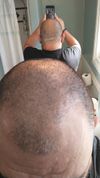
A user shared their successful hair loss treatment using 1.25mg finasteride daily, 2.5mm microneedling every 1-3 weeks, zinc pyrithione shampoo, occasional scalp massages, and 40% glycolic acid on temples. They reported significant progress over 21 months.
The user reported noticeable hair improvement over four months using 1 mg of finasteride and weekly microneedling. Progress photos from October 2024 to January 2025 show positive changes.
The user experiences histamine intolerance with alcohol-based hair loss treatments like Rogaine foam and seeks alternatives. Suggestions include alcohol-free and PPG-free topical minoxidil or finasteride, and trying Spectral products with different solvents.
The user experienced excessive bleeding during microneedling after consuming caffeine and THC, and is unsure if they should continue with the same routine. They are seeking advice on whether the bleeding is a cause for concern.
The conversation is about a user experiencing hair thinning potentially due to excessive microneedling while using finasteride and minoxidil. Many suggest reducing microneedling frequency and considering alternative treatments like dutasteride or a hair transplant.
The conversation discusses progress with a hair loss treatment regimen that includes once daily topical Finasteride, Pyrilutamide, and WAY-316606. Specific treatments for hair loss are being shared and discussed.
The post discusses the experiences of individuals with diffuse hair thinning using finasteride, with many reporting no improvement or worsening conditions after 6 months. Various suggestions include persisting with the treatment, checking for underlying conditions, adding minoxidil for volume, adjusting dosage, and considering other potential causes like autoimmune responses and inflammation.
Using 0.1% Alfatradiol and 1% Pyrilutamide stopped hair loss, reducing shedding from over 150 hairs a day to less than 10, with no side effects. The user also uses Minoxidil and microneedling, applying the treatments twice daily.
User discusses group buy for finerenone, a third-gen mineralocorticoid antagonist for hair loss treatment. Finerenone inhibits TGFb, NOX, and ROS, and improves renal and cardiac function; topical dose should be no more than 10mg per day.
A physician experienced hair thickening and new growth using microneedling and minoxidil, but stopped using topical finasteride due to side effects like reduced libido and erectile dysfunction. The physician plans to continue with microneedling and minoxidil, considering finasteride nonessential for cosmetic purposes.
The user completed a Clascoterone study with no observable changes in hair loss and plans to try microneedling and Minoxidil next. They will microneedle weekly and apply Minoxidil twice daily, except on the night of microneedling, and compare results after six months.
A user who didn't respond well to minoxidil and finasteride is considering the role of IGF-1 in hair loss treatment effectiveness. They discuss the potential of using HGH to improve hair growth and other health issues, referencing several sources that suggest IGF-1 levels may influence hair loss and treatment response.
A user is experiencing rapid hair loss and has been diagnosed with telogen effluvium by multiple dermatologists, but doubts the diagnosis due to the severity and speed of the hair loss. They are considering various treatments like spironolactone, estradiol, and possibly finasteride, while also exploring the possibility of hormonal imbalances or autoimmune issues.
The user has been microneedling at 0.25mm once a week for 4 weeks and noticed further hairline recession. They are concerned about the impact of vitamin deficiencies, like biotin, on hair growth.
A user with seborrheic dermatitis and traction alopecia is seeking alternatives to minoxidil for hair loss, considering rosemary oil for its anti-inflammatory properties. They express concerns about potential side effects and effectiveness of various treatments, including rosemary oil, caffeine, and Redensyl.
Creating a liposomal gel with Pyrilutamide for hair loss to reduce systemic effects, similar to Xyon's gel. The discussion includes concerns about ingredient sourcing and the benefits of targeted topical treatments.
The conversation discusses the use of topical finasteride and minoxidil for hair loss and inquires about the effectiveness of adding RU58841. Participants share experiences and opinions on the potential benefits of including RU58841 in their treatment regimen.
The conversation discusses using 1% cetirizine, an antihistamine, as a potential treatment for androgenetic alopecia (hair loss). One user plans to try cetirizine instead of finasteride, while others are curious or skeptical about its effectiveness, discussing the role of inflammation in hair loss.
The user diagnosed with DUPA tried treatments like dutasteride, finasteride, RU58841, and minoxidil without success and is considering a hair system. They hope for a future cure, possibly with PP405, and others suggest options like scalp biopsy and SMP.
A user experienced severe dry eyes as a side effect of using topical and oral Finasteride for hair loss and is seeking alternative treatments. They are considering other anti-androgens like Dutasteride, RU58841, Pyrilytamide, and Fluridil, despite mixed results and potential side effects.
People discussed using vitamin D supplements for hair loss, with some also using steroid injections, pumpkin seed oil, saw palmetto, and zinc. Despite supplementation, one user noted no improvement in hair condition, but acknowledged the general health benefits of addressing vitamin D deficiency.
A 35 year old male who has seen good results from Finasteride and microneedling, with minimal side effects. Replies to the post ask about the device used for microneedling, discuss the progress made, and offer encouragement.
People discussed their experiences with anti-androgens for hair loss, mentioning side effects like chest pains with RU58841 and skepticism due to lack of safety data, while considering Fluridil as a potential addition to treatment. Some users expressed reluctance to use these chemicals.
Hair loss recovery using estrogen and anti-androgen treatment for 18 months showed significant improvement. However, results vary and alternative treatments like RU58841 and Dutasteride may work without systemic feminization.
Using tretinoin or tazarotene with minoxidil may eliminate the need for microneedling or dermastamping. Microneedling can enhance minoxidil's effects but may cause long-term scalp issues.
The user is using oral finasteride and minoxidil, microneedling, and plans to add topical minoxidil to boost hair growth. They are considering adding tretinoin but are unsure if it's necessary.
The user has been treating hair loss with finasteride, dutasteride, oral minoxidil, and pyrilutamide for several years without success and is experiencing an inflamed scalp, possibly due to seborrheic dermatitis. They are seeking advice on additional treatments after these methods failed to improve their condition.