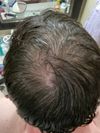
The user experienced hair repigmentation and attributes improvements in hair and overall health to a carnivore diet, Boron, and Selenium supplementation. They stopped using finasteride after 20 years, noticed increased testosterone and libido, and observed hair regrowth with RU58841.
A user reported significant hair growth improvements using 1mg finasteride and 2.5mg minoxidil daily, despite minor side effects. The doctor advised against combining multiple treatments to identify what works.
The user reports hair growth improvements after using topical minoxidil, oral finasteride, and weekly dermarolling for about three months, but is experiencing dandruff, possibly due to the minoxidil.
The user is concerned about the lack of improvement in hair density 12 months after a hair transplant on the crown, despite using minoxidil. The doctor suggests the native hair is thinning, but the user disagrees.
The user has been using topical finasteride since October without improvement and is considering adding a caffeine product with dimethylglycine. Another user suggests caffeine is more promising and advises consulting a dermatologist about the lack of progress with finasteride.
The user experienced significant hair quality and thickness improvement using a daily topical treatment of 0.3% finasteride and 6% minoxidil, with noticeable regrowth in the last few months. Minoxidil can darken hair by increasing pigmentation.
A 26-year-old male shared progress pictures showing significant hair improvement after using finasteride (1mg daily) since November 2024 and minoxidil foam since October 2025. The user noted thicker hair and a less noticeable bald spot, attributing the changes to these treatments.
A 40-year-old user reports promising hairline improvement after 4 months of using 1mg finasteride daily and 5% minoxidil foam 2-2.5 times daily. The hairline vellus hair appears to be turning terminal.
A 23-year-old male saw significant hair improvement after using topical minoxidil for five years and oral finasteride for one year. He is considering adding dutasteride weekly and continues using Head & Shoulders and Stiproxal for dandruff control.
Estrogen injections significantly improved hair growth, particularly on the crown, after stopping finasteride. Monotherapy with estrogen led to hairline improvement, but also caused sterility and potential feminization effects.
The user experienced significant hair growth and density improvement over nine months using 1 mg finasteride daily, initially 5% topical minoxidil, then transitioning to 2.5 mg and later 5 mg oral minoxidil, along with weekly microneedling. Noticeable changes were observed after three months, with the most significant progress by month nine.
A woman experienced increased body hair and acne with minimal hair improvement after switching from topical to oral minoxidil. Suggestions included reducing the oral dose, trying spironolactone, returning to topical minoxidil, or considering laser treatment for body hair.
A 26-year-old male shared progress photos showing hair improvement after nearly 5 months on oral Minoxidil (4mg), Dutasteride (0.5mg), and biotin (4mg). The photos show noticeable hair growth over time.
A new hair loss treatment claims a 539% improvement over placebo, but skepticism remains due to lack of substantial evidence and reliance on percentage figures. Users discuss the effectiveness of existing treatments like Minoxidil and Finasteride, expressing doubt about the new solution's impact.
A new hair loss treatment reportedly shows a 539% improvement in hair count, but skepticism remains due to unclear placebo results and potential minimal actual hair growth. Many users doubt its effectiveness and market viability, citing high costs and lack of visual proof.
A 28-year-old male experienced significant hair improvement in two months using 2.5mg oral minoxidil daily, 1mg finasteride every other day, weekly dermastamping, daily scalp massages, and rosemary oil. The user reports no side effects and questions if the rapid progress is typical or if they are a hyper responder.
A 35-year-old experienced slow but noticeable hair density improvement over 5 months using 0.5 mg oral dutasteride, 2.5 mg oral minoxidil, and 5 mg oral biotin daily. Initial shedding and acne were side effects, but overall satisfaction was reported.
Some users experience worsening hair loss with dutasteride and improvement after switching back to finasteride, while others find better results with dutasteride. The effectiveness of treatments like finasteride, dutasteride, minoxidil, and RU58841 varies, requiring individuals to try different combinations or dosages to find what works best.
A 23-year-old male experienced significant hair improvement over 9 months using dutasteride, minoxidil, finasteride, PRP, and red light therapy, with no side effects. He plans to continue treatment for 6 more months before deciding on a hair transplant.
The user has been using finasteride for three months without improvement and is considering switching to dutasteride due to ongoing hair shedding and side effects. They are also inconsistently using minoxidil.
The user experienced hair loss and initially saw improvement with Finasteride but is now considering switching to Dutasteride due to lack of recent results. They plan to add topical Minoxidil and are awaiting biopsy results to determine the cause of hair loss.
The user is considering stopping topical minoxidil due to lack of improvement in hair growth and is exploring alternatives like oral minoxidil, topical finasteride, and tretinoin. They are hesitant about oral finasteride and dutasteride, and are open to trying oral minoxidil if available, despite concerns about potential heart-related side effects.
The user started dutasteride and oral minoxidil but saw no improvement in crown hair regrowth. Users suggest increasing the minoxidil dose and seeking a second opinion.
A 29-year-old male experienced hair loss and found improvement using a combination of onion hair oil, castor oil, ketoconazole shampoo, and aloe vera gel with vitamin E, while discontinuing minoxidil and finasteride due to side effects. He emphasizes the importance of scalp massage and oiling for hair growth and reduced hair fall.
The user plans to use a "nuclear protocol" for hair improvement, including topical minoxidil 12.5%, topical finasteride 0.1%, and tretinoin 0.05%, with microneedling once a week. They have seen improvements with minoxidil and are seeking opinions on their approach to achieve thicker hair.
A 23-year-old experiencing hair thinning has seen noticeable improvement after using 1.25 mg oral finasteride for over a year and recently starting 2.5 mg oral minoxidil, along with ketoconazole shampoo. They are considering a hair transplant in the future and have not experienced any side effects from the medication.
The user started oral minoxidil in February 2025 and noticed hair improvement, but paused due to pregnancy. They experienced minimal shedding and some facial hair growth as a side effect.
Spraying pyrilutamide on the crown area shows noticeable improvement compared to using a dropper. Applying directly to the vertex is challenging without wasting the product.
Minoxidil and finasteride can cause initial hair shedding before improvement, as new, stronger hairs replace the old ones. Users advise patience, as results vary and improvement may take time.