Search
for
Sort by
Community Join
660-690 / 1000+ resultscommunity 5% minoxidil &1mg finasteride -7th months- Asian-23M
A user's successful hair regrowth after 7 months of using 5% minoxidil, 1mg finasteride, and adding micro needling 4 months ago. The user also took biotin, fish oil, and collagen supplements, and reduced finasteride intake to once every 3 days due to minor libido decay.
community Has anyone tried exosome treatment?
Exosome treatment for hair loss, derived from umbilical cord stem cells, is being considered as an option before a hair transplant. Users discuss the need for ongoing maintenance and share experiences with different exosome sources, including plant-derived options.
community 85 days Topical Min-Fin progress
The user has been using a treatment of 0.1% topical finasteride, 5% minoxidil, dermastamping, and vitamin D3 supplements for 85 days and is seeing good progress. Other users note the effectiveness of topical finasteride despite it being less potent.
community is it getting better? min+fin treatment
community Closing in on one year on Min+Fin
User shared progress after one year using Minoxidil 5% topical and 1 mg Finasteride pills daily, along with vitamin D3 supplements. They experienced significant hair regrowth and are now growing their hair out again.
community 1.5 Year Hair Restoration Journey - Stem Cells, PRP, Minoxidil, Topical Finasteride
A user shared their 1.5-year hair restoration journey, successfully using mesenchymal stem cell therapy, Platelet Rich Plasma (PRP) injections, and a topical compound of finasteride and minoxidil, avoiding a hair transplant and oral finasteride. They experienced significant hair regrowth, particularly crediting the stem cell therapy for quick initial results.
community Finasteride + Minoxidil + Ketozolin Shampoo + Vitamin D and Biotin results
So maybe vitamin D is important here
This conversation discussed the user's successful results from a combination of treatments, including finasteride, minoxidil, ketozolin shampoo, Vitamin D and biotin. The discussion also included advice about frequency and dosages for these treatments.
community Tropical growth stimulants other than minoxidil
The conversation discusses alternative hair growth treatments to minoxidil, including Stemoxydine, Tretinoin, adenosine, Baicalin, castor oil, Latanoprost/bimatoprost, and Redensyl. Users share their experiences and opinions on the efficacy of these treatments.
community My turn to come out and show. I think it might be improving.
The user experienced increased hair density after starting 1mg finasteride in February and 2.5mg oral minoxidil two months ago, along with 10mg biotin daily. They initially used topical minoxidil but switched to oral due to application difficulties and have seen improvements without significant side effects.
community 2 Years of Dut. Can these miniaturized hairs still recover?
community The hardest hair protocol ever!
The user is using RU58841, finasteride, dutasteride, and minoxidil to slow down aggressive hair loss but is still experiencing hair shedding due to high testosterone levels. They plan to use ostarine to lower testosterone and prevent hair loss while maintaining muscle mass, and will continue using the other treatments.
community Cumshotdiva II Drink min/Topical Min/MN/Just started fin/multivitamins/D3/Kvitamin /Tret/Keto
The user shared progress pictures and discussed using oral and topical Minoxidil, microneedling, recently starting finasteride, multivitamins, vitamin D3, vitamin K, tretinoin, and ketoconazole for hair loss. The conversation focuses on the effectiveness of these treatments.
community Hope for older men! 57 year old male 6 mo. progress pics. Minoxidil, RU58841, Microneedling, Nizoral
A 57-year-old man shared his 6-month hair regrowth progress using RU58841, Minoxidil, microneedling, and Nizoral. He experienced significant improvement, with a smaller bald spot, thicker hair, and hairline regrowth.

community M17 regrowth journal
A 17-year-old is addressing hair loss with finasteride, topical minoxidil, and microneedling. They are considering adding GHK-Cu to their regimen, but others advise caution with finasteride due to age.
community Need supplemental products in addition to oral minoxidil and oral dutasteride
The user has been using oral minoxidil and dutasteride for hair loss without success and is considering adding topical 17α-estradiol, Pyrilutamide, Clascoterone, or cetirizine. They have confirmed low serum DHT levels and are exploring additional treatments due to genetic sensitivity to DHT and prostaglandin D2.
community 2 Month progress, is this significant change?
A user in their 20s is experiencing hair growth after two months of using minoxidil and finasteride, focusing on the hairline and temple areas. They also addressed vitamin deficiencies (B12, D3, and iron) and are considering additional treatments like derma stamping.
community Case study: 2mo update 1.5mm microneedling + Minox, no fin. Added Nizoral.
The user reports some hair regrowth after two months of using 1.5mm microneedling with Minoxidil and Nizoral shampoo. They note reduced pain and skin flaking, attributing changes to skin thickening and collagen induction.
community Hair Regrowth Following a Wnt- and Follistatin- Containing Treatment: Safety and Efficacy in a First-in-Man Phase 1 Clinical Trial: Scientific, Peer-Reviewed Dermatology Article Indexed with MEDLINE/PubMed
A treatment containing Wnt and Follistatin was found to be safe and effective for hair regrowth in a Phase 1 clinical trial. Specific treatments discussed include Minoxidil, Finasteride, and RU58841.
community Minoxidil + Fin 1 mg + Dermaroller 1x week - 1 year results
A user used Minoxidil twice daily, 1 mg finasteride in the morning, and a dermaroller weekly for a year but is unhappy with the results and sperm quality. Others suggest continuing the regimen, noting hair maintenance and thickness, and considering additional treatments like dutasteride or a hair transplant.
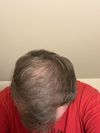
community 2 month check in
After 2 months of using Minoxidil and finasteride, OP noticed fuller hair, confirmed by their wife's observation. OP is pleased with the progress, though the change isn't drastic.
community Seeking Advice on Tretinoin Strength for Minoxidil Success at Age 30
The user is considering adjusting tretinoin strength to enhance minoxidil effectiveness, questioning whether to use 0.025% or 0.01% instead of 0.05% due to increased hair shedding. They have been using finasteride, minoxidil, and Nizoral, and are contemplating reintroducing microneedling.
community Has anyone seen results with latanoprost? And at what dose?
Minoxidil isn't effective for OP, who is exploring latanoprost and bimatoprost for hair growth. Users suggest higher concentrations of latanoprost (0.1%) are needed for effectiveness, but they are costly and hard to find.
community 2022 to today it’s always a work in progess (oral min 2.5, oral fin .5, topical min once daily, red light, massage, keto)
The conversation discusses hair regrowth using oral minoxidil, oral finasteride, topical minoxidil, red light therapy, massage, and a keto diet. The user reports positive results and no negative effects on libido, attributing this to a healthy lifestyle and additional supplements.
community Has anyone regrown hair after adding tretinoin?
Adding tretinoin to minoxidil may help non-responders but likely won't improve results for those already responding to minoxidil. The user plans to try tretinoin with minoxidil and finasteride to see if it enhances hair regrowth.
community Homemade fin - solubilization issue
The user is attempting to create a topical finasteride solution by mixing crushed finasteride pills with minoxidil but is facing solubility issues. They are unsure if the finasteride has dissolved properly and are seeking advice on whether it is safe to use and if there is a solution to the problem.
community Am I seeing regrowth? (Halfway through month 5)
The user is experiencing hair regrowth after five months on a treatment regimen including Musely's bloom+ pill (Minoxidil and Dutasteride), Nizoral, and microneedling. They are optimistic about the results and have not experienced any side effects.
community 12 mo fin. 3 mo Min. time for me to leave the subreddit.
A user sharing their hair restoration results after taking finasteride for 12 months and minoxidil orally for 3 months; other users responding with questions and comments about the treatments used.
community Close Up of 1.5 months progress. Minox + 0.5mm Derma Stamp + Caffeine Serum
The conversation discusses hair loss treatment progress using Minoxidil, a 0.5mm derma stamp, and caffeine serum, with additional use of rosemary, peppermint, and olive oil. The user is avoiding DHT blockers like Finasteride due to potential interference with other medications.
community PRP after 1 months next month Exosome and PRP
The user is one month into their FUE treatment and has just undergone PRP treatment at American Mane in Miami. They plan to start using minoxidil and LLT, take xpecia with saw palmetto, and try Exosome from ExoScrt and PRP for better hair growth results.