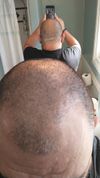
A user's experience with microneedling monotherapy and potential treatments such as finasteride, minoxidil, Stemoxydine, rosemary oil, peppermint oil, and RU58841 for reversing hair loss.
Stem cell and exosome injections for hair loss are discussed, with skepticism about their effectiveness and concerns about using non-genetically related stem cells. Dr. Deyarmin's treatments are mentioned, with some users questioning their legitimacy and others expressing curiosity.
Various hair growth treatments were discussed, including microneedling, bimatoprost, setipiprant, stemoxydine, PGE2, CB-03-01, WNT Beta-Catenin upregulators, KY19382, topical estrogen, IGF-1, GH, MK-677, oral castor oil, fisetin, resveratrol, cetrizine, and lactic acid. Users shared experiences and sources for these treatments, with some expressing interest in topical solutions and others noting the lack of FDA approval or scientific evidence for certain options.
Hair loss discussion includes treatments like Minoxidil, Finasteride, and RU58841. L'Oreal's study on Stemoxydine 5% claims a 4% increase in hair density after 3 months, but some users question potential bias.
The conversation discusses the less impressive results of Pyrilutamide (kx-836) in phase 3 compared to phase 2, with a suggestion that a longer study might show more significant results. One user reports personal success with Pyrilutamide, experiencing no further hair loss and gradual regrowth.
The conversation is about a group of people trying KX-826 for hair loss, with no serious side effects reported after 25 days of use. Some participants are experiencing less scalp itch and shedding, but it's too early for definitive results.
A 43-year-old male with advanced hair loss is experimenting with alternative treatments, including red light therapy, microneedling, scalp massages, an oil mix, and ketoconazole shampoo, after previously experiencing side effects from finasteride and minoxidil. He noticed some minor changes with red light therapy but remains skeptical about significant improvement.
Topical finasteride may have higher systemic absorption and lower efficacy when using a Propylene Glycol/Ethanol formulation compared to the hydroxypropyl chitosan (HPCH) formulation. The safety profile of topical finasteride relies heavily on the HPCH formulation, and using standard solutions might lead to different pharmacokinetics.
The conversation discusses the failure of Phase 3 trials for the hair loss treatment KX-826, with no significant difference found between the drug and placebo. Some users express disappointment and skepticism, while others discuss alternative treatments like Minoxidil, finasteride, and RU58841.
The conversation discusses using higher doses of minoxidil and finasteride, considering dutasteride, and exploring other treatments like RU58841 for hair preservation. The user reports no side effects after six months and is interested in advanced treatment combinations.
Exploring different treatments for hair loss, such as cosmeRNA and HMI-115 which are small interference messenger RNA that inhibits the DHT receptor and an antibody that binds to the prolactin (PRL) receptor respectively; and researching mechanism and environment of hyperresponders.
The conversation discusses using estradiol mesotherapy to replicate hormone replacement therapy results while minimizing systemic exposure. It also covers the use of Spironolactone cream, which reportedly has no systemic side effects, and the potential risks of using bicalutamide and Spironolactone in men.
The user has been using liposomal topical finasteride since late 2022, progressively increasing the dose, but DHT serum levels remain largely unchanged. Despite using finasteride, minoxidil, microneedling, and ketoconazole, hair condition has neither improved nor worsened.
A user who has tried multiple treatments for hair loss, including oral and topical finasteride and liposomal finasteride, but experienced severe side effects in each case; the user is considering trying RU58841 or aromatise inhibitors as alternatives.
PP405 is a potential hair loss treatment undergoing trials, with discussions on its effectiveness and comparison to existing treatments like finasteride and minoxidil. There is skepticism about its status as a cure, with hopes for future advancements in genetic treatments like CRISPR.
The conversation discusses the difference between the commercially available Pyrilutamide and the version in clinical trials. It also mentions treatments like Minoxidil, finasteride, and RU58841 for hair loss.
A double blind, placebo-controlled study that looked into the potential effectiveness of topical fluridil for treating male androgenetic alopecia, showing increased anagen to telogen ratios with no reported side effects on libido or sexual performance.
The user shared their positive experience with a 1,500 graft FUE hair transplant at NewHair Institute in Korea, highlighting the natural design by Dr. Jino Kim and the supportive staff. They experienced minimal discomfort and swelling, and appreciated the thorough aftercare and communication.
Kintor apologized for using misleading images in their advertisements and promised stricter review processes. They are also considering developing a topical dutasteride formulation.
A user's progress with using Minoxidil, finasteride, and microneedling to treat hair loss; another user mentioned a Japanese study that found better results for hairy individuals on finasteride.
A 3-month update on a microneedling-only project to treat hair loss, which has not had significant results in terms of thicker hair but may have seen some acceleration in hair growth and an increase in vellus hairs. The user plans to continue the journey for 6 months before making any changes, such as adding minoxidil or finasteride.
Kintor Pharma has finished enrolling the first patient in a Phase III trial for KX-826, a treatment for androgenetic alopecia (AGA). One user has set a reminder to check back on the topic in a year.
The user, on testosterone replacement therapy, found finasteride and minoxidil ineffective for hair loss. They are trying a new topical gel with dutasteride, tretinoin, and a higher concentration of minoxidil, and plan to document the results.
PP405 shows some hair growth after 4 weeks, but results are debated and expectations should be tempered. Some users compare it to minoxidil or finasteride, questioning its effectiveness and commercialization timeline.
The user reported noticeable hair improvement over four months using 1 mg of finasteride and weekly microneedling. Progress photos from October 2024 to January 2025 show positive changes.
The user shared progress pictures after three months of using RU58841, finasteride, and OM (oxidative stress modulators) for hair loss treatment. They haven't noticed much change but are seeking feedback on their results.
A new topical treatment, TH07, combining finasteride, latanoprost, and minoxidil, is entering phase III trials with promising early results. Some users express skepticism, noting the treatment uses existing products.
A 32-year-old is seeing positive hair regrowth after nearly three months using finasteride, oral and liquid minoxidil, and microneedling, and plans to add RU58841. They are considering switching to dutasteride and possibly a hair transplant in the future.