The conversation is about seeking updates on new hair loss treatments, specifically mentioning scube3 and GT20029, with one person mentioning HMI_115 as showing promising results.
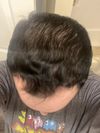
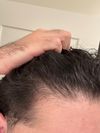
The conclusion of the conversation is that the user has decided to embrace their hair loss and has buzzed their head. They plan to continue their current hair loss treatments until they run out of stock. They also mention having dandruff and will continue medication for that.
The conversation is about trying unconventional treatments for hair loss, such as green tea, coffee, cocoa, multivitamin pills, red wine, onion, honey, herbs, and hydrogen peroxide. The user is seeking feedback on these methods to avoid ineffective ones.
The user experienced significant hair regrowth after 9 months of using finasteride, with minimal use of minoxidil. They reported no side effects and emphasized patience and consistency in their treatment routine.
A user on dutasteride for hair loss noticed hair regrowth on their head but a significant reduction in body hair growth. They plan to switch to finasteride and dutasteride and are considering testosterone replacement therapy but are concerned about its effects on hair growth.
A user who has started to go bald and decided to try wearing a hair piece, discussing the experience of doing so and sharing tips for maintenance. The conversation includes discussion about confidence in relation to wearing a wig or hair piece, as well as advice on getting it cut and attached professionally.
A user's hair loss progress after 4 months of using a topical fin and min mix, with responses from other users about their experience with the same treatments.
A 19-year-old trans man has been using Finasteride 1mg for a little over two months and is concerned about worsening hair loss, noting a fuzzy and soft hairline and crown. The user is upset as the hair loss appears worse than before starting the treatment.
User "missbloombastic" has been experiencing hair loss since 2016 and tried min, fin, multivitamins, and spiro with mixed results. Another user shares their struggle with hair loss and its impact on self-esteem, while a third user suggests checking blood tests and confirming the cause of hair loss.
PP405 and hair cloning are discussed as potential treatments for reversing hair loss from Norwood 7 to Norwood 1. Hair cloning is seen as a more permanent solution, while PP405's effectiveness and long-term effects remain uncertain.
A 19-year-old is using finasteride, dutasteride, and minoxidil to combat hair loss, seeing improved hair density but minimal hairline regrowth. Users suggest patience, continued treatment, and possibly considering a hair transplant in the future.
Hair cloning was predicted to be a baldness cure within 3-4 years in 2004, but it has not materialized. Users express frustration and skepticism about the delay.
The conclusion of the conversation is that the user should consider using treatments such as finasteride, minoxidil, and RU58841 to potentially reverse their hair loss. Other suggestions include using hair loss concealers and maintaining a healthy diet.
Young guys with thick hair asking if they're going bald and people discussing early action for hair loss treatments like Minoxidil and Finasteride. Some users share their positive experiences with these treatments.
The user is considering starting minoxidil or getting their scalp checked for permanent scarring due to noticing thinner hair after bleaching. They are seeking advice on hair loss remedies.
Scalp massages may show slight improvement in hair appearance, but users suggest more aggressive treatments like finasteride or minoxidil for better results. Some users believe lighting and angles affect photo comparisons, and recommend combining massages with medication.
Balding is challenging, and relying on medications like finasteride is often seen as a better option than constantly shaving or trying to compensate in other areas. Many feel that societal expectations to "own it" or drastically change oneself to cope with baldness are unrealistic and burdensome.
The user shared a 6-month update on their hair loss treatment, using finasteride/minoxidil gel, ketoconazole shampoo, thickening shampoo and conditioner, and topical minoxidil. They wash their hair three times a week and switched to a less oily topical foam. Other users commented on their hairstyle, advising against it to prevent traction alopecia.
The user is using oral finasteride, topical minoxidil, Nizoral, dermarolling, a hair thickening conditioner, and hair vitamins for hair loss treatment. They stopped taking testosterone due to medical reasons and are now technically on estrogen, but it's unclear if this impacts their hair growth.
A user asked how much people would pay for guaranteed hair cloning, with responses ranging from $3.50 to $20,000. The conversation did not mention specific treatments like Minoxidil, finasteride, or RU58841.
User Tricky9555 tried various hair loss treatments for 8 months with no visible results. Others suggested considering a hair transplant, checking thyroid levels, and being patient for up to 24 months for potential results.
Shampoos are unlikely to cause permanent hair loss; hair loss is more likely due to male pattern baldness (MPB). The user is advised that losing hair in the shower is normal, and to avoid shampoos with sodium sulfate.
Hair loss significantly impacts self-perception and attractiveness, with treatments like finasteride, minoxidil, and hair transplants suggested. The conversation highlights the emotional struggle and societal perceptions tied to hair loss.
Hair cloning is discussed as a potential future solution for hair loss, but it's not expected to be available soon due to high costs and technical challenges. Current treatments like Minoxidil, finasteride, and RU58841 are not mentioned in this conversation.
PP405 is seen as a potential breakthrough for converting vellus hairs to terminal hairs, with users expressing both hope and skepticism. It is compared to treatments like minoxidil and finasteride, with discussions on side effects and marketing concerns.
The user is using oral finasteride, minoxidil, and KX-826 for hair regrowth, noticing small improvements. They plan to add ketoconazole shampoo and consider a hair transplant with verteporfin after a year of treatment.
The user noticed increased hair loss over the past three years and is seeking advice. A suggestion was made to consult a dermatologist or trichologist and consider blood tests, particularly for vitamin D levels, to address potential androgenetic alopecia (AGA).