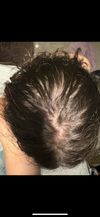
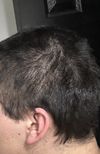
A user's journey with hair loss and their use of topical finasteride, minoxidil and pyri/minoxidil ratio treatments to attempt hair regrowth. Replies focused on offering support and advice while sharing personal experiences with different treatments.
User is experiencing hair loss and scalp dryness after using a topical solution containing minoxidil, tretinoin, finasteride, and hydrocortisone. They seek advice and personal experiences with this treatment.
A user is experiencing hair loss in the center of their hairline and has been using topical finasteride for seven months with minimal progress. They are considering switching treatments due to concerns about losing ground and potential side effects of other options.
Vitamin E and K deficiencies due to exocrine pancreatic insufficiency may affect hair growth. A scalp biopsy is recommended to check for autoimmune-related hair loss.
The user has been using a combination spray with 0.1% finasteride, 5% minoxidil, and tretinoin for over a year but feels their hairline has worsened. They are considering increasing the concentration of finasteride and adding 5% minoxidil once a day.
A user has been losing hair for two and a half years after a tropical trip and illness. A dermatologist prescribed betamethasone valerate 0.1% lotion, but the user is unsure if it's safe or effective for general hair loss.
A 43-year-old male with advanced hair loss is experimenting with alternative treatments, including red light therapy, microneedling, scalp massages, an oil mix, and ketoconazole shampoo, after previously experiencing side effects from finasteride and minoxidil. He noticed some minor changes with red light therapy but remains skeptical about significant improvement.
The user has been experiencing diffuse hair thinning despite using finasteride, minoxidil, dermarolling, clobetasol cream, and PRP sessions. They seek advice on additional treatments and are advised to check vitamin D, iron, and thyroid levels.
The user is exploring hair loss treatments in China, currently using finasteride and minoxidil, and is concerned about seborrheic dermatitis. Clinics are recommending selenium sulfide, doxycycline, and mesotherapy ampoules like PT88/PT66 or SP88/SP66, but the user is unsure about their effectiveness.
The dermatologist diagnosed androgenic alopecia and prescribed minoxidil and a shampoo for dandruff, avoiding finasteride due to side effects. The user questions the dermatologist's approach and considers seeking a second opinion due to concerns about the lack of a physical scalp check initially.
After taking finasteride for 192 days, the user experienced side effects like depressed mood and decreased libido, along with worsening hair thinning and scalp issues. Despite consulting a dermatologist, the user's hair condition and scalp itchiness have not improved.
The user lost ground on oral finasteride and plans to switch to topical finasteride/minoxidil and microneedling. They are curious if topical treatments are more effective than oral ones.
Mixing Nizoral and T-Gel in a 1:1 ratio and using it three times a week provided relief from persistent seborrheic dermatitis. This treatment is recommended for those with stubborn SD.
The user is considering using topical finasteride for thinning hair around the middle part, vertex, and crown, and is unsure if the whole scalp is thinning. Another user suggests oral finasteride is more effective than topical, and recommends consulting a dermatologist for proper treatment.
The user is considering using dutasteride or finasteride for hair loss and has recurrent folliculitis. Another user suggests treating the folliculitis and notes diffuse thinning.
Hair loss possibly caused by a fungal infection might be treated with antifungal shampoos or oral medications. If not fungal, treatments like minoxidil or finasteride may be necessary.
The user used minoxidil 5% and finasteride 0.1% for six months, along with a dermaroller and Nizoral shampoo, experiencing only dry scalp as a side effect. They are pleased with the results.
The user has experienced significant hair regrowth using finasteride, oral minoxidil, microneedling, keto shampoo, an LLLT helmet, vitamins, and supplements. They note progress but hope for further improvement in a specific area.
The conversation is about applying 2% Ketoconazole to the scalp for hair loss treatment. It suggests using conditioner afterward due to its drying effect.
The user is experiencing scalp itching from a PG ethanol base in their hair loss treatment, which includes 0.025% finasteride and 2.5% minoxidil, and is seeking alternatives without PG or ethanol. Suggestions include Zeuss non-PG foam and Ulo, which do not use PG or hydrocortisone.
A user is starting a topical finasteride treatment for diffuse patterned alopecia, having previously used minoxidil without success. They are cautious about side effects and have chosen topical over oral finasteride, while also using Nizoral and biotin in their routine.
The user is using a combination of microneedling, minoxidil, tretinoin, scalp massages, and red light therapy to address hair loss, with a focus on the hairline and temples. They emphasize the importance of scalp massages and have seen regrowth, attributing success to their comprehensive routine.
The user is using minoxidil, finasteride, and recently added tretinoin to address hair loss, specifically around a receding hairline. They are seeking advice on application methods and mention experiencing mild skin rashes potentially from tretinoin.
The user has been using Dutasteride, Minoxidil, Ketoconazole, and RU58841 for hair loss but sees subpar results. Suggestions include adjusting treatments, considering a hair transplant, and addressing scalp inflammation.
User taking 1mg finasteride daily for 2 years, wants to block more scalp DHT. Seeks reference for additional topical DHT blockers like alfatradiol and fluridil.