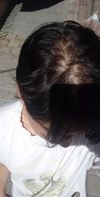
RU58841 powder from a lab supplier was tested at a free drug testing service. The discussion includes using Minoxidil and finasteride for hair loss treatment.
A 30-year-old man with diffuse hair thinning shared his hair regrowth regimen, which includes increasing Vitamin D intake, taking oral castor oil, using a dermapen, and various supplements like Glycine, K2, Vitamin E, Vitamin C, Aspirin, Sodium Bicarbonate, and a multivitamin. He also mentioned inconsistent use of Minoxidil, Peppermint Oil, Zix, and topical Castor Oil, and negative side effects from Finasteride, RU58841, and Nizoral.
A natural sugar called 2dDR may stimulate hair growth and is comparable to minoxidil, but it's not widely available for purchase. Concerns about minoxidil's safety for pets were discussed, with some users seeking alternatives.
A user shared a 6-month update on using a daily tablet combining finasteride, minoxidil, biotin, and vitamins C, B5, and B6 to address hair thinning. They are pleased with the results, despite experiencing some facial hair regrowth as a side effect.
The conversation is about someone wanting to import RU58841 or CB-03-01 from China for hair loss treatment but being concerned about receiving counterfeit products. Specific treatments mentioned are RU58841 and CB-03-01.
The individual is experiencing hair loss and has a vitamin D deficiency, with levels at 7.49ng/ml or 26nmol/l. They are unsure if the deficiency is causing the hair loss and are seeking advice on vitamin D supplementation.
A 24-year-old male started using finasteride, minoxidil, biotin, and vitamin D for hair loss but noticed worsening thinning and white patches on his temples. He seeks advice on improving his regimen, which includes topical minoxidil and a shampoo for seborrheic dermatitis.
A user is documenting their natural approach to treating a receding hairline using a dermastamp, essential oils (rosemary oil at 3% dilution with pumpkin seed oil), a multivitamin with vitamin D, and daily collagen shakes. They acknowledge the common recommendations of minoxidil and finasteride but prefer to test natural methods and share their results.
A user is seeking a Minoxidil Response Test kit in the EU without bundled consultations. They mention alternatives like oral minoxidil and tretinoin but prefer the test alone.
The conversation discusses the effectiveness of various supplements for hair loss, with some users suggesting higher doses of Zinc and Vitamin C, while others recommend additional supplements like Saw Palmetto and Omega-3. It is concluded that multi-vitamins are often ineffective unless there is a deficiency, and excessive intake can harm hair follicles.
The user claims to have successfully treated hair loss using natural supplements like collagen, L-lysine, zinc, B12, and bamboo shoot extract, without using the "Big 3" treatments (Minoxidil, finasteride, RU58841). The community is skeptical, demanding proof and emphasizing that the "Big 3" are proven effective, while natural remedies are often not.
A 23-year-old achieved significant hairline regrowth using minoxidil, saw palmetto, collagen peptides, biotin, omega-3, iron, ketoconazole shampoo, and scalp care techniques, without finasteride or dutasteride. The user attributes success to this combination but is unsure which element is most effective.
A user reports significant hair density increase and new growth at the temples after two months of using finasteride, minoxidil, ketoconazole, dermarolling, MK-677, zinc, and vitamin D3, with shedding stopping a week ago. They recently added MK-677 to their regimen.
The conversation discusses whether to get a blood test to check DHT levels while using Dutasteride for hair loss and concerns about Quercetin's potential interaction with Dutasteride. It concludes that testing DHT isn't necessary unless no effects are seen, and the small amount of Quercetin in a multivitamin likely doesn't interfere with treatment.
The conversation discusses hair regrowth using finasteride, minoxidil, biotin, and vitamin D over three months, with visible results. One person asks about the daily dosage of vitamin D and biotin.
The conversation is about whether topical Minoxidil could be effective for hair loss if oral Minoxidil did not work, considering the addition of microneedling and tretinoin. The user has tried oral Minoxidil for over a year without results and is seeking advice on alternative treatments.
The user stopped using minoxidil due to side effects and is trying alternatives like vitamin D supplementation, scalp massages, cold showers, oil treatments, zinc shampoo, and dermarolling. They report improved scalp health and some new hair growth, despite skepticism from others about the effectiveness of these methods.
A user from Iran reports hair growth in bald spots after using a domestic tonic containing Anageline, Trichogen, Aminexil, Caffeine, Saw Palmetto, and B vitamins, alongside Finasteride, but without Minoxidil. They prefer the tonic over Minoxidil as it doesn't make their hair greasy or cause hair fall.
Sons are offering free Biotin capsules, Thickening Clay, or Conditioner for hair care testing to UK men. Interested individuals can apply to receive these products without purchase.
Minoxidil, dutasteride, and copper peptides are used in a tattooing method for hair regrowth, with some users noting better results compared to oral treatments. Copper peptides are considered to have minimal impact, but the method may reduce side effects.
Iron or vitamin deficiencies can lead to decreased hair diameter, not just androgenetic alopecia. Treatments discussed include Minoxidil, finasteride, and RU58841.
The user is frustrated with ongoing hair loss despite using oral finasteride and topical minoxidil. They are considering adding magnesium to their diet and exploring other treatments like micro-needling and keto shampoo.
Minoxidil sulfate is considered for those unresponsive to regular minoxidil, with some trying a 10% formulation from Folligenz. Concerns exist about the product's stability and transparency, but some users report positive initial results.
A 25-year-old male is concerned about his blood test results, particularly the low percentage of free testosterone, and is questioning whether starting finasteride for hair loss might worsen this issue. He also notes a slight vitamin D deficiency and lack of sleep before the test.
A user in their mid-30s experienced unexpected hairline regrowth after starting a new supplement stack, despite being on a regimen of finasteride, minoxidil, and Nizoral for over four years. The new supplements include Tongkat Ali, Fadogia Agrestis, Panax Red Ginseng, Vitamin B1, Vitamin D3, Zinc Picolinate, Magnesium Glycinate, Maca, and L-Citrulline.
MaBelen experienced hair growth with topical Minoxidil but it plateaued, and Finasteride and Spironolactone didn't help. They wonder if oral Minoxidil will work and if it loses effectiveness over time.
The user started finasteride and experienced increased shedding for five months. They are concerned about how low vitamin levels might affect the shedding and effectiveness of finasteride.
The user has tried minoxidil, finasteride, dutasteride, tretinoin, and microneedling for hair loss without success and is considering taking 2.5 mg of minoxidil orally by mixing it with bottled water, questioning if this affects the solution's stability.
