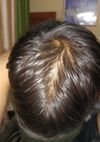
The conversation discusses using Tretinoin for treating androgenic alopecia. Specific treatments mentioned include Minoxidil, Finasteride, and RU58841.
PP405 is considered a potential new treatment for hair loss, compared to finasteride and minoxidil. There is skepticism about its effectiveness in humans, with anticipation for more information from an upcoming conference.
Temporal peaks are crucial for a natural-looking hair transplant, but they are challenging to achieve due to the need for precise angles and appropriate hair thickness. Many users emphasize the importance of finding a skilled surgeon and using finasteride to maintain hairline stability.
The conversation discusses hair loss treatments, specifically mentioning Minoxidil, finasteride, RU58841, and Xeljanz. The user inquires about Xeljanz and shares a link suggesting it may help with hair loss.
User experienced hair regrowth after eliminating scalp itch with RU58841. Others discussed itch and hair loss connection, and effectiveness of combining RU58841 with 5AR inhibitors.
A 23-year-old male started using Redensyl and Aminexil, along with Tab BTN Ultra and Vitamin D3 supplements, for hair loss. He shared progress pictures after 45-50 days of treatment.
The user experienced increased hair shedding after adding tretinoin to their regimen of finasteride, minoxidil, and dermarolling, but noticed new vellus hairs appearing. They plan to restart tretinoin more gently, as some users suggest shedding indicates treatment effectiveness, while others warn it may cause severe thinning for a minority.
Pelage Pharmaceuticals' PP405 aims to treat hair loss by reactivating dormant hair follicle stem cells, showing promising results in early trials. The company plans to present their findings at the American Academy of Dermatology Annual Meeting in 2026.
A user is seeking advice on purchasing RU58841 from Biolab Shop in Poland and is looking for trustworthy sources that deliver to Germany from Europe or China. They are interested in the product's composition and user experiences.
The user has tried many hair loss treatments including dutasteride, oral and topical minoxidil, topical finasteride, PRP, and microneedling without much success and is now using RU58841, seeing initial vellus hair growth but no further improvement after 5 months. They are inquiring about the effectiveness of RU58841 after 6-12 months of use.
A user switched from finasteride to dutasteride, experiencing significant shedding initially but noticing improved hair health and thickness over time. They also use minoxidil, both oral and topical, and report no significant side effects from the treatments.
The conversation is about whether doctors are offering hair transplants using verteporfin. Dr. Bargouthi in Jordan and Dr. Bloxham in New York are currently conducting trials on it.
RU58841 stopped scalp itching for the user, providing relief from persistent itchiness associated with hair loss. Some users reported side effects like chest pain, while others found relief with different treatments like mometasone.
The conversation is about using adenosine, finasteride, and minoxidil for hair loss treatment. The user ordered a 0.75% adenosine solution and is currently using finasteride 1mg and minoxidil 5%.
The user is experiencing significant hair thinning and scalp discomfort after two years on finasteride and is considering switching to dutasteride. Another person suggests that scalp inflammation might be the cause and recommends a YouTube channel for more information.
The user shared progress pictures showing significant hair regrowth after 6 months of using 1mg finasteride and 2.5mg minoxidil, with no side effects reported. They added Nizoral to their routine to address an itchy scalp.
A user shared their one-month progress using Minoxidil and RU58841 for hair loss, noting significant shedding after micro-needling and seeking opinions on their regrowth. They stopped micro-needling and added RU58841 to their treatment.
Researchers at the University of Virginia discovered a new group of stem cells in hair follicles that could potentially restore hair growth. The findings suggest that activating these stem cells might offer a new way to combat hair loss, though practical treatments are still years away.
A user shared their one-year progress using finasteride 1mg three times a week, starting at age 25, with noticeable regrowth after three months and no side effects. Other users discussed their experiences with finasteride, minoxidil, microneedling, and dutasteride, noting varying results and side effects.
Tretinoin combined with minoxidil may improve hair regrowth, especially in difficult areas like temples, but requires diligent scalp cleaning. Some users suggest oral minoxidil as a more potent and less irritating alternative.
The conversation discusses the effectiveness of adding RCP (redensyl, capixyl, procapil) to a hair loss treatment regimen that includes minoxidil and finasteride. Users share experiences, suggesting RCP may not be as effective as minoxidil, but could be useful for creating topical solutions.
A 20-year-old diffuse thinner has been using finasteride for 8 months and is considering adding minoxidil to their routine. A user suggests incorporating minoxidil for quicker regrowth, despite the hassle of daily application, while continuing finasteride.
The user has been on 1.2 mg finasteride for 1.5 years with minimal results and recently switched to dutasteride. Suggestions include adding minoxidil, derma rolling, and considering dietary changes to improve hair health.
User shared 13 months of progress using finasteride, microneedling, vitamins, and scalp care, and recently started stemoxydine. The post includes before and after photos.
Finasteride effectively treated hormonal acne for multiple users, including the original poster. Topical treatments like Winlevi are effective but expensive and not always covered by insurance.
Results for Amplifica's AMP-303 hair loss treatment study are expected late summer 2024. The study, fully enrolled in Q1 2024, focuses on safety and tolerability.