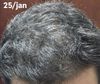
Hair density and color improved with 1mg oral finasteride, 3mg oral minoxidil, red light therapy, biotin, and microneedling. Visible results seen in 3 months.
The conversation discusses the potential of Verteporfin, an FDA-approved drug, for hair loss treatment, particularly in combination with microneedling or PRP. Users express hope and curiosity about its application, while some remain cautious due to the need for more extensive testing.
The user is experiencing positive hair regrowth results after four months of using oral finasteride (1mg daily), oral minoxidil (5mg daily), Polaris NR02 shampoo, and ketoconazole 2% shampoo. They plan to continue the regimen and consider a hair transplant in the future, with no reported side effects from the current treatment.
The conversation is about whether the phase 2 results for pyrilutamide, a potential hair loss treatment, were presented at a dermatology convention and inquiries about the completion of phase 3 trials. Specific treatments mentioned include pyrilutamide.
The conversation discusses GT20029, a compound by Kintor Pharma that degrades androgen receptors and is in trials, with potential as a hair loss cure. Another promising treatment mentioned is an antibody that blocks prolactin and has shown positive results in macaques.
The conversation is about choosing an anti-androgen for hair loss treatment, with options being alfatradiol and pyrilutamide. Alfatradiol is considered a better choice due to its established use, while pyrilutamide is more experimental.
The conversation discusses the effectiveness of topical tretinoin as a monotherapy for hair loss, with users suggesting it may not be as effective as minoxidil or finasteride. The original poster is considering other options like a phenol peel and is concerned about the risks of derma rolling.
Finasteride and Dutasteride used in combination with RU58841 and microneedling, as a treatment for hair loss. There was discussion on progress of the treatment and potential other methods to consider.
Alfatradiol is often discussed at a 1% concentration, but studies typically use 0.025%. Some users report success using it as a topical treatment alongside other hair loss treatments like finasteride.
The conversation is about a user planning to undergo a hair transplant and seeking information on clinics that perform Verteporfin treatment. A user suggests Dr. Barghouthi might offer this service.
The user has been using minoxidil, finasteride, and microneedling for two years, resulting in significant hair regrowth and plans for a 4000 graft hair transplant. The treatments have strengthened the donor area, making a hair transplant feasible.
The conversation discusses using Pyrilutamide, Alfatradiol 0.1%, and Minoxidil for hair loss treatment. Pyrilutamide is described as a strong antiandrogen, and Alfatradiol is noted for its effectiveness in inhibiting DHT on the scalp.
HMI-115, a newly discovered hair loss treatment that could potentially be effective for those with diffuse thinning and telogen effluvium. It is based on prolactin receptor antagonist signaling and has already undergone Phase I trials in women, with potential commercialization by 2027.
Alfatradiol (0.025%) is an effective and safe treatment for androgenetic alopecia in both men and women, increasing anagen hair rates with minimal side effects. Users discuss its cost-effectiveness and ease of use compared to other treatments like finasteride and RU58841, with some combining it with stemoxydine and Minoxidil.
A user is exploring VEGF gene therapy to enhance hair transplant results, considering measuring hair shaft diameter and growth rate. Suggestions include using phototrichograms and possibly adding PRP, though its effectiveness is uncertain.
A user's 15-month experience with oral finasteride, minoxidil, zinc and vitamin C, caffeine, and microneedling as treatments for hair loss, which has yielded impressive results. Suggestions were made to stack a topical DHT blocker with the finasteride or increase the microneedling regimen, and it was suggested to re-evaluate at the two year mark.
Minoxidil and finasteride have improved hair thickness and density, but temple areas remain stubborn. Continued use is recommended, with suggestions for topical minoxidil, microneedling, or considering a hair transplant for further improvement.
A user's plan to use Zix and topical finasteride (5AR inhibitors) for hair loss, followed by blood testing before/after. The user has suggested creating a fund to cover part of the cost of their blood tests. Replies to their post discuss the effectiveness of the treatments.
The conversation discusses the effectiveness of anti-androgens for hair loss, with a preference for topical treatments like RU58841 over oral options due to better scalp concentration and fewer side effects. Topical finasteride at 0.1% may provide some results, especially when combined with a topical androgen receptor antagonist like RU58841.
Treating hair loss with finasteride, minoxidil, keto diet, and microneedling; the user has seen good results but wants to focus more on their temples; another user suggested using an exfoliating comb while shampooing.
The conversation is about treatments for androgenetic alopecia, focusing on hyperresponders. Treatments include Minoxidil, finasteride, RU58841, leg training, and cold therapy.
Clinical studies by Dr. Barghouthi and Dr. Bloxham indicate that Verteporfin, when used with FUE and FUT hair transplantation methods, shows promise in hair follicle regeneration and minimal scarring due to its ability to inhibit Yes-associated protein (YAP). Microneedling at depths of 3-3.5mm, combined with Verteporfin, could potentially reactivate dormant follicles, although the optimal dosage and application method are still under investigation. Concerns remain about the DHT sensitivity of regenerated follicles, highlighting the need for further research to optimize trauma levels and Verteporfin concentrations to achieve effective and scar-free hair regeneration.
Hair regrowth in transfems is more effective due to hormonal changes, specifically estrogen, which keeps hair in growth phase longer. Treatments mentioned include anti-androgens, sex hormones, and DHT blockers like finasteride.
A user discusses starting nandrolone replacement therapy to stop hair loss and improve hair health, noting its benefits over finasteride. They report halted hair loss, improved skin, increased muscle, and a calm mood after three weeks.
A 43-year-old from Thailand shares progress after 1 month using topical finasteride, minoxidil, tretinoin cream, and weekly microneedling for diffused thinning. Users compliment his appearance and suggest he doesn't need treatment.
The user is seeking help with using Ell-Cranell for hair loss treatment. They are unsure about the correct application method and dosage. They also inquire about combining microneedling with topical alfatradiol and question a study that referred to alfatradiol as a hair growth inhibitor in male mice.
The conversation is about Kintor's announcement indicating continued hope for their product KX-826 as a treatment for Alopecia Androgenetica. Specific treatments mentioned are Minoxidil, Finasteride, and RU58841.
The user experienced significant hair regrowth over 8 months using finasteride, minoxidil, and a custom topical mix including progesterone, cortisone, and alpha 5 estradiol. They reported no side effects and noticed improvement around the third month.
The conversation is about the effectiveness of alfatradiol for hair loss and whether it can be used with or as a replacement for common treatments like minoxidil, finasteride, and RU58841. The user is seeking feedback on others' experiences with alfatradiol.