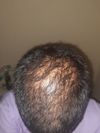
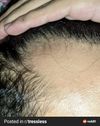
The conversation discusses a hair loss treatment regimen that includes a topical spray with finasteride and minoxidil, tretinoin, and using a Derminator (microneedling device) at 1.25mm depth every 5-6 days. The user reports positive results after 90 days and plans to continue the treatment, with others commenting on the process and potential outcomes.
The user started a hair loss treatment with oral finasteride, minoxidil, and microneedling but hasn't seen improvement after six months, experiencing increased shedding instead. Suggestions include continuing the treatment for a year, considering topical minoxidil, and possibly adding dutasteride if needed.
The user experienced chronic telogen effluvium and mild male pattern baldness, treated with finasteride, oral minoxidil, and later switched to dutasteride, which stopped excessive hair shedding. Other treatments like low-level laser therapy, hair loss shampoos (except ketoconazole), and supplements were ineffective.
A 36-year-old man restarted hair loss treatment after a break, using topical Minoxidil 5% twice daily, topical Finasteride 0.01% daily, and Ketoconazole 2% three times a week, along with supplements like Vitamin B12, D3, C, Biotin, Omega-3, zinc, and copper. He avoids oral Finasteride due to side effects and plans to evaluate progress after a year.
A user who experienced positive results from using finasteride and dutasteride to treat their hair loss, with 2000 grafts being transplanted in the temples area for further improvement. They also discussed cost and other treatments such as minoxidil.
The user has tried RU58841, pyrilutamide, oral minoxidil combined with finasteride or dutasteride for hair loss. They are asking for new and exciting treatments.
The conversation discusses whether gt20029 could cure complete baldness, mentioning verteporfin as a realistic treatment. Other treatments like Minoxidil, finasteride, and RU58841 are implied to be less promising.
An arthritis drug, baricitinib, is discussed as a potential treatment for autoimmune alopecia, not androgenetic alopecia. Ritlecitinib is also mentioned as a possible treatment for scarring alopecia.
A 32-year-old is using finasteride, oral and topical minoxidil, microneedling, and keto shampoo to treat hair loss, noticing healthier hair and new tiny hairs on previously bald areas. They are hopeful for more visible results in the coming months and encourage others to try the treatment.
The conversation discusses alternatives for hair loss treatment for someone allergic to finasteride, suggesting options like hair systems, topical anti-androgens such as CB-03-01, RU58841, and kx-826. It highlights the challenges faced by individuals allergic to anti-androgen inhibitors and the need for more information on this topic.
The conversation discusses hair loss treatments, specifically mentioning Minoxidil, finasteride, and RU58841. It also references Epibiotech's hair multiplication and cell therapy as potential solutions.
Tretinoin is used with minoxidil to enhance hair growth, with some users applying tretinoin before minoxidil to improve results. Some users report success with this combination, while others experience irritation or dryness.
The user reduced serum DHT by 60% using Advanced Trichology's natural DHT blocker but saw no improvement in hair loss. They are considering switching to finasteride due to its proven effectiveness in inhibiting scalp DHT.
A user started taking finasteride due to increased hair shedding and sought advice on coping with the anxiety of starting the treatment. Responses included personal experiences with finasteride, minoxidil, and tips for integrating the medication into daily routines.
The conversation discusses using 0.1% Alfatradiol compounded by a pharmacy for hair loss treatment. It also mentions Minoxidil, finasteride, and RU58841 as other treatments.
The conversation is about hair loss treatments, specifically the lack of improvement after one year of using oral finasteride and topical minoxidil. Suggestions include switching to stronger medications like dutasteride and oral minoxidil, considering a hair transplant, and possibly using microneedling or tretinoin.
Doctors are testing verteporfin topically for healing and potential regeneration after transplants. The user is asking how it is formulated for topical use, such as if it's mixed with a carrier gel.
The user updated their hair loss treatment to include daily dutasteride, oral minoxidil, topical dutasteride with minoxidil and tretinoin, and RU58841. Commenters feel the extensive treatment is unnecessary for the user's level of hair loss.
The conversation discusses a hair loss treatment involving oral minoxidil, topical finasteride, and a custom topical formulation with minoxidil, cetirizine, finasteride, progesterone, and hydrocortisone. The user seeks advice on the effectiveness of these ingredients for diffuse thinning.
A user asked if anyone who didn't respond to minoxidil saw improvement after adding tretinoin. One person replied they saw hair growth on their hairline after using a combination of minoxidil, finasteride, and tretinoin, suggesting tretinoin may have made them respond to minoxidil.
The user is concerned about post-hair transplant care, specifically regarding the use of a bandana, minoxidil, and tretinoin. They are advised to consider finasteride and possibly adjust the minoxidil dosage.
The user has maintained hair thickness using oral finasteride and minoxidil for four years, with suggestions to consider dutasteride or a hair transplant for further improvement. Some users recommend trying topical minoxidil with tretinoin or increasing the oral minoxidil dose for better results.
Finasteride isn't working after 8 months, and stopping minoxidil led to no regrowth. Advice includes resuming minoxidil, correcting iron deficiency, and continuing finasteride.
The user has been treating hair loss for a year using Hims topical finasteride/minoxidil, derma stamping, and RU58841, with plans to continue and hopes for more significant results. They have noticed some small hair growth at the temples and will provide updates on their progress.
A 33-year-old male experienced initial hair improvement with exosomes, PRP, Regenera, oral minoxidil (2.5mg), and finasteride (1mg), but his condition worsened after stopping treatments. He is considering a hair transplant and seeks advice on its viability.
The conversation discusses using minoxidil, finasteride, and multivitamins for hair regrowth, with additional treatments like microneedling and ketoconazole shampoo. Suggestions include continuing treatment, considering oral minoxidil, and possibly getting a hair transplant.
A Phase II clinical trial for TDM-105795 has started recruiting in the US, and it might be a promising treatment for hair loss. Many hair loss drugs, including this one, originate from China.
User shared progress of two years using 1mg daily Finasteride and 2x weekly microneedling for hair loss. Many users praised the results and discussed their own experiences with microneedling and Finasteride.