Search
for
Sort by
Community Join
600-630 / 1000+ resultscommunity 6 month update – topical fin min, dermaroll, ketokonazole – specifics in prior posts
A user's six-month update on their hair loss treatment plan, which includes topical finasteride and minoxidil, dermarolling, and ketokonazole. Replies to the post appreciate the comparison pictures and commend the results achieved from the treatments.
community Topical min and dermarolling with seborrheic dermatitis
The user is managing hair loss with oral finasteride, recently switching to dutasteride, and topical minoxidil, but faces challenges due to seborrheic dermatitis. They seek advice on effective regrowth methods that don't worsen their condition, with suggestions including various shampoos like Vichy Dercos and ketoconazole.
community Wimpole Clinic 1850 grafts (23yo) Dr Malkani
A user shared their positive experience with a hair transplant at Wimpole Clinic, performed by Dr. Malkani, and discussed using finasteride at a reduced dose due to side effects. They also mentioned avoiding minoxidil due to heart pain and taking supplements like biotin, marine collagen, viviscal, and krill oil.
community Is topical min a waste of time for diffuse thinners?
The user is considering switching from oral to topical minoxidil due to lack of improvement and side effects, while continuing with dutasteride or finasteride. They seek advice from others with diffuse thinning.
community Estradiol as an addition to finasteryde and minoxidil - hair los after first 2-3 weeks
community Alternatives/unorthodox hairloss protocols to the big three
The conversation discusses alternative and unorthodox hair loss treatments, including RU58841, nandrolone, and dianabol, as well as theoretical approaches involving high doses of estrogen and selective estrogen receptor modulators. These methods are considered extreme and potentially harmful but are explored for those unable to tolerate traditional 5-alpha reductase inhibitors.
community 5mg Min + DermaRoll 1.5mm Weekly + Keto/Salicyclic alternative day + 0.5 mg Dut. Norwood 6, should I go to 2.5 mg Dut? 33 Year old
community Making my own topical finasteride
community The Big Fat Layer II
Hair loss treatment should target dermal white adipose tissue (DWAT) to restore hair follicles. Potential remedies include tocopherol (vitamin E), botox, rosiglitazone, niacin, kojyl cinnamate esters, and ADP355.
community Has anyone tried RU powder ???
RU58841 powder is discussed for hair loss treatment, with suggestions to use a 5% solution in isopropyl alcohol. One user mentions using RU injections directly to the scalp.
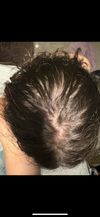
community Trying to identify area of treatment with topical fin
The user is considering using topical finasteride for thinning hair around the middle part, vertex, and crown, and is unsure if the whole scalp is thinning. Another user suggests oral finasteride is more effective than topical, and recommends consulting a dermatologist for proper treatment.
community Has anyone added micro needling or tretinoin and gotten extra gains?
The user has been using Minoxidil and finasteride for two years, which stopped their hair loss but did not regrow hair. They are inquiring if adding microneedling or tretinoin has provided benefits to others in similar situations.
community Summary of future treatments from 2020
Hair loss treatments include finasteride, minoxidil, microneedling, dutasteride, CB-03-01, RU-58841, and experimental options like KY-19382 and stem cell therapy. Some treatments are considered ineffective or risky, such as ketoconazole, PRP, and low-level laser therapy.
community Any idea when clascoterone will actually be released?
Clascoterone, a topical anti-androgen for hair loss, is expected to be released in late 2026 or early 2027.
community Reddit’s Amatorial microneedling meta analysis of 11 different Clinical studies for a Total of 559 patients (Scalp microneedling + topical minoxidil 5%, safety, efficacy and Ideal protocol)
Microneedling with 5% minoxidil improves hair growth for hair loss patients. Best protocol: 1.5mm dermaroller weekly for 12 weeks or 0.6mm dermapen every 2 weeks for 12 weeks, skipping topicals for 24 hours.

community Hair Transplant Issues & Hair Loss Medication Side Effects - Similar Experiences
The user experienced long-term pain after an FUE hair transplant and is considering Kenacort injections for relief. They also reported brain fog, dizziness, and anxiety after stopping minoxidil and finasteride, and are currently using PRP, microneedling, and rosemary oil for hair maintenance.
community Comparison of options: topical vs medication
A user diagnosed with AGA is seeking advice on hair loss treatments, comparing topical Minoxidil, Spironolactone, and Finasteride to oral medications and natural methods like dermastamping, PRP, and LED light. They are concerned about side effects and effectiveness, especially given their existing fatigue.
community Epibiotech will now offer off-the-shelf allogeneic hair multiplication treatment in South Korea
Epibiotech will offer off-the-shelf allogeneic hair multiplication treatment in South Korea, using dermal papilla cells from donors to grow hair in balding areas. This method is cheaper and less invasive than traditional hair transplants.
community Finastride and rosemary oil/castor oil
community Before/after: 4 months of topical minoxidil 5%, finasteride 0.5%, tretinoin 0.02%
community Rational Review of Pelage Results
A treatment showed a 20% hair density increase in weeks, with nearly a third of participants experiencing significant results, while questions remain about its long-term efficacy and effectiveness across different scalp areas. There is interest in combining it with finasteride and minoxidil for potentially better outcomes.
community Thoughts on my Topical and Oral concept idea ?
The user is seeking advice on improving their hair loss treatment regimen, considering changes to their topical solution, and is curious about others' daily routines and recommendations for medications and supplements. They are contemplating switching Tretinoin for Tazarotene, Latanoprost for Bimatoprost, and possibly adding Alfatradiol, Topical Melatonin, or a topical androgen receptor antagonist.
community Dr Gokhan Gur. 2nd HT - 1849 grafts. Focus on midscalp and crown
A user shared their experience with a second hair transplant by Dr. Gokhan Gur, focusing on the midscalp and crown with 1849 grafts. Their current treatment includes dutasteride, finasteride, oral and topical minoxidil, and Nizoral shampoo.
community What are the alternatives to spironolactone for AGA?
The user experienced side effects from spironolactone and is seeking alternatives for androgenetic alopecia (AGA), considering saw palmetto but unsure of its effectiveness. They are also exploring the possibility of using topical spironolactone, despite availability challenges.
community Breezula Phase III 12-Month Data Released by Cosmo Pharma
Clascoterone 5% topical solution is effective and safe for long-term use in treating male pattern hair loss. Cosmo Pharma aims for EU and US approval, with a potential US release in late 2027 or early 2028.
community ~6 months of chemicals and needles
User tried oral min/fin/dut, VitD, and derma 2x monthly for hair loss and is happy with results. They saw improvements almost immediately.
community Why is everyone still arguing about PP405 when clascoterone is already heading toward regulatory submission?
community 3-month update on the microneedling-only project
A 3-month update on a microneedling-only project to treat hair loss, which has not had significant results in terms of thicker hair but may have seen some acceleration in hair growth and an increase in vellus hairs. The user plans to continue the journey for 6 months before making any changes, such as adding minoxidil or finasteride.
community 3 month fin,min and derma rolling once per week
The conversation is about a user sharing their 3-month progress with finasteride, minoxidil, and weekly derma rolling for hair loss. Some suggest buzzing the hair off to better apply treatments and consider a hair transplant in the future.