Search
for
Sort by
Community Join
210-240 / 1000+ resultscommunity Verteporfin Update #2: Day 1 through Month 1 | Dr Blake Bloxham | Feller & Bloxham Medical | NY, NYC
The conversation discusses the use of Verteporfin in hair loss treatment. It suggests that Verteporfin could potentially regenerate hair follicles instead of forming scars, providing an unlimited donor supply for hair transplants.
community So, what's the consensus on bimatoprost, lanatoprost or travoprost for AGA/MPB?
Bimatoprost, latanoprost, and travoprost can aid hair regrowth but are costly and less effective than minoxidil. They work best when combined with minoxidil and finasteride.
community 4350 Grefts - Result in 1 Year - Hair Transplant in Turkey - FUE- Best decision of my life
A user shared their positive experience with a hair transplant in Turkey, using 4350 grafts, and described it as the best decision of their life. They discussed using finasteride to maintain non-transplanted hair and addressed questions about the procedure and recovery.
community Verteporfin Update #4: Month 5 | Dr Blake Bloxham, Feller & Bloxham Medical
The conversation discusses patient updates on hair loss treatment with Verteporfin after five months, as reported by Dr. Blake Bloxham. Patients voluntarily sent their progress pictures to Dr. Bloxham.
community Starting Bimatoprost! Hair time
The conversation is about using Bimatoprost for hair growth, with concerns about potential side effects like eye color change and fat atrophy. Users discuss combining it with other treatments like Minoxidil and Finasteride, and sourcing Bimatoprost in bulk.
community So the cure for Nw7 is verteporfin
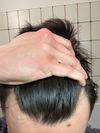
community 24M with mild temple recession - is topical finasteride worth it?
A 24-year-old with mild temple recession is using 5% minoxidil without noticeable effects and has started topical finasteride but is anxious about potential side effects. They are considering a specialist visit for peace of mind despite the cost.
community DLQ01: A Better "Minoxidil" PGF2a synthetic analogue.
DLQ01, a prostaglandin F2α analog, shows promise for hair growth by directly stimulating PGE2/PGF receptors without needing conversion, and can be combined with minoxidil and retinoids like tretinoin for enhanced effectiveness. Minoxidil's efficacy may be reduced by COX-1 inhibitors, but using prostaglandin analogs like Latanoprost or Bimatoprost can help maintain its effectiveness.
community Switching from oral to topical finasteride due to mood issues - 4 months post transplant
The user experienced mental side effects from oral finasteride, such as brain fog and low mood, and switched to topical finasteride combined with minoxidil. They are monitoring mental clarity and hair progress after stopping oral finasteride.
community IGFBP‐rP1 is a potential therapeutic target in androgenic alopecia
IGFBP‐rP1 shows potential for treating androgenic alopecia by influencing hair cycle transitions. Increasing IGF-1 levels may have similar effects to Minoxidil and 5-AR inhibitors in reducing hair loss.
community Promising stem cell treatment
community Eucapil, Fluridil update from manufacturer
The user is experiencing hair loss after a hair transplant and is considering using fluridil (Eucapil) and possibly alfatradiol as treatments, as they couldn't tolerate finasteride or minoxidil. The manufacturer of Eucapil confirmed they won't produce higher concentrations due to lack of efficacy.
community Trying to understand finasteride side effects and post finasteride syndrome
The conversation discusses the side effects of finasteride, including low libido and erectile dysfunction, and the possibility of these effects being permanent, known as post-finasteride syndrome (PFS). Some users report personal experiences with PFS and debate whether the condition is real, with varying opinions on the reversibility of side effects and the role of individual biology.
community Almost 5 Years post 5000-hair FUT in South Korea
User had a 5000-hair FUT procedure in South Korea in 2014 and is satisfied with results. Uses Minoxidil, dermarolling, and Toppik hair fibers for crown area, and considering Finasteride.
community 3000 grafts + DHI Technique + Foam Minoxidil + Tretinoin + DUT 5 months and 2 weeks so far.
The conversation is about a user's hair transplant progress using 3000 grafts with DHI technique, foam Minoxidil, Tretinoin, and Dutasteride after 5.5 months. Commenters are impressed with the results, noting significant improvement.
community Any updates on verteporfin or FAK inhibitors regarding donor area hair regeneration? or, when can we expect updates?
Verteporfin and FAK inhibitors being looked at as potential treatments for hair regeneration, with updates on the unofficial off-label human trial being discussed.
community Any remedy for eye bags from minoxidil 5%?
Minoxidil 5% can cause eye bags, but using Cerave Eye Repair Cream helped reduce them. The user also decreased their minoxidil dosage to manage side effects.
community Spiro for AGA in Europe
Treatment options for female alopecia androgenetica, discussing the availability of spironolactone online in The Netherlands and other potential treatments like finasteride, minoxidil and RU58841.
community Is Latanoprost same as min/fin?
Hair loss discussion includes treatments like Minoxidil, Finasteride, and RU58841. Question asked if stopping Latanoprost causes loss of gained hair.
community Clascoterone 12 months phase 3 result out
Clascoterone is promising for hair loss, showing 24.5% improvement in satisfaction compared to placebo. Users consider it an alternative to finasteride, with concerns about absorption and side effects.
community Recent recipient of a 5000 graft hair transplant in Istanbul….
A user underwent a 5000 graft hair transplant in Istanbul, which included 900 beard grafts, after previously using finasteride with limited success. The procedure cost £4500, including transport and aftercare in both Istanbul and the UK.
community Dr. Tsuji online lectures today and tomorrow
Dr. Tsuji is giving online lectures about hair multiplication trials. Users express hope for a cure, but some are skeptical about its timeline.
community Has anybody here used topical Bimatoprost over a longer period of time?
Bimatoprost was discussed for hair loss, with concerns about long-term scalp effects. A user reported no substantial effect after 6 months of use.
community AMA: I travelled to Turkey to get an FUE Hair Transplant: 5000 Grafts, Dr Koray Erdogan, ASMED Clinic
A user traveled to Turkey for a 5000-graft FUE hair transplant at ASMED Clinic with Dr. Koray Erdogan. They used finasteride before and after the surgery and shared detailed experiences, costs, and recovery tips.
community Phase 2B trial for PP405 leaked (The study Pelage DOESN'T want you to see)
The conversation discusses hair loss treatments, mentioning minoxidil, finasteride, RU58841, VDPHL, GT20029, and follicle cloning as potential solutions. It also reveals that the discussion about PP405 was an April Fool's joke.
community My 4200 Grafts Hair transplant surgery update
A user shared their positive experience with a 4200-graft hair transplant performed by Dr. Heena Kudyar, noting significant improvement in hairline and density by month 9. The user did not mention using medications like Minoxidil, Finasteride, or RU58841.
community Using topicals after hair transplant if safe to do so
After a hair transplant, it's advised to stop using RU58841 and minoxidil to avoid irritation, resuming them 25-30 days post-surgery if the scalp is healed. The user is currently using finasteride, minoxidil, and RU58841, but there are concerns about the safety and efficacy of RU58841 in humans.
community My 8 months hair transplant surgery update.
A user shared an 8-month update on their hair transplant surgery, which used 1800 grafts for aesthetic refinement, resulting in a natural-looking hairline and improved confidence. The procedure was performed by Dr. Abhinav Kumar, and the user is pleased with the results.
community Am I crazy or is this recovery?
The user is experiencing sudden hair loss and is considering micro-needling, low-level light therapy, iron supplements, folihair, and Omega 3. They are hesitant to start finasteride, suspecting the hair loss might be due to telogen effluvium from a past COVID-19 infection.