The conversation discusses experimenting with microneedling for hair loss, with OP considering using a 3mm derma-stamp. Other users advise against going beyond 1.5mm to avoid damage.
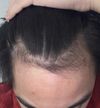
A trans woman is using finasteride, minoxidil, microneedling, and HRT to address hair loss, with noticeable improvement in hairline shape and presence of vellus hairs. She is considering hair transplants if these treatments don't yield desired results within a year or two.
Dr. Bloxham's trial is testing verteporfin on hair transplant patients to see if it can improve hair regrowth in treated areas. People are discussing the potential for follicle regeneration, expected results timeline, and concerns about side effects like cancer.
Using 0.025% tretinoin may enhance minoxidil's effects for hair loss. Users suggest starting with 0.025% and gradually increasing the concentration, and discuss combining treatments like microneedling.
A user shared their hair regrowth success using microneedling with a dermaroller every 6 days and minoxidil, recommending betadine (povidone-iodine) before microneedling to sterilize the scalp and enhance results. Another user noted the potential risks of iodine toxicity.
Minoxidil caused water retention and gastrointestinal issues for the user, which improved after stopping the medication. The user is now using finasteride and topical minoxidil, experiencing excessive urination and concerns about systemic absorption.
The user is experiencing slow but solid hair regrowth using topical finasteride, oral minoxidil, keto shampoo, microneedling, RU58841, and rosemary oil. Another user suggests being grateful for the dense coverage.
A popular streamer got a hair transplant in NY, sponsored by the clinic. Some users discussed the quality of the transplant and the use of medications like Minoxidil and finasteride.
A Phase 1 update for the HMI 115 clinical trial, which involves 16 participants and is expected to end in July 2023; as well as changes to the recruitment process, including treatment protocols with Minoxidil, Finasteride, and RU58841.
The user is using a hair loss treatment regimen including Avodart (dutasteride), oral minoxidil, LLLT caps, vitamins, and ketoconazole shampoo, and is considering adding dermarolling and RU58841. They are experiencing unwanted body hair growth from minoxidil and are planning for a future hair transplant.
The conversation revolves around how balding has made the original poster and others hyper-aware of other men's hairlines, often judging the severity of their hair loss and whether they've had treatments like hair transplants, minoxidil, or finasteride. Some participants express a need for therapy due to their obsession, while others joke about their newfound "expertise" in assessing hair loss.
Kintor Pharma has finished enrolling the first patient in a Phase III trial for KX-826, a treatment for androgenetic alopecia (AGA). One user has set a reminder to check back on the topic in a year.
Recruitment for a verteporfin trial and a separate hair cloning trial using verteporfin and other methods is underway, with locations in Jordan, NYC, Beverly Hills, and Memphis. Dr. Bloxham is conducting the hair cloning trial, and interested participants are encouraged to contact him directly.
The conversation discusses whether using 0.1% topical finasteride alongside 0.5 mg oral finasteride is excessive, with suggestions to choose either oral or topical treatment. The user also uses 5% minoxidil and mentions concerns about alcohol-based solutions due to seborrheic dermatitis.
The user is experiencing diffuse hair thinning despite using dutasteride and minoxidil for over five years and is considering adding oral minoxidil, microneedling, and nizoral to their regimen. They are concerned about the effectiveness and side effects of these treatments, especially with an upcoming event.
At this point.
In this conversation, users discussed the risks of drinking topical minoxidil and suggested alternative treatments such as obtaining a prescription for oral minoxidil or finasteride.
A 17-year-old is experiencing rapid hair loss from NW1.5 to NW3 in six months and feels dermatologists are unhelpful. They are using Minoxidil (Rogaine) and seeking advice on application.
The conversation is about the release timeline for clinical trial results and the availability of Breezula, a hair loss treatment. The user is not comfortable buying it as a research drug from China.
Using lice as an alternative to microneedling for hair loss treatment, with concerns about effectiveness and practicality. Some users humorously suggest genetically altering lice to produce beneficial compounds.
A user is participating in a phase 3 trial for Clascoterone, a topical acne medication that may stimulate hair growth, and will share results after 6 months. They will have a section of their hair shaved and marked with a tattoo for the study.
The conversation discusses concerns about the effectiveness of RU58841 due to high temperatures during delivery. A user reassures that the heat will not affect its efficacy.
Dr. Bloxham's 9-month update on FUT scar revision with Verteporfin shows promising results. Excitement is high for FUE, which appears highly effective based on Dr. Barghouthi's findings.
The possible increased risk of severe Covid-19 cases in men due to higher androgen levels, and how taking medications such as finasteride, dutasteride, spironolactone, enzalutamide, or canabidiol might help mitigate the severity of the disease.
New hair loss treatments, including Breezula, VDPHL01, and PP405, are nearing Phase 3 trials, offering hope for effective solutions. Current treatments like finasteride and minoxidil remain effective, but early intervention is crucial.
The conversation discusses the effectiveness of anti-androgens for hair loss, with a preference for topical treatments like RU58841 over oral options due to better scalp concentration and fewer side effects. Topical finasteride at 0.1% may provide some results, especially when combined with a topical androgen receptor antagonist like RU58841.
The conversation discusses a patent filed by Shiseido for cloning Dermal Papilla (DP) cells to treat hair loss. The method involves using viral vectors to maintain the cells' growth-inducing properties, differing from Replicel's approach with Dermal Sheath Cup (DSC) cells.
A user's hair regrowth journey involved a hair transplant and using RU58841, finasteride, and minoxidil, with side effects managed by other medications.
The user has been using minoxidil, finasteride, and microneedling for two years, resulting in significant hair regrowth and plans for a 4000 graft hair transplant. The treatments have strengthened the donor area, making a hair transplant feasible.
A user is interested in Absci's AI-driven antibody platform, ABS-201, for treating androgenetic alopecia, which shows promising preclinical results and potential for hair regrowth and pigmentation restoration. However, concerns are raised about the drug's development timeline and its advantages compared to existing treatments.
Before getting a hair transplant, it's crucial to research and understand that ongoing treatments like finasteride, dutasteride, or minoxidil are necessary to maintain results. Concerns were raised about Turkish clinics, including overharvesting grafts, lack of regulations, and discouraging finasteride use.